On this page
What separation means
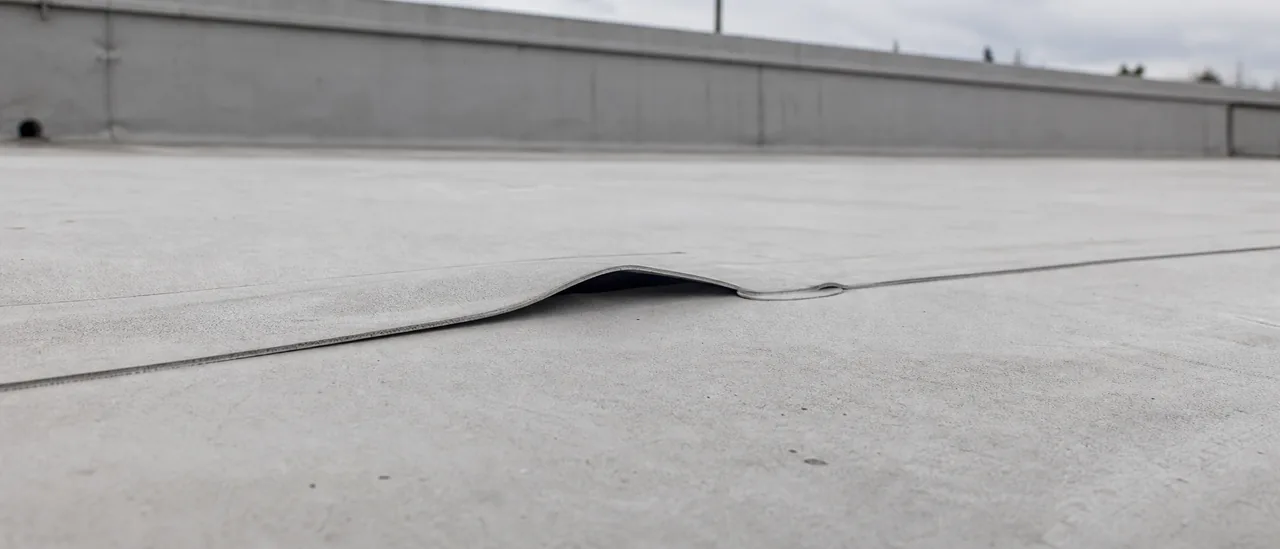
A separated flat-roof seam means part of an overlapping membrane joint is no longer continuously bonded or welded. Installation conditions, contamination, movement, and repair details are possible contributors, but the opening alone does not identify which one occurred.
Not every raised edge is open. A wrinkle beside a bonded lap or cracked surface sealant may look similar. Actual separation leaves an unbonded path between layers, sometimes called an open lap, void, fishmouth, or cold weld depending on the defect.
Why the joint opens
- Incomplete heat welding: For the TPO and PVC systems covered by the cited manufacturer manual, welding depends on proper machine adjustment, consistent power, suitable speed and temperature, and a clean membrane. Dirt or a discontinuity at a welder start or stop can leave an incomplete weld.
- Weak tape bonding: EPDM laps can be bonded with seam tape and primer. Contamination, missing primer, uneven pressure, unsuitable temperature, or incorrect application can reduce the bond.
- Movement concentrated at the joint: Wind-driven membrane flutter, loose attachment, or movement near curbs and angle changes can repeatedly load a seam. Movement may expose an already weak bond or create bridging where the membrane cannot lie flat.
- Detailing or repair errors: T-joints, penetrations, wall flashings, and earlier patches combine extra layers and tight geometry. Insufficient overlap, incompatible repair materials, or bonding onto an inadequately prepared weathered surface can create a local opening.
Ponding is usually context, not the root cause
Standing water does not by itself prove why a seam separated. It can increase the opportunity for water to enter an existing opening, so drainage and the seam defect should be evaluated separately.
How the cause is confirmed
Confirmation starts by identifying the membrane and seam method. A qualified evaluator traces the defect, notes stress points, checks nearby attachment and drainage, and compares the pattern with installation details or repairs.
The cited manufacturer’s instructions call for checking its cooled heat-welded seams with a blunt probe to locate small skips. Test welds help establish suitable welder settings for those systems. EPDM evaluation focuses on where adhesion stopped and whether primer, contamination, pressure, or an aged repair surface is implicated. Sampling is sometimes needed when the visible edge cannot establish the internal bond.
How urgent is it?
A confirmed opening should be addressed promptly because an EPDM overlap is bonded to create a watertight surface, and an open thermoplastic weld provides a direct break in the membrane joint. Protect the area from foot traffic and avoid probing or filling it with an arbitrary sealant; the repair must match the membrane and defect.
Active dripping, a growing ceiling stain, saturated materials, or a long opening before rain raises the urgency. Otherwise, document the location and arrange a qualified roof evaluation soon. An interior stain alone does not prove which seam leaked because water can travel within the roof assembly.