On this page
The most likely explanation
Shingle granule loss most often means loose mineral granules are shedding during installation or ordinary weathering. New asphalt shingles carry extra surface granules, sometimes called “hitchhikers,” so some grit in gutters soon after installation can be normal.
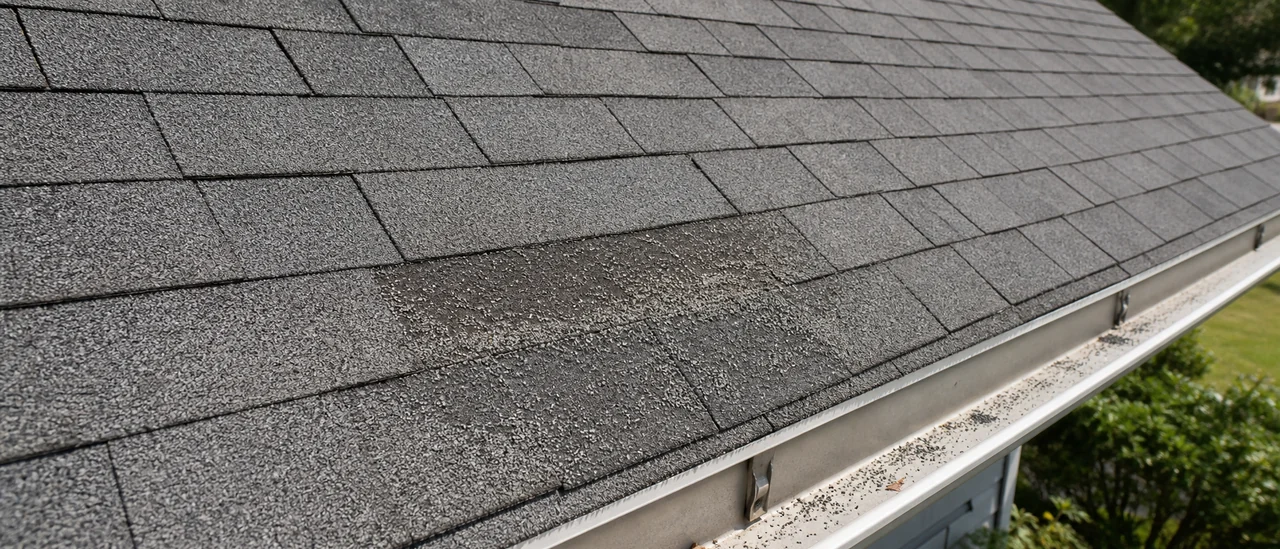
Granule loss becomes more concerning when it leaves concentrated bald areas, exposes the dark asphalt coating, or accompanies cracks and punctures. The amount of grit alone does not identify the cause.
Granules have a job
Mineral granules form the weather-facing surface of an asphalt shingle. Concentrated loss matters because it can leave the underlying asphalt exposed.
Other plausible causes
- Long-term weathering: Everyday weather can gradually change the asphalt surface. Some shingles continue shedding over the years until the coating beneath becomes visible.
- High wind: Strong wind can remove loose granules and may cause other visible shingle damage. Wind is more plausible when the change follows a severe event, but the surface pattern still needs examination.
- Hail: Impacts can displace granules, dent a shingle, or breach its reinforcing material. Granule loss by itself does not prove hail damage because ordinary weathering and wind can produce a similar surface change.
- Early-life shedding: Manufacturers apply more granules than the asphalt surface needs for complete coverage. Some excess remains after production and comes loose during installation and early weathering.
How the cause is confirmed
Start with the pattern, not the gutter. Loose granules collected below the roof do not show which slope released them or whether the remaining shingle surface is adequately covered.
From the ground, photographs may reveal broad, even color change or distinct dark patches. A qualified roof inspection can compare slopes, look for exposed asphalt, and check whether suspicious areas also contain dents, tears, cracks, blisters, or traffic patterns. Installation age and earlier photographs help distinguish early shedding from a developing condition.
Do not scrub a shingle or walk the roof to test it. That can remove more granules and create misleading evidence.
When it needs attention
A modest amount of loose grit from a new roof is usually something to monitor, especially if shedding decreases and no bare areas appear. Widespread thinning, visible asphalt, cracking, punctures, or an active leak justify prompt qualified evaluation.
Those findings do not automatically mean the entire roof needs replacement. The next step depends on whether the loss is superficial and localized or part of broader material deterioration or impact damage.