On this page
The most likely meaning
A bouncy floor usually means the floor system is flexing or vibrating noticeably under foot traffic. It may reflect a long or flexible joist span, loose interaction between framing and subfloor, or an isolated finish-floor issue. The sensation alone does not prove structural failure.
Floor movement is partly a serviceability question: how stiff the assembly feels in normal use. American Wood Council guidance explains that floor joists must be both strong enough and stiff enough; a joist can resist breaking but still bend enough to cause problems.
That distinction matters. A floor can feel lively without being near collapse, yet new, localized, or worsening movement can also reveal damage or inadequate support.
Other plausible causes
An inspector considers where the movement occurs, whether nearby finishes are cracking, and what framing is visible from below. Possible explanations include:
- long, shallow, or widely spaced joists that create a flexible floor;
- loose or thin subflooring, missing blocking, or weak connections;
- notched, drilled, cut, or altered framing;
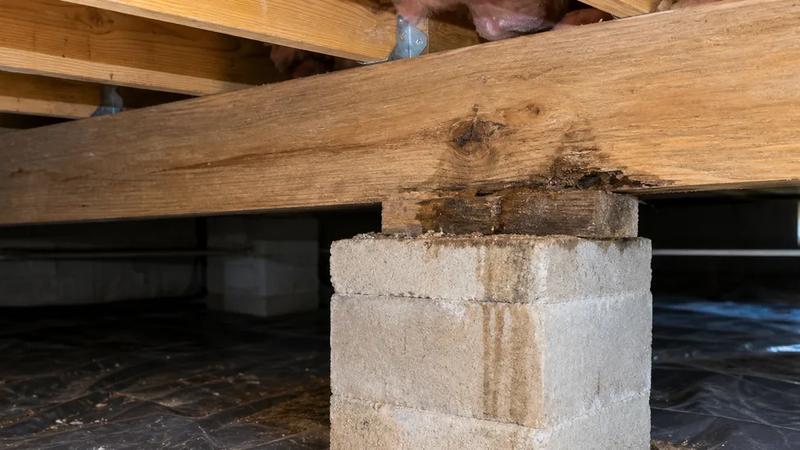
- moisture damage, decay, or insect damage;
- a shifted post, beam, bearing point, or foundation support; or
- a loose floor covering that feels springy while the framing remains firm.
The American Wood Council identifies joist depth, spacing, lumber species, and grade among variables affecting strength or stiffness. These factors help frame the investigation, but they do not diagnose a particular house.
What the inspection can confirm
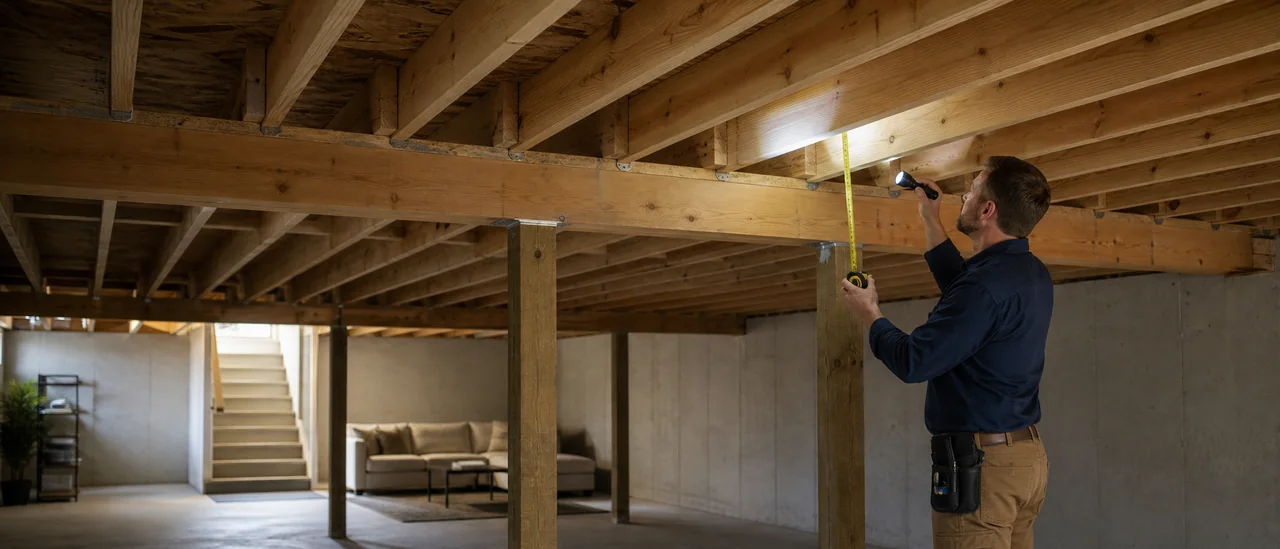
An inspector can compare the movement across rooms and examine accessible joists, subflooring, beams, posts, connections, and supports. Visible stains, decay, displaced framing, improper cuts, or missing hardware may provide a credible explanation.
Concealed conditions remain a major limitation. Carpet, ceilings, insulation, finished basements, and stored belongings can hide the relevant connections or damage.
A finding is not an engineering calculation
Under ASHI's current Standard of Practice, inspectors examine readily accessible, visually observable components and inspect structural framing. They are not required to determine structural adequacy, identify every cause, or provide engineering analysis.
Accordingly, a report may accurately document abnormal movement and visible clues without naming a final cause. Confirmation may require measurements, load and span calculations, selective access authorized by the owner, or evaluation by a qualified structural professional.
Urgency and next step
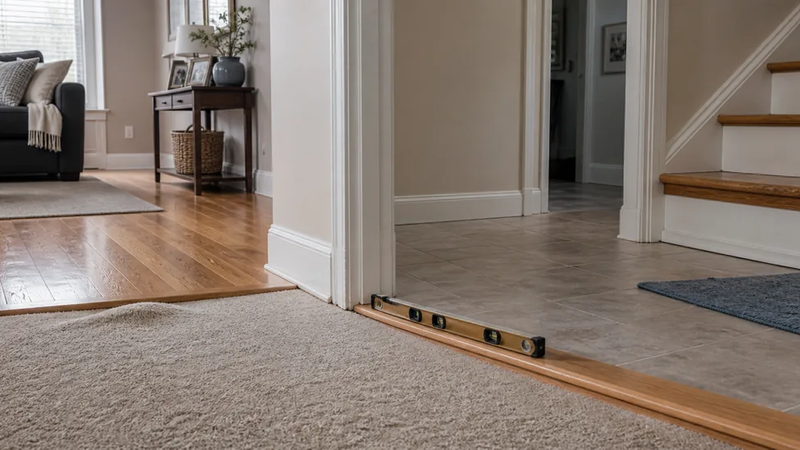
Prompt evaluation is appropriate when movement is severe, newly developed, worsening, or accompanied by cracked framing, active moisture damage, displaced supports, significant sagging, or doors and walls changing nearby. Avoid concentrating heavy loads in the affected area until the condition is understood.
If the bounce is mild, longstanding, and unsupported by visible distress, it may be a comfort issue rather than an emergency. Still, the practical next step is to compare the inspector's exact location and observations with accessible framing—not to treat the word “bouncy” as a verdict.