On this page
What a cracked flange usually means
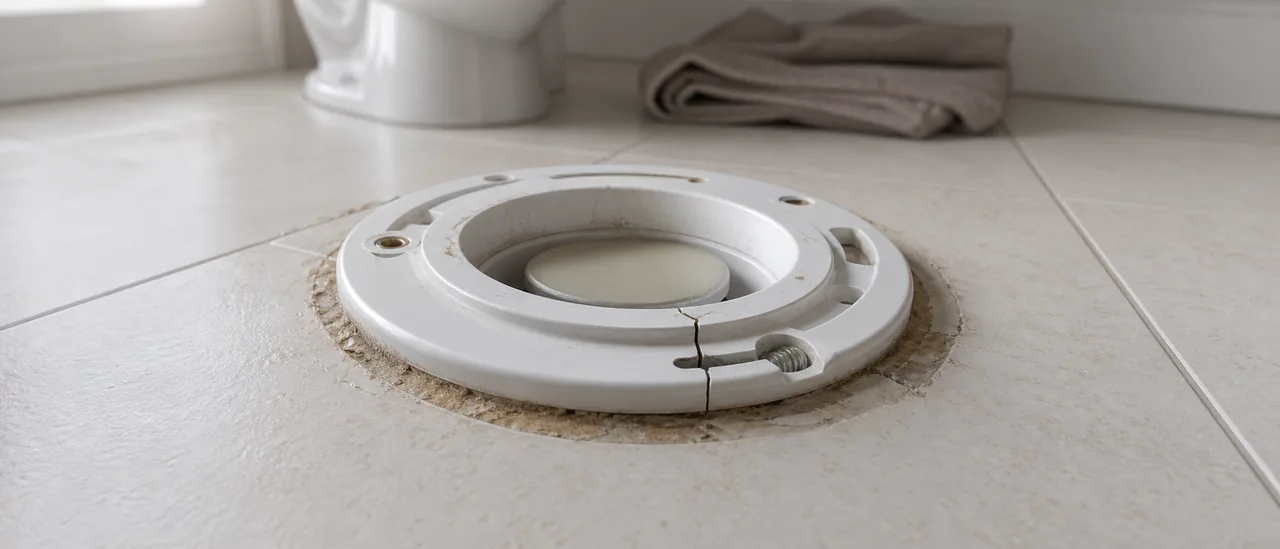
A cracked toilet flange usually means part of the bowl’s floor attachment is damaged. Also called a closet flange, this fitting connects the toilet to the drain and holds the mounting bolts. A crack near a bolt slot can let the bowl loosen or rock.
This finding matters, but it does not automatically mean sewage is leaking or the subfloor is rotten. The wax or non-wax seal is a separate component between the bowl and flange. A damaged attachment can disturb that seal, yet leakage must be supported by additional evidence.
Damage and leakage are different findings
A visible crack establishes flange damage. Moisture, staining, odor, or deterioration may indicate a related seal or floor problem, but the crack alone does not confirm one.
Why a flange may crack
Common explanations include an inadequately anchored flange, repeated toilet movement, stress around a mounting slot, corrosion in a metal ring, or damage during installation or fixture replacement. Plastic and metal flanges fail differently, so the material and crack location affect the likely repair.
A look-alike is possible, too. A joint in a two-piece metal repair ring, surface residue, or an old repaired area can resemble a crack in a photograph. Conversely, a toilet that feels stable may still conceal damage under its base.
What the inspection can confirm
Home-inspection standards generally cover readily accessible, visually observable plumbing fixtures. Inspectors may flush the toilet and document rocking, loose or missing fasteners, water at the base, staining, soft flooring, or visible damage from an accessible area below.
The flange itself is normally covered by the toilet. A standard inspection does not require dismantling, and removing the toilet goes beyond a visual inspection. Therefore, “cracked flange” should reflect a flange that was actually visible, previously documented, or otherwise supported—not merely a guess based on movement.
Definitive confirmation usually requires lifting the toilet, cleaning away the old seal, and examining the flange, fasteners, drain connection, and surrounding floor. That work also distinguishes a cracked ring from loose bolts, poor support, incorrect flange height, or concealed deterioration.
Urgency and the practical next step
Arrange timely plumbing evaluation when a crack is visible or specifically reported. Prompt attention is more important if the bowl rocks, water appears during or after flushing, sewer odor is present, the floor feels soft, or damage is visible below.
Until then, avoid rocking the fixture or trying to solve movement by aggressively tightening the bolts. Tightening cannot restore a broken mounting slot and can damage the porcelain. If active leakage or substantial movement is present, limit use until a qualified plumber can remove the toilet and determine whether the flange, seal, or floor also needs repair.