On this page
Usually, the wall materials have moved at a stress point
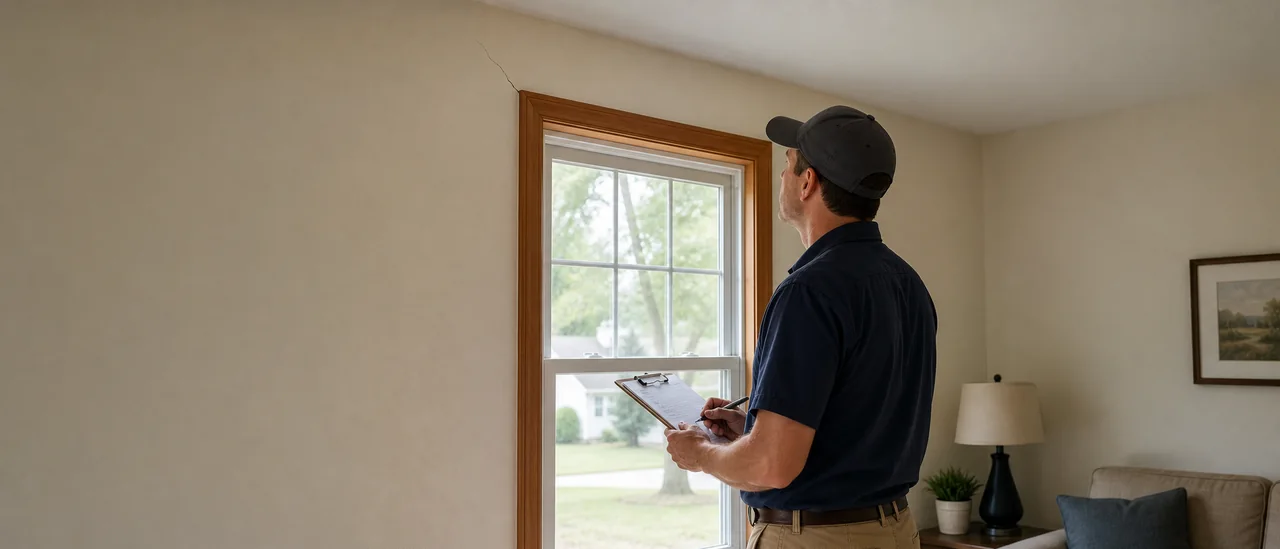
Cracks around a door or window frame usually mean that the finish, framing, or masonry has moved enough to separate at a vulnerable location. Openings concentrate stress at their corners, so cracks often begin there. The finding does not by itself prove foundation failure.
Small interior cracks may reflect movement between wood framing and gypsum board as temperature or moisture conditions change. Poorly placed drywall joints or earlier patching can also affect where a crack appears. In masonry, plausible causes range from drying shrinkage and thermal movement to inadequate support above an opening or differential foundation settlement.
What makes a crack more concerning?
Pattern and context matter more than the mere presence of a line. An isolated, narrow crack with no displacement and a door or window that works normally generally presents less evidence of significant movement than a widening or repeated pattern.
Look for related observations such as:
- a diagonal or stair-step crack extending from an opening;
- separation, bulging, or one side of the crack sitting forward of the other;
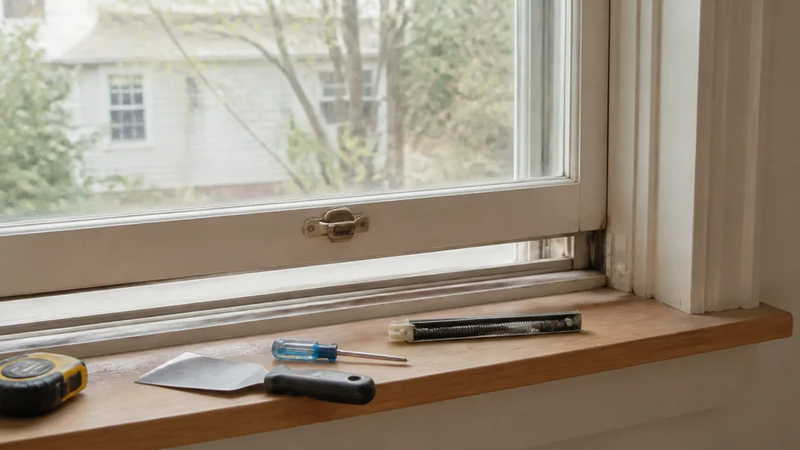
- doors or windows that bind, will not latch, or appear out of square;
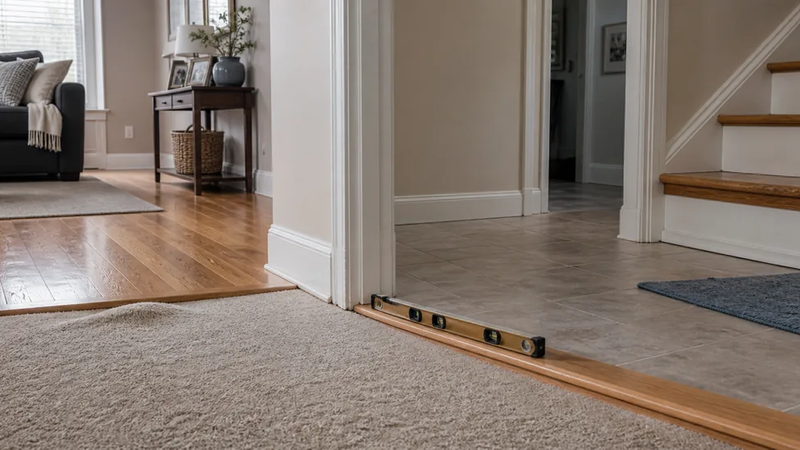
- sloping floors or additional cracks in the same area; and
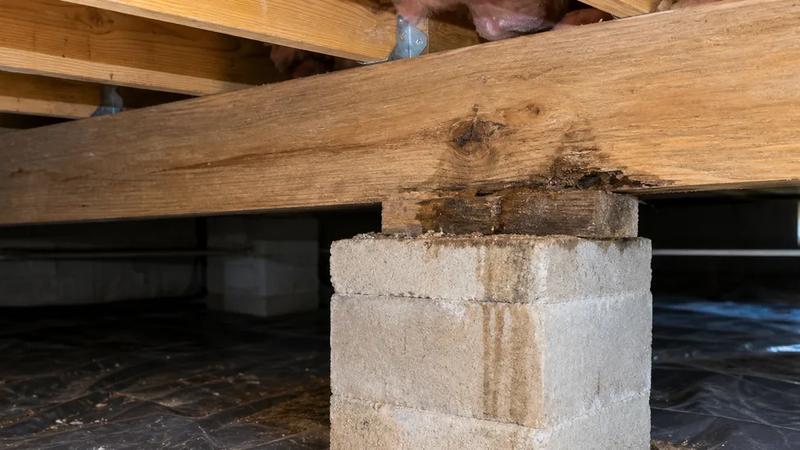
- staining, softness, failed sealant, or other evidence of moisture entry.
These signs still do not identify one cause. For example, University of California, Davis guidance shows that differential settlement can produce cracks and doors or windows that do not open, while National Park Service guidance lists several non-settlement causes of masonry cracking.
A snapshot cannot show whether a crack is active
Fresh edges, displaced materials, a failed patch, or dated photographs may suggest change. One visual inspection cannot establish a movement rate without reliable earlier measurements or monitoring.
What can the inspector confirm?
A general home inspection can document the crack’s visible location, direction, approximate width, displacement, and nearby symptoms. The inspector may operate accessible doors and windows, compare similar openings, and report components that need correction, monitoring, or further evaluation.
The limits are important. InterNACHI’s standard describes a non-invasive visual examination of accessible areas and says the inspection is not technically exhaustive. It does not require identifying concealed defects, determining the cause of a condition, providing engineering services, or assessing structural adequacy. State rules and the inspection agreement may alter the exact scope.
Urgency and next step
Review the report for the crack pattern, access limitations, and associated findings. A stable-looking hairline finish crack with no other symptoms may warrant ordinary repair or monitoring. Prompt evaluation is more reasonable when there is displacement, continuing change, widespread cracking, moisture damage, or several movement indicators together. Where structural significance remains uncertain, a qualified structural engineer can provide analysis beyond a visual home inspection.