On this page
Most likely, the metal took an impact
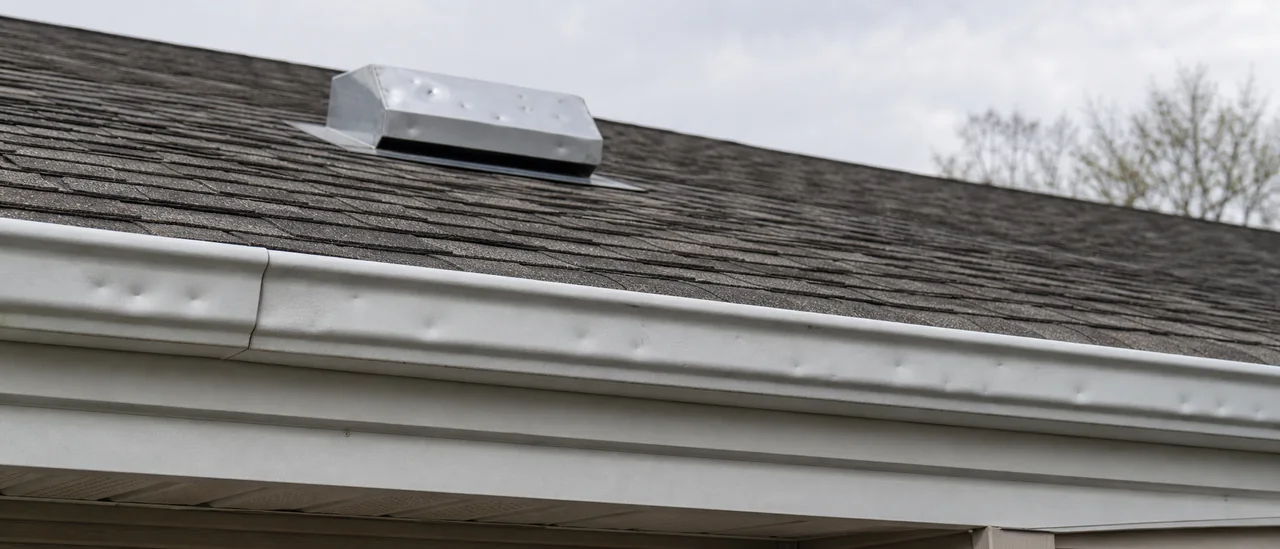
Dents that appeared after a hailstorm most likely mean hail struck those metal components. They are useful evidence of exposure, especially when similar marks appear across multiple exposed surfaces.
They do not automatically mean the shingles, roof membrane, or decking are damaged. Soft metals such as aluminum can dent from hailstones that lack enough impact energy to damage a supported roof covering. The gutter or vent itself may also have only a cosmetic change.
Cosmetic or functional?
A shallow dent may change appearance without changing performance. A puncture, split seam, displaced vent flashing, loose fastener, or gutter deformation that blocks drainage can affect how the component works.
Other causes can look similar
A new storm may draw attention to dents that were already present. Metal dents do not weather away quickly, so gutters and vents can preserve a record of earlier impacts.
Ladder contact, dropped tools, branches, installation handling, and other mechanical impacts can also dent metal. One isolated crease beside a ladder-rest point carries different meaning than scattered rounded marks across exposed gutters, vents, flashing, and other surfaces. Even a convincing pattern remains supporting evidence rather than a diagnosis of the roof covering.
Confirmation requires the roof itself
A sound evaluation separates three different kinds of information:
- Radar estimate: NOAA radar products can estimate hail size and help verify that hail likely occurred within an area.
- Observed hail: a measured stone, photograph, or reliable nearby report documents hail at a particular place and time.
- Confirmed property damage: inspection connects physical changes on this property to hail and determines whether each affected component still performs properly.
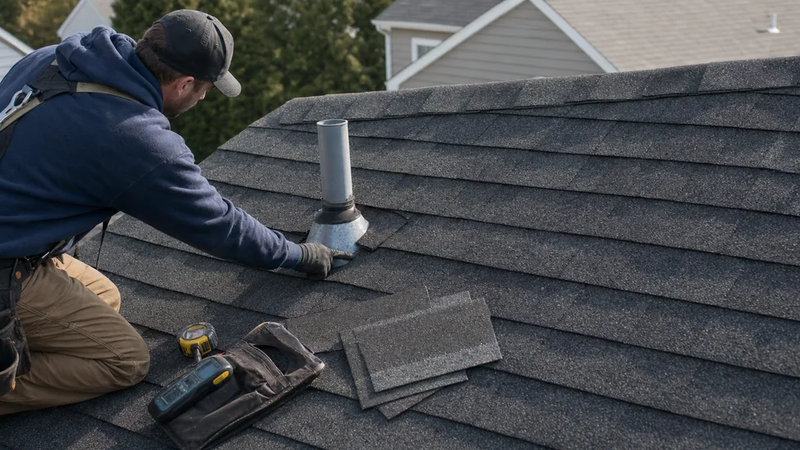
The roof covering must be examined directly, not inferred from gutter or vent dents. NRCA's assessment protocol calls for inspecting test areas on each directional roof slope, because exposure, materials, orientation, support, and existing condition can differ. A qualified evaluator should also distinguish hail impacts from ordinary wear, manufacturing conditions, foot traffic, and mechanical damage.
How urgent is it?
Shallow dents with intact seams, stable flashing, normal gutter drainage, and no water entry are usually not an emergency. Photograph visible conditions safely from the ground and monitor them rather than climbing onto the roof.
Arrange prompt evaluation if a vent is cracked or punctured, flashing has shifted, a gutter has pulled away or stopped draining, or water is entering the attic or living space. A qualified roof inspector can determine whether the finding is cosmetic, needs a component repair, or accompanies separate damage to the roof covering.