On this page
What fogging usually means
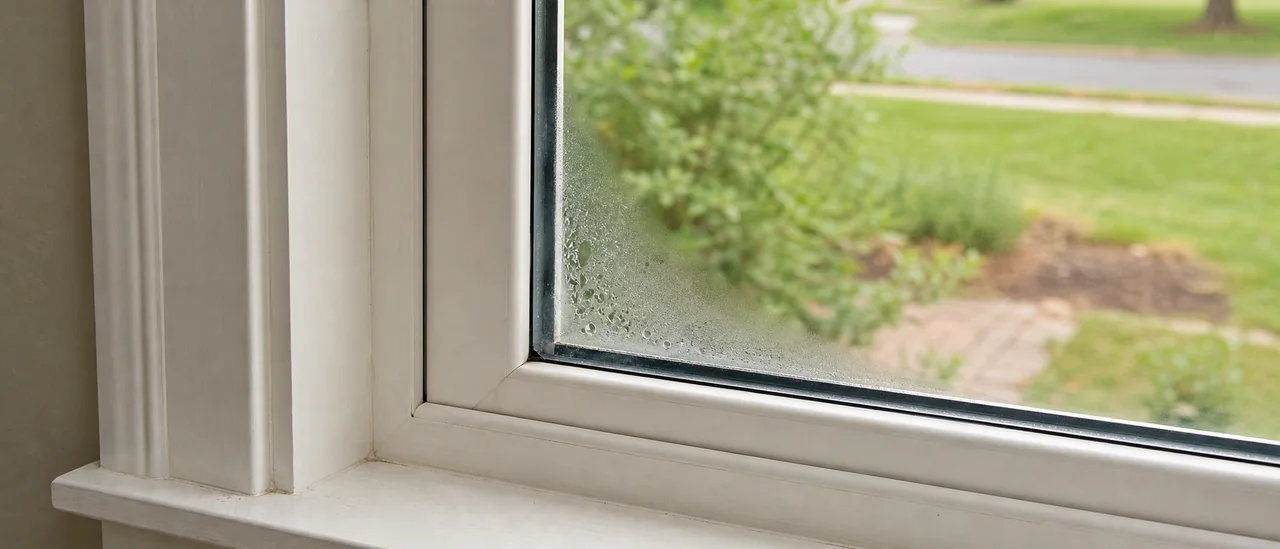
Persistent haze, droplets, or mineral-like residue between the panes of an insulated window usually indicates that its sealed glazing unit has failed. Moisture has entered the space meant to remain sealed, and insulating gas may have escaped. The window can still keep out rain and remain operable, but the glass unit no longer performs exactly as designed.
This is generally a localized window defect, not evidence that the home has a structural problem. It also does not prove that the frame, wall, or surrounding finishes are leaking.
The moisture location matters
Condensation that wipes from the room-side or outdoor surface is not trapped between panes. Indoor humidity, outdoor humidity, and glass temperature can produce surface condensation even when the glazing seal is intact.
Other plausible explanations
A dirty pane, damaged screen, low-emissivity coating, reflection, or removable surface film can resemble fogging under certain lighting. Condensation may also collect between a primary window and a separate storm panel; that space is not the factory-sealed cavity of an insulating-glass unit.
Fogging can be intermittent. Temperature, sunlight, and humidity may make it obvious one day and nearly invisible the next. Etching or residue can remain after the visible moisture disappears.
What an inspector can confirm
A home inspection is visual and non-invasive. ASHI's standard calls for inspecting a representative number of windows, but it does not require inspection of coatings or hermetic seals between panes.
An inspector can document the location and appearance of visible moisture, compare nearby panes, and note related conditions such as cracked glass, frame deterioration, difficult operation, or staining. Access, curtains, screens, dirt, lighting, weather, and a representative-window inspection can limit what is visible.
Visual evidence can support a probable failed seal, but it cannot establish the precise leak path, remaining insulating-gas concentration, hidden frame condition, or whether every similar window is affected. A window or glazing specialist can examine an uncertain pane more closely and identify whether the insulated glass, sash, or complete window is the relevant repair unit.
Urgency and practical next step
A fogged unit is normally a maintenance and performance issue rather than an emergency. Record which panes are affected and distinguish between trapped moisture and wipeable surface condensation.
Seek timely evaluation if the glass is cracked, the sash is loose or difficult to secure, water is entering the room, or nearby materials show active moisture damage. Otherwise, obtain qualified evaluation when the diagnosis is uncertain or when repair scope matters to a purchase decision.