On this page
A crack is a finding, not a diagnosis
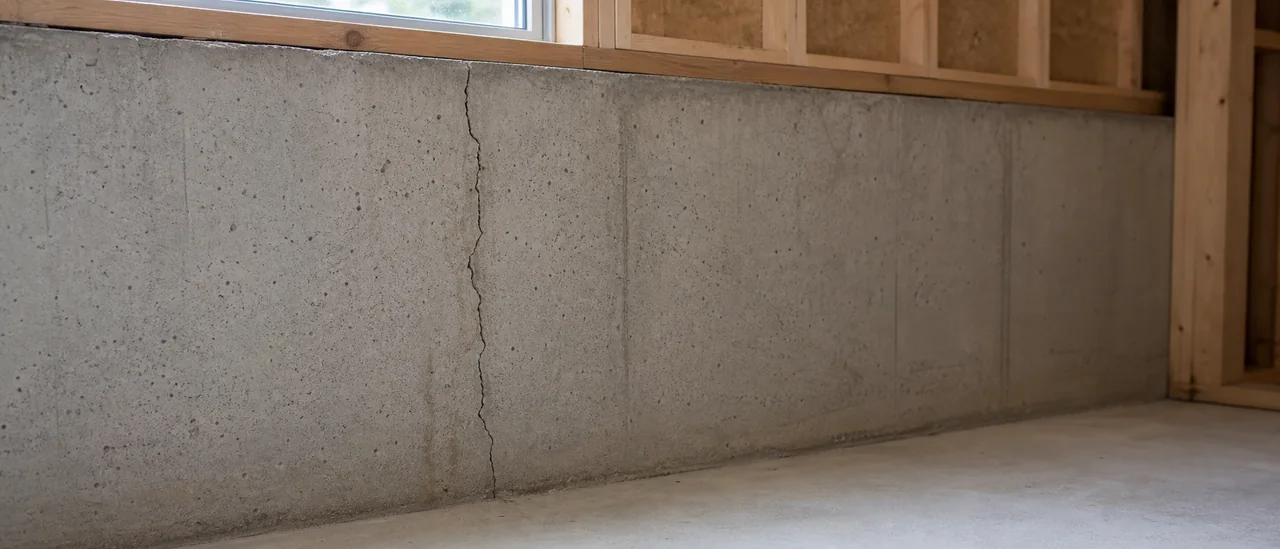
Foundation cracks most often mean the material has moved, shrunk, or been stressed at some point. A crack alone does not establish that the foundation is failing. Its practical meaning depends on its pattern, width, displacement, location, moisture conditions, and whether other parts of the house show related movement.
Concrete can crack as it dries or responds to temperature changes. Masonry can also crack from moisture and thermal movement, differential settlement, freeze-thaw effects, or movement between different materials. Some cracks remain stable and mainly need monitoring or moisture control. Others are evidence of continuing soil or structural movement.
Pattern matters more than the word “crack”
A narrow crack with aligned edges is a different observation from a widening crack, displaced wall sections, stair-step masonry cracking, or a wall that bows or leans. No single pattern proves the cause by itself.
What the inspector looks for
A standard home inspection addresses visible and accessible conditions; the exact requirements vary by jurisdiction and agreement. Ohio’s licensed-inspector rule, for example, requires inspection of readily accessible structural systems and specifically lists the foundation.
The inspector should therefore look beyond the isolated crack. Useful context includes:
- whether the crack continues through adjacent materials;
- offset or separation across the crack;
- bowing, leaning, or rotation of a wall;
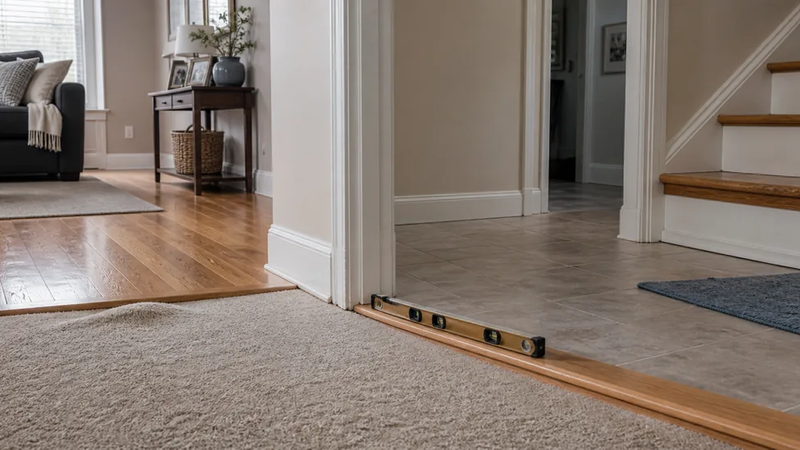
- doors or windows that are visibly out of square;
- uneven floors or corresponding interior cracks; and
- active water penetration or conditions that limit the view.
These observations can increase or reduce concern, but they do not substitute for structural analysis.
What a visual inspection cannot confirm
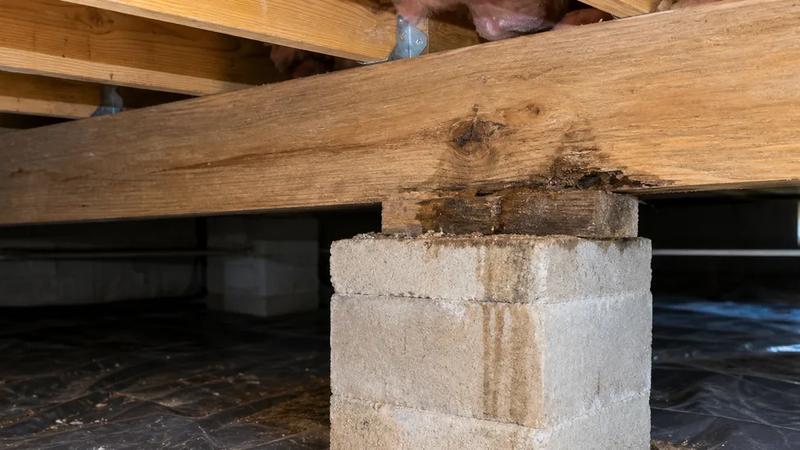
A home inspection reflects visible conditions on the inspection date. Finishes, insulation, stored belongings, soil, and inaccessible crawl spaces may conceal part of the foundation. The inspection generally does not determine footing dimensions, soil properties, hidden reinforcement, structural capacity, or how quickly a crack changed.
That means an inspector can document a crack and explain why its visible features matter without declaring the foundation structurally adequate. The same Ohio rule does not require engineering or architectural analysis or an opinion about structural-system adequacy.
Urgency and the next step
Prompt evaluation is reasonable when a crack has measurable displacement, accompanies bowing or leaning, appears with several movement indicators, admits active water, or is reported as changing. A structural engineer is the appropriate professional for structural conclusions; a qualified foundation or drainage specialist may address a clearly defined nonstructural condition.
When the finding is isolated and minor, the practical next step may be documentation and monitoring. Record its location and appearance, correct any identified water-management issue, and compare it over time. If the crack changes or related symptoms develop, seek a qualified evaluation rather than relying on appearance alone.