On this page
The most likely meaning
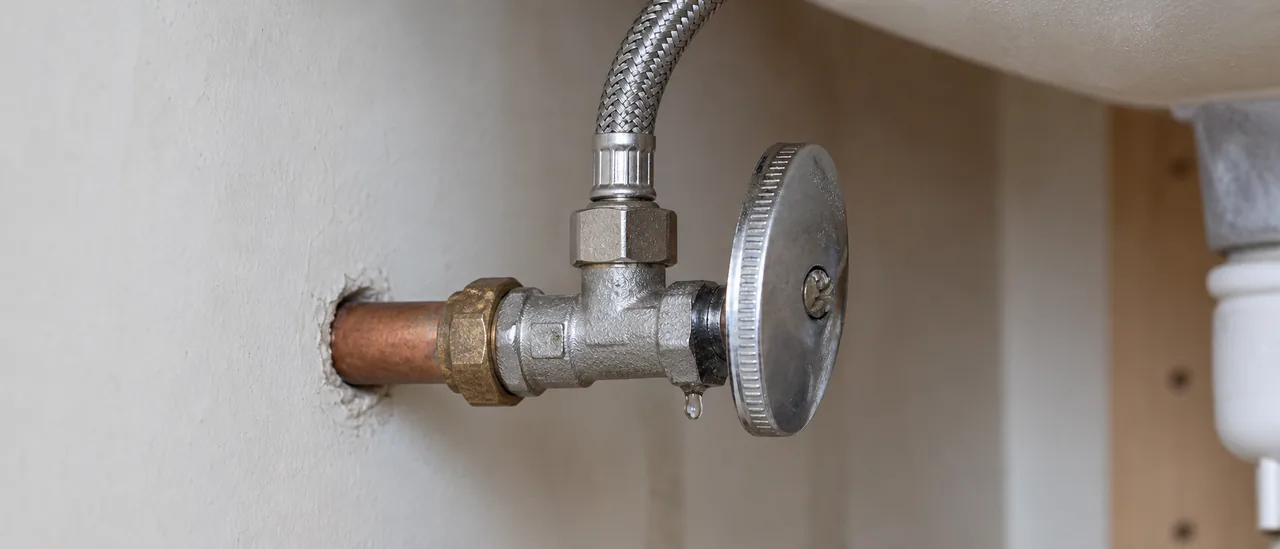
A leaking shutoff valve usually means water is escaping at the stem seal or a nearby connection. It is a localized valve defect, not proof that the entire plumbing system is failing.
The wet point matters. Moisture around the handle often points to the packing area beneath it. Water at a compression nut, threaded joint, or supply-tube connection suggests a connection leak instead. A cracked or corroded valve body is less routine and may require replacement.
City of Orem guidance identifies the packing nut as a primary source of main-shutoff leakage. It also notes that operating the valve can loosen packing and start a leak.
Other explanations to separate
Water can travel along a pipe before dripping from the valve, so the highest wet point may be elsewhere. Condensation on a cold supply line can also resemble a leak. Dry mineral residue or staining shows that moisture was present, but it does not establish whether water is still escaping.
These distinctions change the practical meaning:
| Observation | What it may indicate | What it does not confirm |
|---|---|---|
| Fresh bead at the stem | Packing or stem-seal leakage | Whether the valve closes completely |
| Wetness at a fitting | Loose, worn, or damaged connection | That the valve body itself is defective |
| Dry staining below the valve | Prior or intermittent moisture | An active leak during the inspection |
What the inspection can confirm
A home inspector can report visible dripping, dampness, staining, corrosion, and damage around an accessible valve. InterNACHI guidance specifically tells inspectors to look for leakage at the stem, packing washer, and packing nut, and for watermarks below the main shutoff.
A standard home inspection is visual and limited to accessible components. Under InterNACHI's Standard of Practice, inspectors identify the main water shutoff's location but are not required to operate shutoff or manual stop valves. Therefore, the report may confirm an external leak without proving that the valve will stop flow when closed.
Urgency and the practical next step
An active drip deserves timely correction because it can wet cabinets, walls, floors, or nearby equipment. Treat the issue as more urgent when flow is steady, materials are already damaged, the valve body is heavily corroded, or the leaking component is the home's main shutoff.
Do not force a stiff, corroded, or leaking valve during a transaction walkthrough. A qualified plumber can trace the exact wet point, determine whether adjustment, sealing work, or replacement is appropriate, and verify shutoff function after the correction. If the valve is dry and only old staining remains, the next step may simply be confirming whether the condition is active.