On this page
What the finding usually means
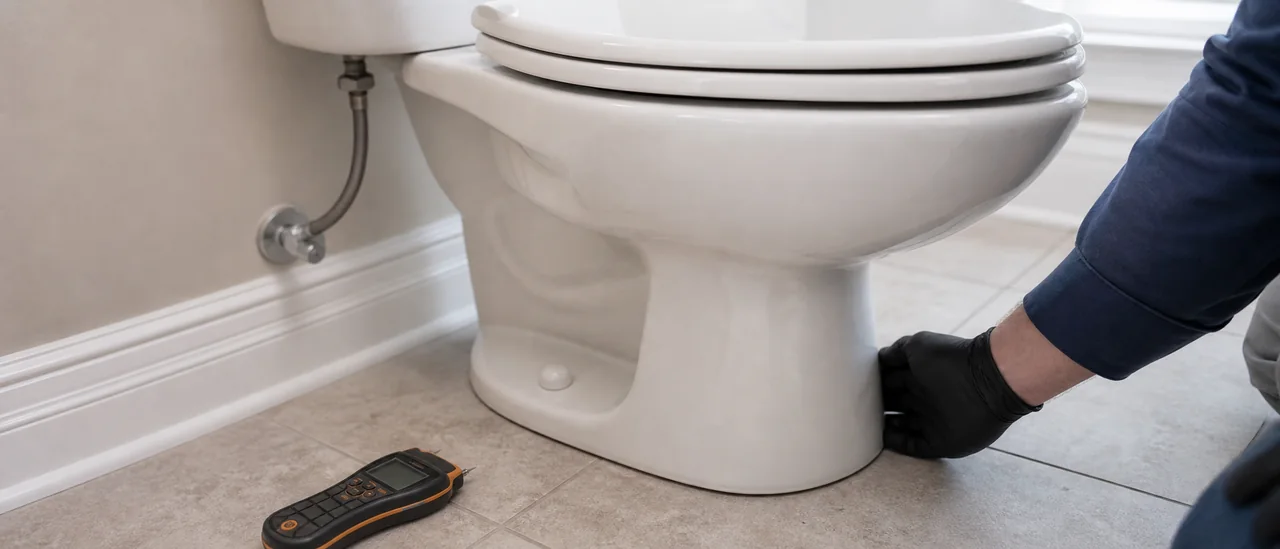
A loose toilet usually means the bowl is not firmly secured to the floor. The closet bolts may be loose, but movement can also indicate a damaged wax seal, a broken or corroded flange, or weakened flooring around the drain.
The finding does not automatically mean there is a major plumbing failure. It does mean the fixture can move when it should remain stable, so an inspector will normally report it for correction. InterNACHI’s standards specifically identify toilets with loose floor connections as needing correction.
Why the toilet may move
Several conditions can create the same rocking symptom:
- Loose or improperly installed closet bolts may no longer clamp the bowl securely.
- An uneven floor or poor installation may leave the toilet without solid support.
- A damaged flange may prevent the mounting bolts from holding properly.
- Repeated movement may compromise the seal between the toilet and drain.
- Past leakage may have softened wood subflooring, allowing the fixture to shift.
These possibilities range from a straightforward fastening problem to concealed moisture damage. The amount of movement alone does not identify which cause is present.
Loose does not prove leaking
A toilet can rock without visible water at the inspection. Conversely, staining, soft flooring, odor, or elevated moisture near the base can make a failed seal or past leakage more likely.
What an inspector can confirm
A home inspector typically flushes the toilet, observes its operation, checks for visible leakage, and evaluates whether the bowl is firmly connected to the floor. InterNACHI describes a home inspection as a visual examination of readily accessible systems, so this is not a destructive diagnosis.
Visible movement, damaged mounting hardware, moisture, staining, or deteriorated flooring can be documented. A moisture meter may help examine the surrounding floor for evidence of leakage. However, the wax seal, flange, and covered subfloor usually cannot be confirmed without removing the toilet or finishes.
That distinction matters. “Loose toilet” is an observed condition, not proof that a particular concealed component has failed.
Urgency and the practical next step
Prompt correction is sensible because continued rocking can stress the floor connection and may allow leakage into the floor. InterNACHI notes that a loose bowl can leak and contribute to decay in wood flooring.
Avoid simply overtightening the bolts. Porcelain can crack, and tightening will not repair a damaged flange, failed seal, or softened subfloor. Limit use if the toilet leaks, the floor feels soft, the bowl shifts substantially, or sewer odor is present. A qualified plumber can remove and reset the fixture, inspect the flange and seal, and identify whether flooring repair is also needed.