On this page
The most likely meaning
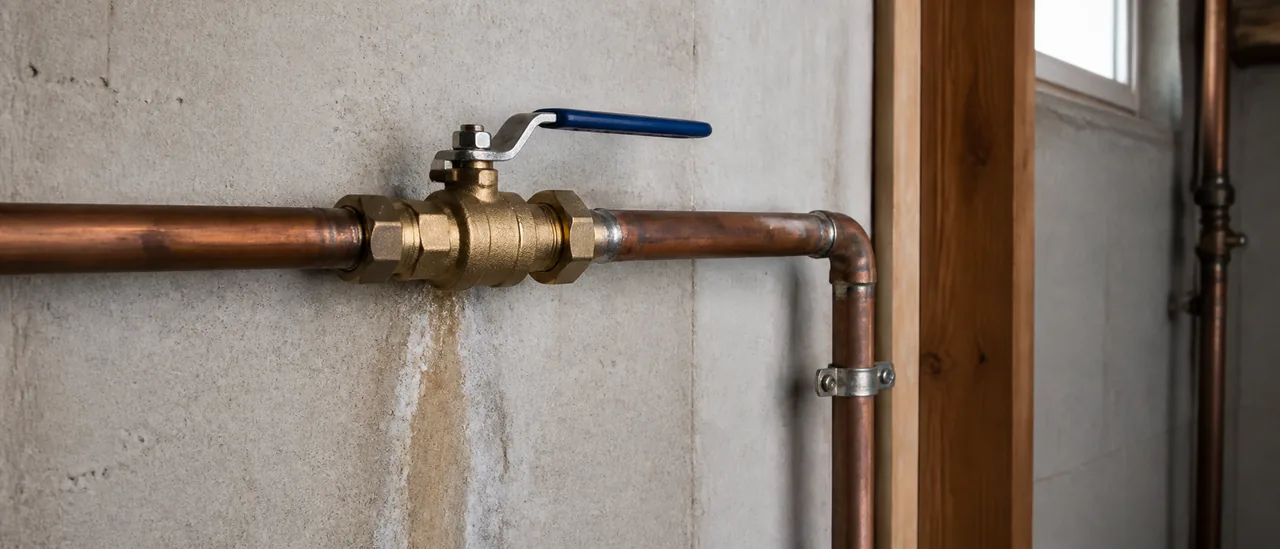
A main water shutoff problem usually means the inspector saw a visible defect or could not readily access the valve. Common findings include active seepage, a missing or damaged handle, heavy corrosion, or belongings blocking the approach.
That does not automatically mean the valve is inoperable. Surface corrosion or old water staining can look concerning without proving an active leak or internal failure. The report's exact wording should distinguish what was observed from what remains unknown.
The main shutoff sits between the incoming water service and the home's distribution piping. Because it is intended to isolate the home's water supply, poor access or obvious damage can make a future plumbing emergency harder to control.
Inspection does not necessarily mean operation
Inspecting a shutoff typically means locating it and examining visible, accessible parts. ASHI and InterNACHI standards do not require an inspector to turn shutoff valves, so a report may leave full closure unconfirmed.
Other plausible causes
Moisture at the valve may come from the stem, packing area, or a nearby connection. Dry mineral residue can mark an older seep that is not active during the inspection. Condensation or water from an adjacent pipe may also resemble valve leakage, so the moisture source matters.
A stiff-looking wheel, missing handle, or limited clearance raises practical concerns but does not reveal the internal condition. Likewise, corrosion describes visible deterioration; its depth and effect on operation may require closer evaluation.
How the issue is confirmed
A home inspector can identify the valve's location and document visible access, leakage, staining, corrosion, or damaged parts. The inspector may also explain why a valve was not inspected, such as stored items or an unsafe approach.
Visual examination cannot prove that the valve will close completely, reopen without leaking, or hold back water under service pressure. InterNACHI's standard specifically excludes operating any valve, while ASHI excludes operating shutoff and manual stop valves. Inspection scope can also vary with the applicable state standard and inspection agreement.
Confirmation may involve drying the area and checking whether moisture returns, then having a qualified plumber evaluate the valve. If operability must be established, the test should be planned so the water can still be controlled if the valve begins leaking or will not reopen.
Urgency and practical next step
Active leakage, severe damage, or no usable way to isolate the water deserves prompt plumbing evaluation. Those conditions can allow continued water loss or leave the home without a dependable emergency shutoff.
An accessible valve with only dry staining and no current leakage is generally less urgent, but the observation still warrants clarification. Review the inspection photo and comment before deciding what needs repair.
Do not force an unfamiliar or visibly deteriorated valve merely to test it. Ask a qualified plumber to confirm the source of moisture and the valve's condition when operation remains uncertain.