On this page
Most often, the access point was not found
A “missing cleanout” comment usually means the inspector could not locate a visible, accessible opening for servicing the drain or sewer line. It does not by itself prove that the sewer is damaged, blocked, or missing a required fitting.
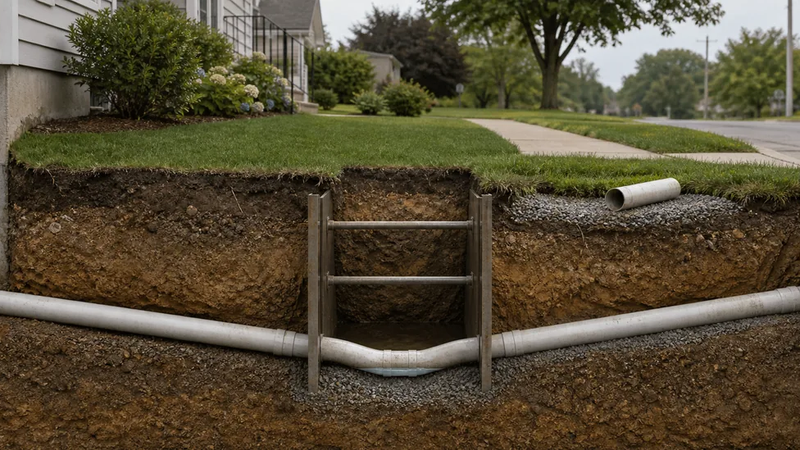
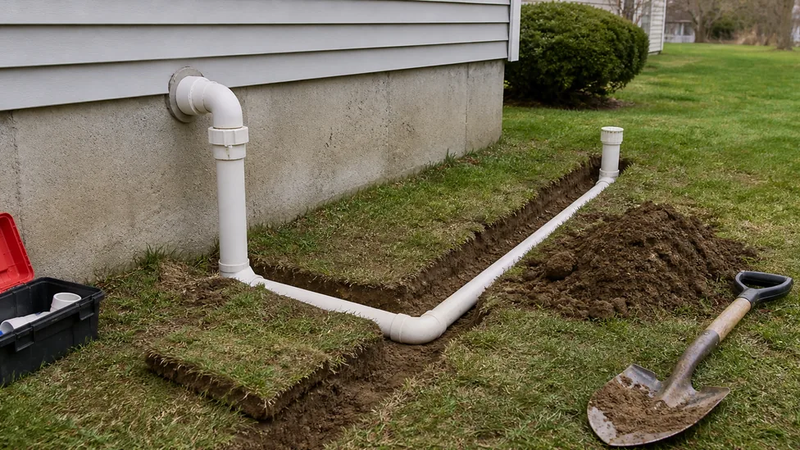
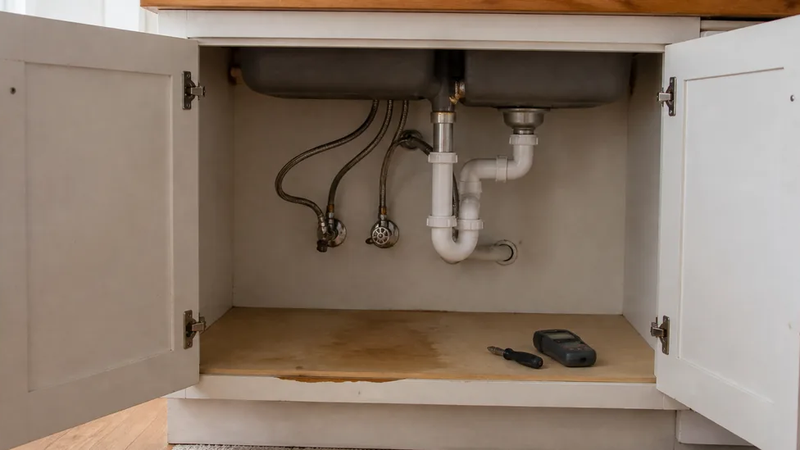
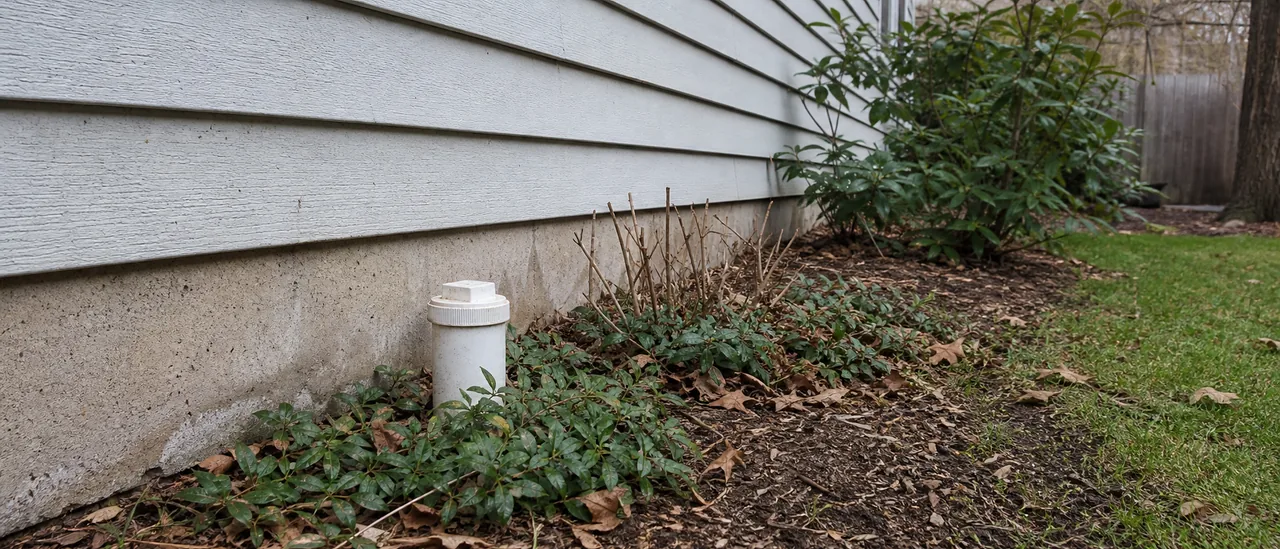
A cleanout is a capped opening that lets a plumber reach drainage piping to inspect or clear it. It may be near a stack, in a basement, at a foundation wall, or along the sewer lateral outside.
The report wording matters
“Not located” describes an inspection limitation. “Inaccessible” means an apparent cleanout could not be used. “Missing” suggests expected access was absent. None confirms the underground pipe’s condition.
Why a cleanout may not be visible
- soil, landscaping, flooring, carpet, or concrete may cover the opening;
- the cleanout may be indoors when the search focused outside, or vice versa;
- a remodel may have concealed access behind a finish without an access cover; or
- an older installation may genuinely have no suitable cleanout.
The City of Minneapolis notes that an unlocated sewer cleanout may be absent or buried beneath dirt, concrete, or carpet. A missing cap is a different finding: the opening exists, but its closure is absent or defective.
The report phrase alone does not establish a code violation. Required locations and access rules depend on the jurisdiction, construction or alteration date, and piping arrangement. Those details need property-specific review.
What the inspection can confirm
A standard home inspection is visual and limited to readily accessible components. ASHI’s standard includes interior drain, waste, and vent systems, while defining “readily accessible” to exclude dismantling, destructive measures, and moving personal property. Inspectors therefore do not excavate a yard or open finished walls to prove a cleanout is absent.
The inspection can document a visible fitting, damaged cap, obstruction, leakage, or concealed access. It cannot determine the condition of buried piping merely because no cleanout was found.
Urgency and next step
With normally draining fixtures and no leakage or backup evidence, an unlocated cleanout is generally an access concern—not an emergency. Clarify the report language and search likely locations without digging or removing finishes.
Prompt plumbing evaluation is more appropriate when drains are slow, multiple fixtures back up, sewage is escaping, the apparent cleanout is open or damaged, or the inspection found related drainage concerns. A qualified plumber can locate the lateral and accessible fittings, determine whether usable service access exists, and compare the installation with local requirements.