On this page
It usually means reliable hand support is unavailable
A missing or loose stair handrail usually means the stairway lacks dependable support for someone ascending, descending, or recovering from a misstep. It is primarily a safety and usability finding, not automatic proof that the stairs or house are structurally unsound.
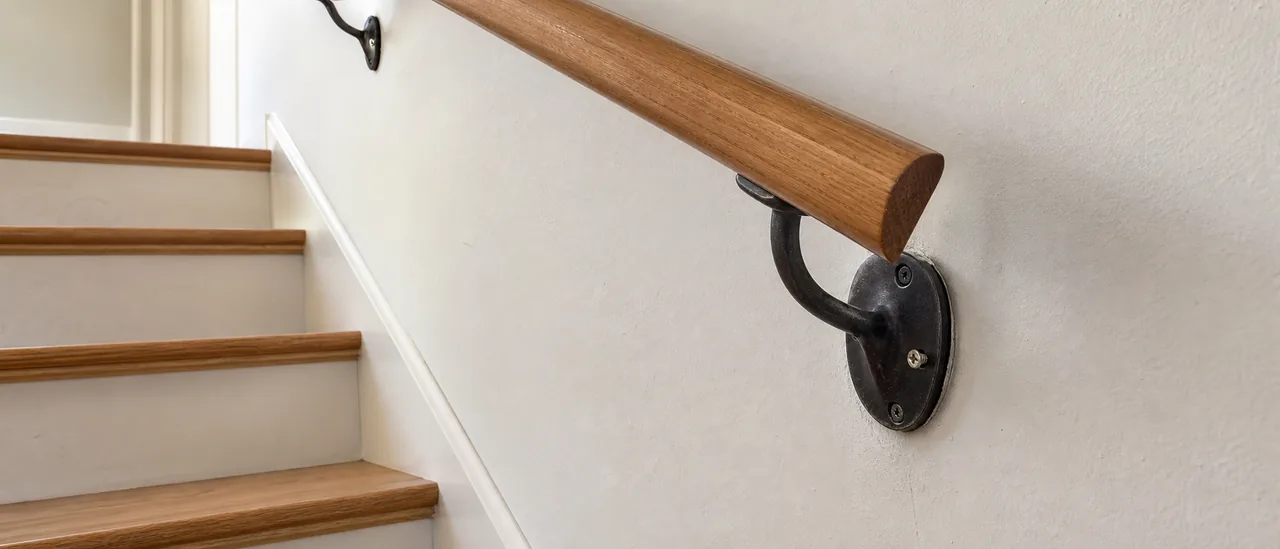
“Missing” generally means no usable handrail is installed where one is expected. “Loose” means the rail, bracket, post, or attachment moves enough that it may not provide reliable support.
Handrail and guard are not interchangeable terms
A handrail is shaped and positioned to be grasped. A guard helps prevent a fall from an open edge. One assembly can serve both functions, but a wide decorative guard cap may not provide a dependable handhold.
Common explanations range from simple to more involved
A handrail may have been omitted during construction, removed for moving furniture, or never reinstalled after remodeling. A loose rail often points to backed-out screws, failed anchors, split wood, a bracket attached only to finish material, or deterioration around an exterior mounting point.
Sometimes the visible rail is intact while its supporting post or stair framing moves. That broader movement deserves closer evaluation because tightening one screw may not correct the actual attachment problem.
What the inspection can confirm
Home-inspection standards commonly include visible, readily accessible stairs and handrails. The ASHI Standard of Practice, for example, includes associated railings at exterior steps and includes readily accessible, visually observable installed components in its general scope.
An inspector can document whether a rail is present, where movement occurs, and visible clues such as missing hardware, open joints, cracked wood, corrosion, or decay. Photographs and the report location help distinguish a localized loose bracket from movement involving a post or stair assembly.
The inspection does not normally establish concealed fastener length, hidden blocking, wall condition, or the exact cause without opening finishes or dismantling components. ASHI also states that its inspection is not technically exhaustive and does not require determining concealed conditions or the strength and adequacy of components.
Treat the finding as a prompt correction
Avoid relying on a loose handrail until it is secured. Limit stair use when practical if the rail shifts substantially, a guard moves with it, materials are visibly deteriorated, or the stairs serve children, older adults, or anyone with limited mobility.
A straightforward loose bracket may need only proper refastening into a sound mounting point. Missing rails, recurring looseness, damaged posts, or uncertain supporting material call for evaluation and repair by a qualified contractor familiar with stair and guard assemblies. Local requirements vary, so the repair should match the rules adopted for that home’s jurisdiction.