On this page
The most likely meaning
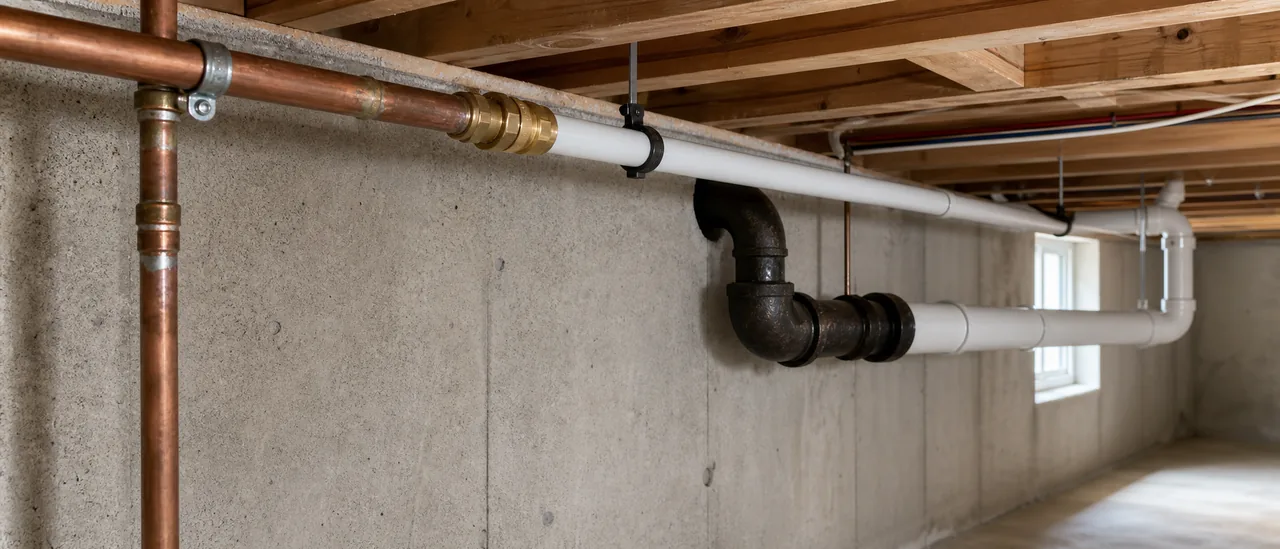
Mixed plumbing pipe materials usually mean that part of the system was installed or replaced at a different time. A house might have copper and plastic water lines, or cast iron and plastic drain piping. That combination alone does not prove a defect or require whole-house replacement.
What matters is where the materials change, how they are joined, and how the system performs. A tidy transition with the correct fitting and no leakage may simply document a repair or renovation. An improvised joint, active leak, heavy corrosion, poor support, or restricted drainage deserves more attention.
“Mixed materials” is a description, not a diagnosis
The report should identify the visible materials and explain any observed concern. Material variety by itself does not reveal installation date, code compliance, or remaining service life.
Why homes end up with several materials
Plumbing systems change over a building’s life. A localized leak repair may replace only the damaged section. A remodeled kitchen, added bathroom, new water heater, or replaced service line can introduce a newer material while sound piping remains.
Different systems may also use different materials intentionally. Water-supply, drain-waste-vent, and service piping perform different jobs. Therefore, seeing plastic drain pipe beside copper supply tubing is not the same as finding a questionable connection between unlike pipes within one run.
The more serious possibilities concern the transition itself or the condition nearby. Direct contact between metals with different activity can create galvanic corrosion. Connecticut public-health guidance notes that a dielectric coupling or fitting can eliminate direct contact between the metals.
How an inspector evaluates the finding
The inspector traces visible, readily accessible piping and records the materials. At transitions, the practical checks include:
- a fitting designed for the two pipe types and sizes;
- leakage, staining, mineral deposits, rust, or localized deterioration;
- adequate alignment, support, and protection; and
- fixture operation or drainage behavior during the inspection.
Standards vary by jurisdiction. North Carolina’s current rules, for example, require inspection of interior water-supply systems and description of supply piping materials. The rules define an inspection as a visual examination and exclude on-site water quantity and quality.
Visual evidence cannot confirm what is inside walls or below slabs. It also cannot establish every pipe’s age, internal condition, sizing, code status, or remaining life. Low flow, slow drainage, recurring leaks, or corrosion may justify targeted testing, but the visible mix alone cannot establish their cause.
Urgency and the next step
No leakage, deterioration, or poor performance usually makes mixed materials a documentation item rather than an emergency. Prompt action is appropriate for active leakage, significant corrosion, loose or unsupported piping, or drainage backup.
If the transition is concealed, improvised, deteriorated, or linked to performance problems, a qualified plumber can identify the fitting, expose the connection when justified, and recommend a repair scope. The goal is to evaluate the questionable transition—not assume every older pipe must be replaced.