On this page
A nitrate result points to dissolved contamination
Nitrates reported in well water mean a laboratory detected a dissolved nitrogen compound. The result does not, by itself, identify one source. Common possibilities include fertilizer, animal waste, septic or wastewater leakage, runoff, decaying plants, and local geology.
The concentration is the key detail. EPA’s drinking-water maximum contaminant level for nitrate is 10 milligrams per liter, measured as nitrogen. A result above that level is a health concern, not a minor plumbing observation.
Treat a result above 10 mg/L as urgent
Use a safe alternative supply for drinking and food preparation while the result and response are evaluated. EPA specifically says not to mix water above 10 mg/L nitrate with infant formula or food.
What the finding can—and cannot—tell you
Clear-looking water is not proof that nitrate is absent; confirmation requires a water test. A visual inspection may identify relevant risk factors, such as a damaged well cap, recent flooding, or a nearby septic area. Those observations cannot confirm nitrate, trace it to a particular source, or show that a treatment system is effective.
A standard home inspection may not include water testing at all. The American Society of Home Inspectors’ standard does not require inspectors to inspect wells or determine water quality. Scope also varies with the inspection agreement and applicable state rules, so the report should say whether a sample was collected and what analysis was ordered.
How the result is confirmed
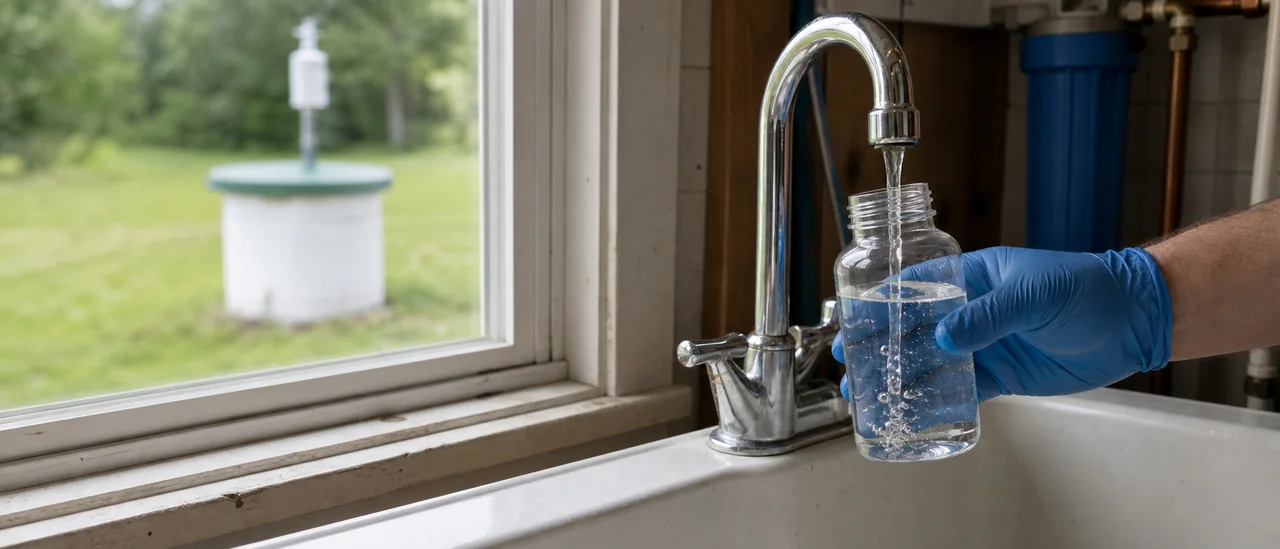
Confirmation requires a properly collected sample analyzed by a state-certified laboratory. Check whether the report expresses nitrate “as nitrogen” or uses another form, because units and reporting conventions affect comparison with a limit. The report should also identify the sampled tap, collection date, result, and laboratory.
If a screening test produced the finding, request confirmatory laboratory testing. CDC recommends annual private-well testing for nitrate and advises contacting the local health or environmental department about additional contaminants appropriate to the area. A high nitrate result may justify testing for bacteria or other locally relevant contaminants; it does not prove they are present.
Practical next step
For a result at or below 10 mg/L, ask the health department or qualified water professional whether the concentration, trend, well location, or household circumstances warrant follow-up. Repeat sampling may be appropriate after flooding, well work, or a change in nearby land use.
For a result above 10 mg/L, use safe water and obtain prompt guidance from the health department or a qualified well-water professional. Evaluation should address the result, possible contamination pathways, the well and septic layout, and any proposed treatment. The inspection finding is a reason to investigate—not proof that one visible defect caused the nitrate.