On this page
Most likely meaning
“Old plumbing supply lines” usually means the visible water piping is an older material or installation that deserves closer attention and future planning. Age alone does not prove the pipes leak, contaminate water, or need immediate replacement.
The practical meaning depends on material, present condition, and performance. An inspector may simply document older piping that appears serviceable. The same wording may also accompany corrosion, leakage, previous repairs, or weak flow at fixtures.
Supply line and service line are different terms
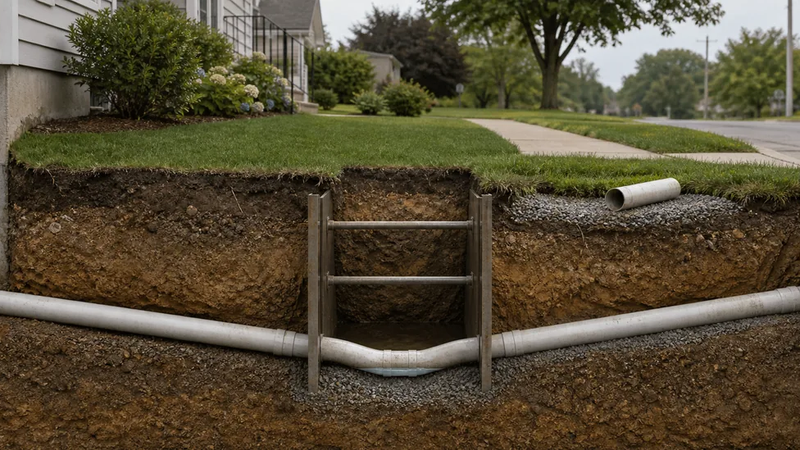
Interior supply or distribution piping carries water through the home. The service line connects the building to the water main or private supply. One may have been replaced while the other remains older.
What else the finding may reflect
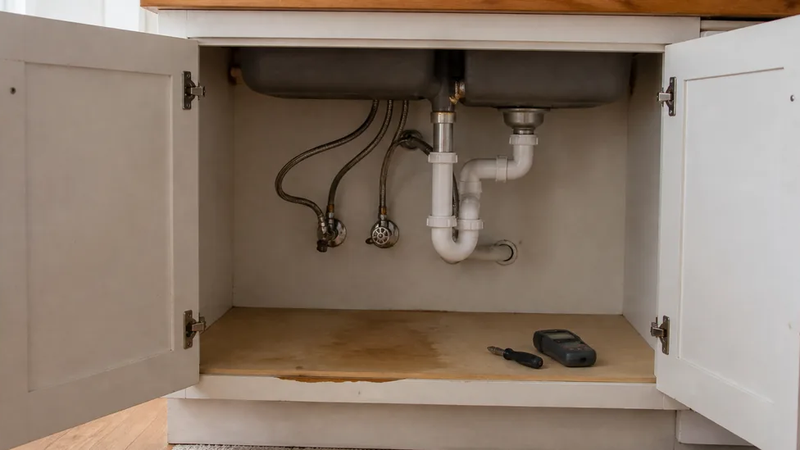
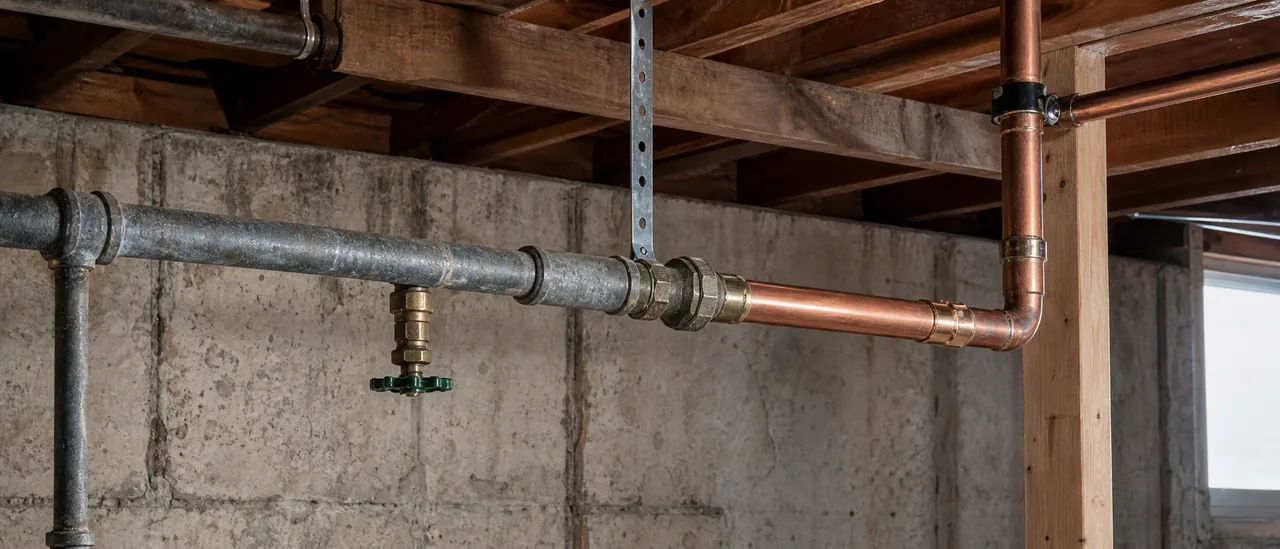
Read the complete report for the observation behind the age comment. Relevant visible clues include active drips, mineral deposits, rust, staining, damaged supports, or numerous transitions between piping materials. Reduced flow at one fixture may be a local faucet issue; similar weak flow at several fixtures can justify a broader plumbing check.
Older does not identify a material by itself. Paint, insulation, corrosion, and limited access can also make identification uncertain. A short visible section near a basement wall cannot establish what runs underground or behind finished walls.
Lead concerns require particular care. A lead service line is the pipe connecting the home to the water main, not a synonym for every old interior pipe. EPA advises contacting the water utility or a licensed plumber to determine whether that service line is lead; public water-system inventories may provide additional evidence.
How the issue is confirmed
Inspection rules vary by state and contract. Washington’s home-inspector rule, for example, covers visible supply lines, requires describing visible piping materials, and calls for operating fixtures to observe functional flow.
That rule excludes plumbing components that are not readily accessible and does not require determining whether water is potable. Accordingly, a normal home inspection cannot certify every pipe, prove water is lead-free, or predict remaining service life.
Confirmation may involve tracing accessible piping, reviewing utility or permit records, measuring pressure and flow, or performing appropriate water testing. These steps answer different questions; a water sample does not reveal the condition of every concealed pipe.
Urgency and practical next step
- Monitor and plan: Older material is reported without leakage, notable deterioration, or functional concern.
- Arrange prompt evaluation: Active leakage, heavy corrosion, repeated repairs, or broadly weak flow is present.
- Investigate an unknown: The service-line material, concealed distribution material, or water-quality concern affects a purchase decision.
A qualified plumber or the water utility can narrow the uncertainty when the report documents a defect or cannot identify important piping. The age label by itself is a reason to gather facts, not a replacement order.