On this page
What a sagging floor usually means
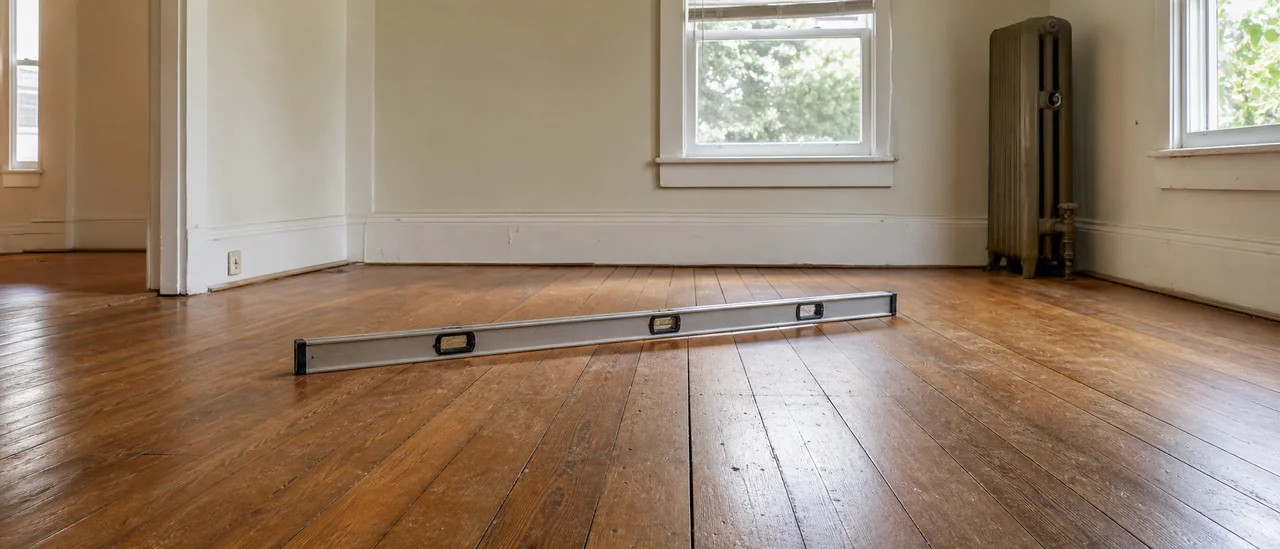
A sagging floor means the surface visibly dips, slopes, or feels out of level. It is an observation, not a diagnosis. The irregularity may be limited to finish materials, while a pronounced or uneven change may indicate deflection or movement in the support system.
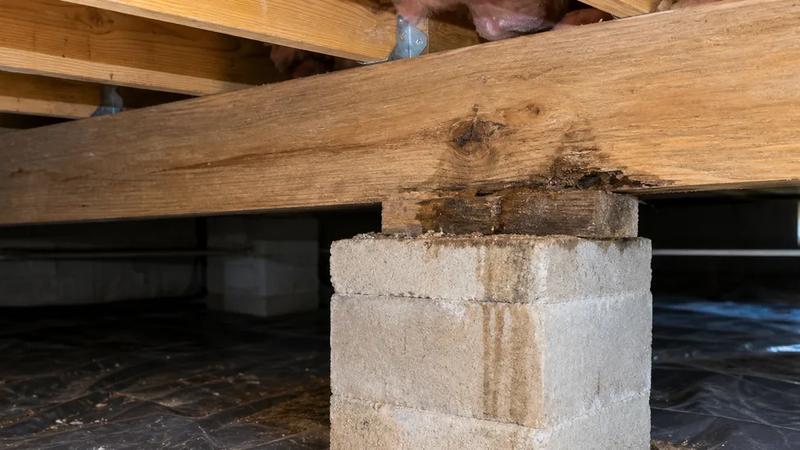
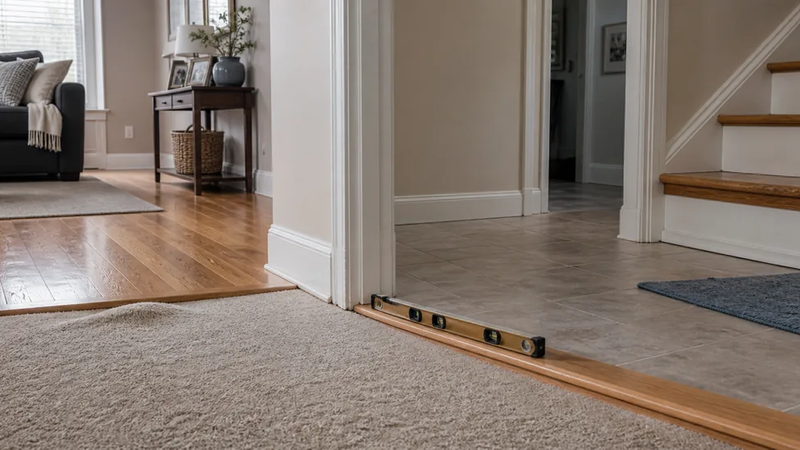
Possible causes include joist deflection, a problem at a beam, post, or bearing point, altered or damaged framing, moisture-related deterioration, or uneven foundation settlement. A finish-floor irregularity can also create a look-alike that does not reflect movement in the structure below.
What the report does—and does not—confirm
A standard home inspection identifies visible conditions in accessible areas. A note about sagging or unlevel flooring does not, by itself, establish the cause, calculate structural capacity, or predict future movement.
Related signs help narrow the possibilities
The pattern matters more than the word “sagging.” A localized dip near the middle of a room can point attention toward floor framing or a support below. A broader slope accompanied by foundation cracks, out-of-square door frames, or wall cracks raises concern about possible foundation movement. Those signs still do not prove settlement on their own.
Inspectors also look for conditions that change the level of concern, including:
- softness, unusual bounce, or a floor that has changed noticeably;
- cracked, cut, notched, or displaced framing below the area;
- leaning, missing, or poorly seated posts and beams; and
- active water penetration, staining, or visible deterioration near supports.
How the cause is confirmed
During a typical inspection, the inspector compares the floor pattern with visible conditions in the foundation, basement, crawl space, and structural framing. Accessible joists, beams, posts, bearing points, and signs of water are relevant. Finished ceilings, flooring, insulation, stored belongings, or an unsafe crawl space may block the most useful view.
Professional inspection standards are deliberately limited. They generally do not require an inspector to uncover concealed framing, determine the adequacy of joists or supports, or provide engineering analysis. The report should therefore distinguish observed evidence from a suspected cause and identify material access limitations.
How urgent is it?
Minor, stable sag in an older floor is not automatically an emergency. Urgency increases when the dip is substantial, appears recent or worsening, feels soft or unstable, or occurs with cracked framing, displaced supports, active moisture, or multiple signs of building movement.
When the cause or structural significance remains unclear, a qualified structural engineer can evaluate framing capacity, support conditions, and movement. The practical next step is to match the evaluation to the evidence—not assume that every uneven floor needs major repair, and not dismiss a cluster of warning signs as cosmetic.