On this page
Treat the problem as both physical and financial
Shared plumbing problems usually mean a leak, blockage, pressure issue, or aging pipe may extend beyond the unit being purchased. The problem is not automatically severe. A loose fixture connection can be local, while repeated backups, damaging leaks, or trouble along a common stack or supply riser can implicate other units and association-managed components.
For a buyer, the decision turns on four questions: what failed, how far it extends, who must repair it, and how the work will be funded. Do not assume that a pipe behind a unit wall is the owner’s responsibility—or that every concealed pipe belongs to the association. The declaration, bylaws, plats, state law, and sometimes the cause and location of damage control that answer.
“Shared” can describe different connections
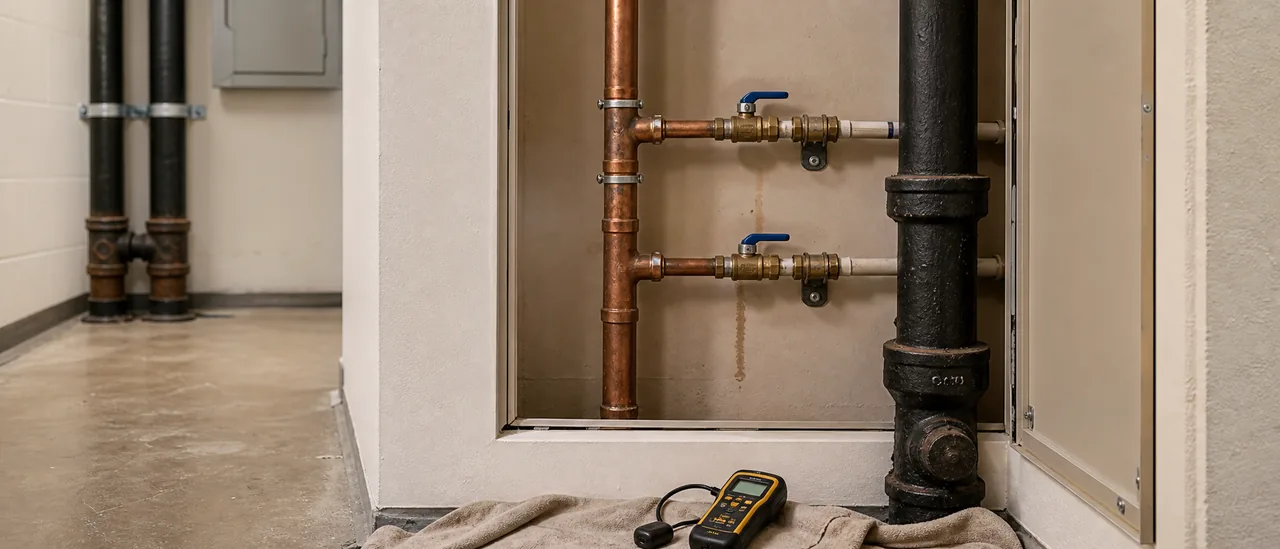
Units may share a vertical drain stack, water riser, main shutoff, sewer lateral, recirculation loop, or equipment room. Identifying the affected component is more useful than calling the entire plumbing system “shared.”
Signs that change the purchase risk
A one-time repaired leak with a documented cause, paid invoice, dry surrounding materials, and no recurrence presents a different decision from an unresolved building-wide pattern. Risk increases when records show repeated complaints on the same stack, sewage backups in several units, unrepaired water intrusion, inaccessible or deteriorated piping, open walls, mold assessment, litigation, or a repair project without a settled scope and budget.
A standard home inspection still matters, but its reach is limited. InterNACHI’s standard covers accessible interior supply, fixtures, drainage, waste and vent components, and reporting observed active leaks. It does not make concealed common piping visible or settle legal responsibility. A plumber may need to perform targeted diagnostics authorized by the seller or association.
Ask whether the apparent symptom could have a minor unit-level explanation. Slow drainage at one sink may involve that fixture’s trap. Low flow at one faucet may involve its aerator. The same symptom at several fixtures or units supports a wider investigation, but it does not prove the cause by itself.
Connect repair responsibility to money
The ownership documents should define unit boundaries and maintenance obligations. Then compare those rules with board minutes, maintenance logs, current budgets, reserve information, insurance notices, engineering or plumbing reports, bids, contracts, and existing or proposed special assessments.
This review can reveal whether the association recognizes the problem, has chosen a repair, and has enough money to complete it. It can also expose disagreement about responsibility, unpaid assessments, or a temporary patch standing in for a larger project. As one jurisdiction-specific example, Illinois law entitles a prospective resale buyer, on demand, to specified association information including financial statements, anticipated capital expenditures, reserves, and pending lawsuits. Required disclosures differ by state.
Financing is a separate checkpoint. Fannie Mae explains that project condition affects all owners because condominium owners have shared financial obligations. Its project review materials identify critical repairs, material deficiencies, and significant deferred maintenance affecting safety, soundness, structural integrity, or habitability as matters that can make a project ineligible. Another loan program or lender may apply different requirements.
Make the contract decision from verified scope
Depending on the contract and local practice, a buyer may seek further investigation, a repair condition, seller payment of an assessment, a credit, an escrow arrangement, or withdrawal within an available contingency. None is automatically the best response. A credit can be inadequate when the association has not defined the project, and a completed unit repair may not resolve a shared-stack cause.
Before the transaction deadline, obtain a unit inspection and any authorized plumbing evaluation, then have the condominium documents and association records reviewed by the appropriate real-estate attorney or other qualified local adviser. Give the identified project condition and assessments to the lender for a written eligibility determination before relying on the purchase terms.