On this page
The most likely meaning
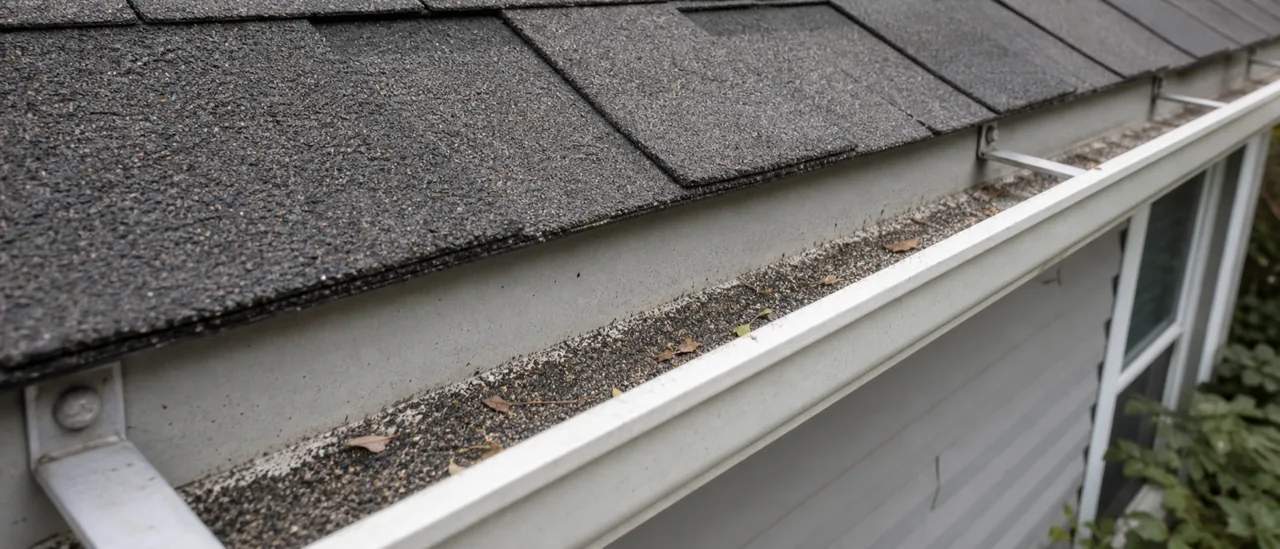
Shingle granules in gutters mean that mineral particles have separated from asphalt shingles and washed downslope. A light scattering is often normal, especially soon after installation. A heavy or recurring accumulation can indicate accelerated wear or damage, particularly when the roof also has bare patches.
Granules form the rough, colored surface of an asphalt shingle. They protect the underlying asphalt from sunlight and weathering, so the important question is not whether any granules are present. It is whether the amount and pattern fit the roof’s age and condition.
The gutter alone cannot diagnose the roof
Granules collect over time and may become noticeable only when a gutter is cleaned. Their presence does not identify when they came loose or prove hail damage.
Common minor and serious explanations
New shingles may release loose surface granules during handling and installation. Asphalt shingles are typically made with more granules than needed, so some early shedding can occur without establishing damage.
Older shingles gradually release granules through natural weathering. Wind, rain, foot traffic, and debris can also dislodge loose particles. More concerning possibilities include advanced aging, poor granule adhesion, concentrated abrasion, or impact from hail.
Hail is only one possible cause. IBHS identifies displaced granules as one way hail can affect asphalt shingles, but other conditions can resemble impact damage. Granules in a downspout after a storm therefore support a closer look; they do not confirm the cause by themselves.
How to confirm what is happening
Start with observations that do not require climbing:
- Compare the granule color with the roof surface.
- Note whether the roof is new or well into its service life.
- Look from the ground for dark or bare shingle areas, uneven color, cracks, curling, or missing pieces.
- After safely cleaning the gutter, watch whether a similar accumulation returns quickly.
- Consider timing, including recent installation, gutter-cleaning history, roof work, or severe weather.
Confirmation requires evaluating the shingles themselves, not counting granules in isolation. A qualified inspector can examine whether loss is widespread or localized, whether exposed asphalt is visible, and whether impact marks include bruising, cracking, or other physical change. That distinction matters because surface shedding and functional damage are not the same finding.
Urgency and next step
A small amount from a recently installed roof, with no bare areas or leaks, is usually a monitor-and-recheck issue. Arrange evaluation when granules build up repeatedly, loss appears concentrated, shingles show exposed asphalt or cracking, or the condition follows severe weather.
Active leaking, missing shingles, or visible openings deserve prompt attention. Stay off the roof: loose granules can reduce footing, and a ground observation cannot establish whether the roof remains watertight.