On this page
What a soft spot usually means
A soft spot means part of the floor flexes, sinks, or feels less firm underfoot than the surrounding area. It often points to a localized problem in the finish flooring or subfloor, but the sensation alone does not prove structural failure.
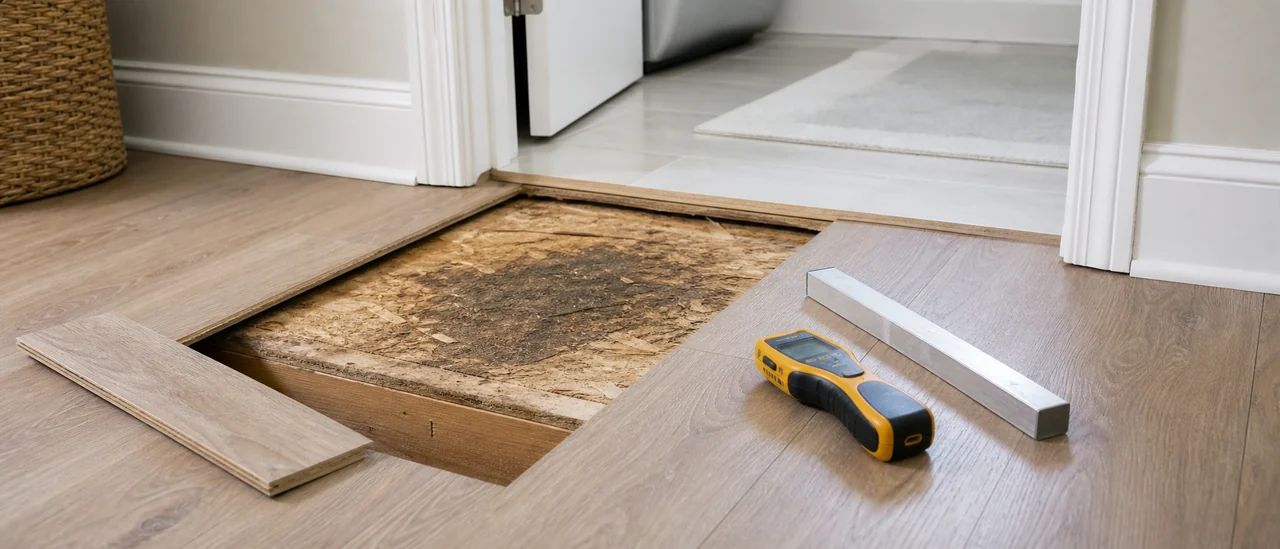
Moisture is a common concern, especially near toilets, tubs, exterior doors, dishwashers, or past leaks. Repeated wetting can deform or deteriorate moisture-sensitive sheathing. The EPA warns that uncontrolled indoor moisture can damage building structure and finish materials, including floors.
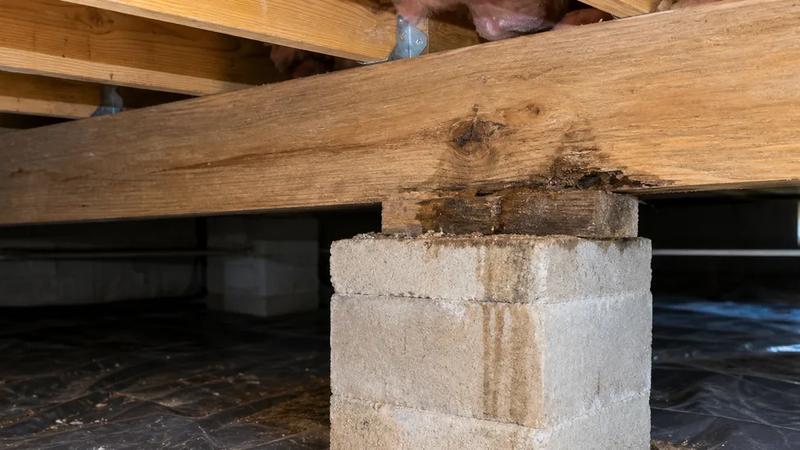
Other possibilities include a loose floor covering, poorly supported subfloor edges, wide framing spans, a damaged joist, or movement at a beam or support. A cushioned floor finish or underlayment can also feel soft while the structure below remains sound.
| Pattern noticed | Plausible explanation | Useful follow-up |
|---|---|---|
| Small area beside plumbing | Leak-damaged finish or subfloor | Check for active moisture and view below if accessible |
| Broad, even springiness | Flexible finish assembly or framing movement | Compare nearby areas and inspect supports below |
| Softness with staining or sagging | Ongoing or previous moisture damage | Trace the moisture source and assess affected materials |
| Softness with shifted supports or cracked framing | Floor-system damage or movement | Obtain a qualified structural evaluation |
These patterns narrow the questions; they are not diagnoses.
What the home inspection can confirm
A home inspector can walk accessible areas, compare the response underfoot, look for staining or distortion, and inspect visible floor framing from a basement or crawl space. The report may document the location, related observations, access limitations, and a recommendation for further evaluation.
The inspection remains visual and non-invasive. InterNACHI’s standard says a home inspection does not identify concealed defects or require the inspector to determine a condition’s cause. ASHI’s standard includes the foundation, framing, and floor structure, but does not require engineering analysis or an opinion about structural adequacy.
“Soft” describes an observation, not a cause
Flooring can hide the subfloor and framing. Confirming the cause may require moisture measurements, access from below, removal of finishes, or analysis beyond a standard home inspection.
How urgent is it?
Prompt follow-up is appropriate when the area is worsening, damp, stained, near an active leak, or accompanied by sagging, cracked framing, shifted supports, or a noticeable change in floor level. Limit heavy loads and avoid opening finishes until the affected area and utilities are understood.
A small, unchanged area without moisture or visible framing damage may be less urgent, but it still belongs in the inspection record. The practical next step is to identify the affected layer and rule out active water. A qualified flooring contractor may evaluate a finish-layer issue; suspected framing or support damage may call for a structural engineer or another appropriately qualified specialist.