On this page
It usually means the protective separation needs attention
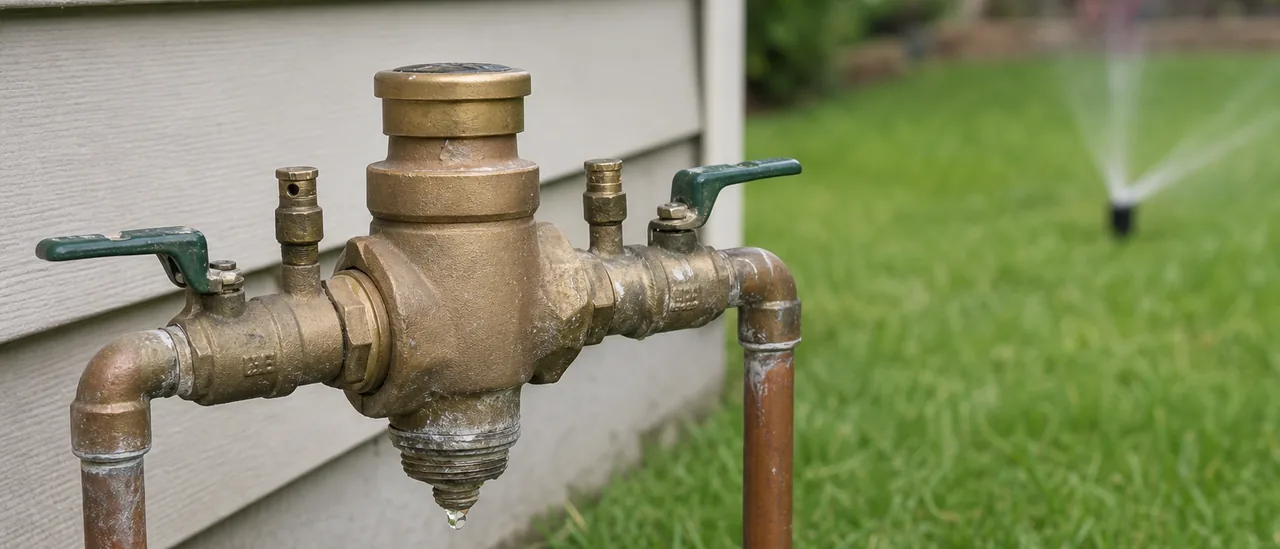
A sprinkler backflow finding usually means the inspector saw a problem with the device or arrangement intended to keep irrigation water from reversing into drinking-water piping. The note may describe a missing, damaged, leaking, inaccessible, or apparently incorrect assembly. It does not automatically mean contaminated water has entered the home.
Backflow is unintended reverse flow through a cross-connection. The Environmental Protection Agency identifies private irrigation systems as potential cross-connections and notes that requirements vary by state and municipality.
A defect is not proof of contamination
A visual finding shows that protection may be uncertain. Confirmed backflow or contamination requires evidence beyond appearance, such as an operational assembly test or water-quality investigation.
What the report wording may describe
Read the exact observation before judging severity. Common report language can point to different conditions:
- Missing or bypassed protection: The visible irrigation connection may lack the expected separation or assembly.
- Physical deterioration: Cracks, corrosion, loose fittings, or active leakage can indicate repair is needed before reliable operation is established.
- Freeze exposure: An above-ground assembly can be damaged in cold weather if it was not adequately protected or winterized.
- No current test evidence: A missing or expired tag is a documentation gap, not a failed test by itself.
- System not operated: Seasonal shutdown, inaccessible controls, or inspection limits may prevent any functional conclusion.
Local rules determine the required assembly type, testing interval, and who may perform testing. Austin Water, for example, requires operational-effectiveness testing by a licensed, registered tester in its service area. That local example should not be treated as a nationwide rule.
How the condition is confirmed
A standard home inspection may not settle the question. The American Society of Home Inspectors’ current standard describes home inspection as visual and excludes landscape irrigation systems from its required plumbing scope. An inspector may still report a visible concern or follow stricter state requirements.
Confirmation begins by identifying what was actually observed and whether the inspection agreement included irrigation. A qualified backflow tester can then verify the assembly type, installation condition, and operation with approved test methods. A passing test report is stronger evidence than an intact-looking housing; concealed irrigation piping still remains outside a visual inspection.
How urgent is the next step?
Active leakage, a visibly broken or bypassed assembly, or an irrigation system about to return to service deserves prompt evaluation. Keep the irrigation system off until the protection is evaluated when the report identifies missing or seriously damaged protection. If drinking water develops unusual odor or discoloration, contact the water utility for immediate guidance; EPA lists those complaints among primary indicators of a possible backflow incident.
A weathered exterior or missing test tag, without leakage or operational evidence, is generally less urgent. Still, obtain the applicable local requirements and arrange qualified testing before relying on the system.