On this page
Most often, the area has been wet
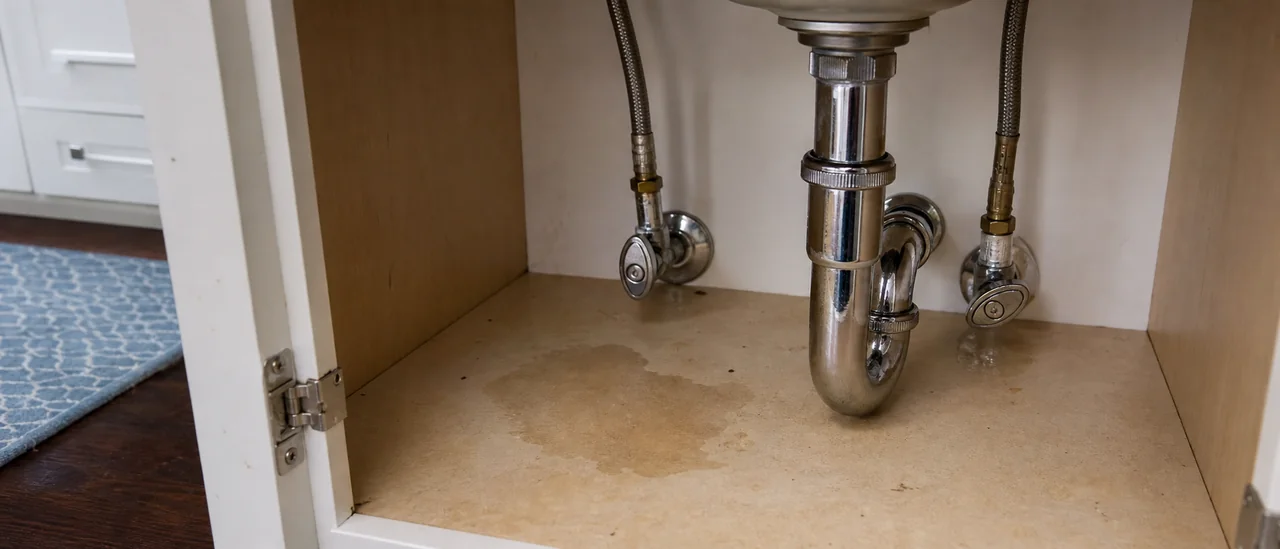
Water stains under a sink usually mean moisture reached the cabinet at some point. They do not, by themselves, prove that plumbing is leaking now. A dry, sharply bounded stain may remain after an old repair or spill; dampness, swelling, softness, or fresh droplets make an active problem more likely.
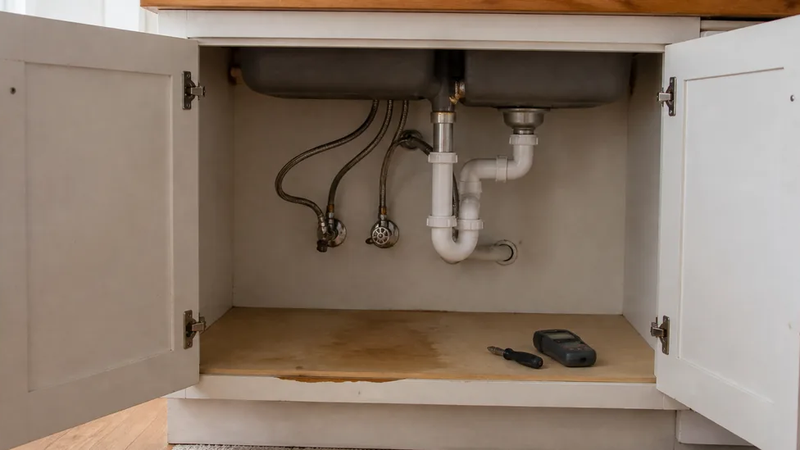
The location offers useful clues. A mark directly below a supply valve or flexible connector points attention to pressurized-water fittings. Staining beneath the trap or drain joints may appear only while the basin drains. Water can also travel from the faucet base, sprayer hose, disposer, dishwasher connection, filter, or countertop before collecting at the cabinet's lowest point.
Not every mark began with failed plumbing. Stored cleaning bottles, a wet sponge, an overflowing basin, or condensation on a cold pipe can produce a similar-looking stain.
A stain is evidence, not a diagnosis
Color and shape cannot establish the source, timing, or severity. The useful distinction is whether the area is currently wet, changes when fixtures operate, or shows lasting material damage.
How an inspector checks the condition
Inspection scope depends on the governing standard and agreement. As one state example, Virginia requires reporting on readily accessible plumbing and readily observable defects, including supply lines, fixtures, faucets, and drainage systems. An inspector may operate the sink normally, watch visible joints, feel for dampness, and compare the stain with the plumbing above it. EPA WaterSense likewise recommends looking under sinks for leaks at pipe connections, puddling, and other water spots.
Repeated operation may expose a drain or faucet leak that was dry when first viewed. However, a short test cannot reproduce every intermittent condition or establish what is happening behind the cabinet or wall.
Inspection access matters. Stored items can hide the cabinet floor or plumbing, so the report should identify important limitations. Virginia's rules, for example, require an explanation when a component or system cannot be inspected. A stain cannot visually confirm a concealed leak, hidden material damage, or mold; those questions require evidence beyond color alone.
Urgency and the practical next step
Use the observed condition to set the response:
- Active dripping, wet cabinet material, or spreading damage: stop using the fixture if operation worsens the leak, contain the water, and arrange prompt plumbing evaluation.
- Dry stain with no leak reproduced: ask whether a repair occurred, document the area, and monitor it after normal sink use.
- Soft, swollen, delaminated, or musty material: investigate the moisture source and the extent of affected material, even if the surface is dry today.
Prompt drying matters because continued moisture can damage absorbent cabinet materials and support mold growth. EPA advises fixing the water problem and drying water-damaged areas within 24 to 48 hours. When the source remains uncertain, a qualified plumber can test accessible connections and determine whether opening concealed areas is justified.