On this page
The tank may not be maintaining a usable air cushion
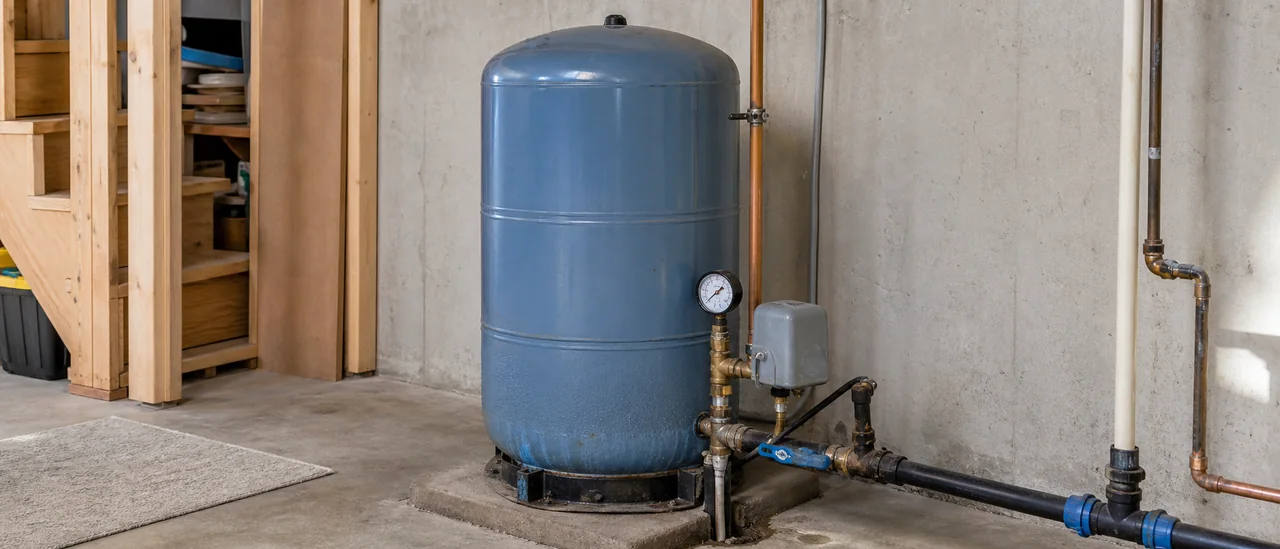
A reported well pressure tank problem most often means the system is losing steady pressure or making the pump start too frequently. A lost air charge or failed internal bladder can reduce the tank’s usable drawdown, causing rapid on-off operation known as short cycling.
That does not automatically mean the well itself is failing. Similar symptoms can come from an incorrectly set or defective pressure switch, a misleading gauge, leaking piping, a check-valve problem, an undersized tank, pump trouble, or low well yield.
The report describes a symptom, not a complete diagnosis
A wet tank exterior may be condensation rather than a leak, while a normal-looking tank may still have an air-charge or bladder problem. The inspector’s observations and test conditions matter.
What a home inspection can reveal
An inspector may observe corrosion, leakage, damaged wiring, an unstable tank, an abnormal gauge reading, or unusually frequent pump cycling while fixtures run. Weak or fluctuating flow at faucets can provide another clue.
However, inspection scope varies. InterNACHI’s general home-inspection standard excludes inspection of water-storage tanks, pressure pumps, and bladder tanks. An inspector may report visible or functional concerns without opening the tank, dismantling controls, measuring well yield, or determining the exact failure.
Read the inspection agreement and report together. A dedicated well-system inspection or local requirement may cover more than a standard home inspection.
How the cause is confirmed
A qualified well or plumbing specialist can compare the gauge reading with the pressure switch’s actual cut-in and cut-out operation. For a bladder tank, checking the air precharge requires following safe shutdown and manufacturer procedures. Washington State Department of Health guidance specifically directs turning off pump power or isolating the pressure tank before troubleshooting.
The same guidance notes that lost air can cause excessive pump cycling. That symptom alone does not identify which component is at fault. Electrical controls, piping, pump performance, and well supply may need separate checks when tank testing is normal.
Urgency and the practical next step
Active leakage, exposed or damaged electrical parts, a pump that will not stop, or loss of household water deserves prompt attention. Avoid removing a pressure-switch cover or adjusting a pressurized system unless qualified to do so.
Short cycling is also worth addressing soon. State well guidance explains that pressure tanks help prevent rapid starts and stops, so continued cycling can increase pump wear. A specialist should confirm whether the problem is the tank, controls, pump, piping, or water source before repairs are chosen.