On this page
A growing stain usually means moisture is still moving
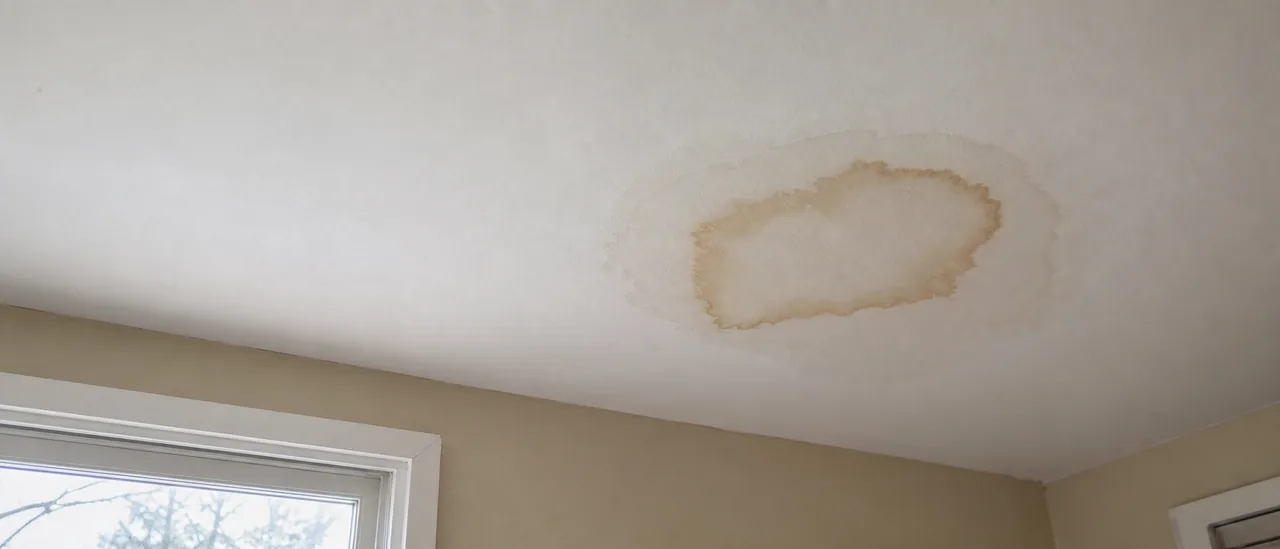
A ceiling stain that keeps enlarging usually indicates an active or recurring moisture source above the finished surface. The water may be entering now, returning during certain weather or appliance cycles, or spreading through porous drywall from a nearby wet area.
The stain’s edge does not identify the source by itself. Water can travel along framing, pipes, or the upper face of the ceiling before appearing away from the entry point. An old stain may also darken temporarily when humid conditions re-wet residue, but measurable growth still deserves investigation.
What may be feeding the stain
The likely cause depends on what is above the ceiling and when the outline changes:
- Rain or snowmelt: A roof covering, flashing, vent, wall transition, or drainage detail may admit water. A stain that grows after storms points toward the building exterior, but does not prove the roof is the source.
- Plumbing use: Supply, drain, tub, shower, toilet, or appliance leakage is more likely when growth follows use in the room above.
- Cooling equipment: A blocked condensate drain, overflowing pan, or sweating uninsulated duct or pipe can wet a ceiling during air-conditioning operation.
- Condensation: Warm, humid air can condense on a cold pipe, duct, roof deck, or poorly insulated surface. This may track with cold spells or humid weather instead of rainfall.
Stain color is not a diagnosis
Brown rings often mark where dissolved material dried at a wet edge. Dark spotting may be dirt or microbial growth. Neither appearance reliably identifies whether the water came from roofing, plumbing, or condensation.
How the cause is confirmed
Start with timing rather than paint color. Photograph the entire area with a dated size reference, then note rain, snowmelt, plumbing use, and heating or cooling operation. This can reveal a repeatable trigger without assuming causation.
A focused inspection traces the moisture path above the ceiling. Depending on access, that may include the attic, roof penetrations, plumbing fixtures, drain lines, air-conditioning equipment, ducts, and insulation. Moisture-meter readings can help compare damp and dry areas, but they do not identify the entry point on their own.
Painting over the mark only hides the symptom. The source must be corrected and the materials allowed to dry before the finish is repaired. Wet concealed areas also matter because mold can grow on hidden surfaces, including the back of drywall and the top of ceiling materials.
How urgent is it?
Arrange prompt evaluation when the stain is actively expanding, feels damp, drips, develops a musty odor, or returns after drying. Keep people and belongings away from a bulging or sagging section, which may hold water or have weakened material.
Even slow growth should not be treated as cosmetic. EPA guidance recommends fixing building-envelope and plumbing leaks quickly and drying wet areas within 24–48 hours to reduce the chance of mold growth. When the source cannot be safely seen from an accessible area, a qualified roof, plumbing, HVAC, or building-moisture professional should evaluate the system that best matches the timing and location.