On this page
What the finding usually means
A septic tank that has not been pumped recently most often indicates deferred or undocumented maintenance. It does not prove that the tank is full, the drainfield has failed, or repairs are needed.
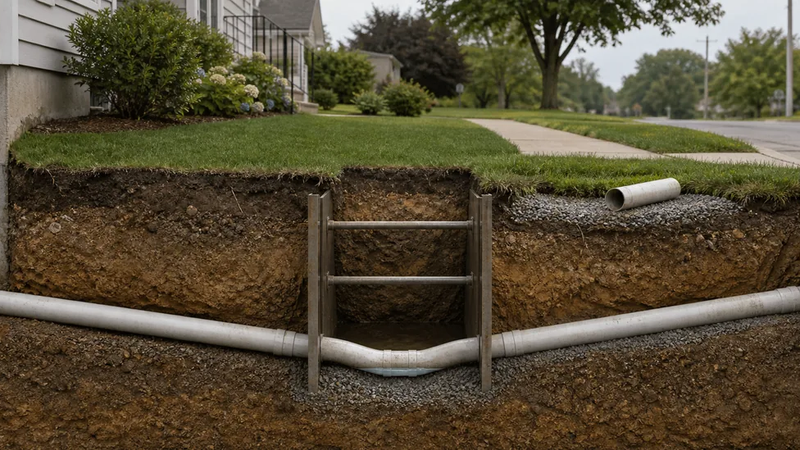
The concern is accumulated sludge and scum. If those layers become too deep, solids can move toward the outlet and drainfield. Yet time alone cannot show the current level. Pumping frequency depends on tank size, household size, wastewater volume, and solids entering the system.
Missing records are not the same as a defect
“Not pumped recently” may mean the seller has no receipt, the date is unknown, or service is overdue. The report should distinguish missing history from an observed malfunction.
What a home inspection can—and cannot—confirm
A general home inspector may identify wastewater backup, odors, standing water, or unusually wet ground near the drainfield. Those clues can justify further evaluation, but none determines sludge depth.
The American Society of Home Inspectors’ minimum Standard of Practice excludes septic and other sewage-disposal systems. An inspector may offer a separate septic service, but the report should say what was actually inspected.
A visual home inspection cannot confirm buried components, sludge depth, scum thickness, or drainfield performance when they were not specifically evaluated.
How pumping need is confirmed
A septic-specific evaluation starts with available pumping and maintenance records. System type, age, occupancy history, and local requirements provide context.
EPA guidance says a service professional examines the tank for leaks and measures its sludge and scum layers. EPA recommends pumping when the bottom of the scum is within six inches of the outlet bottom, the sludge top is within 12 inches of the outlet, or sludge and scum exceed 25% of the liquid depth.
A septic inspection may also examine:
- the tank, inlet, outlet, and accessible baffles;
- evidence of leakage or past backup;
- the distribution box and drain-line flow; and
- the drainfield for surfacing wastewater.
These checks help separate routine pumping from damaged components or a drainfield concern. Pumping alone does not prove the rest of the system works properly.
Urgency and next step
Without backup, sewage odor, surfacing wastewater, or saturated ground, an unknown pump date is usually an evaluation issue—not proof of an emergency. Arrange a qualified septic evaluation when records are absent or service appears overdue.
Active backup or wastewater at the surface deserves prompt attention and limited water use until a qualified professional evaluates the cause. Never enter a septic tank; its gases and confined space are hazardous.