On this page
It means the inspector observed evidence of unwanted moisture
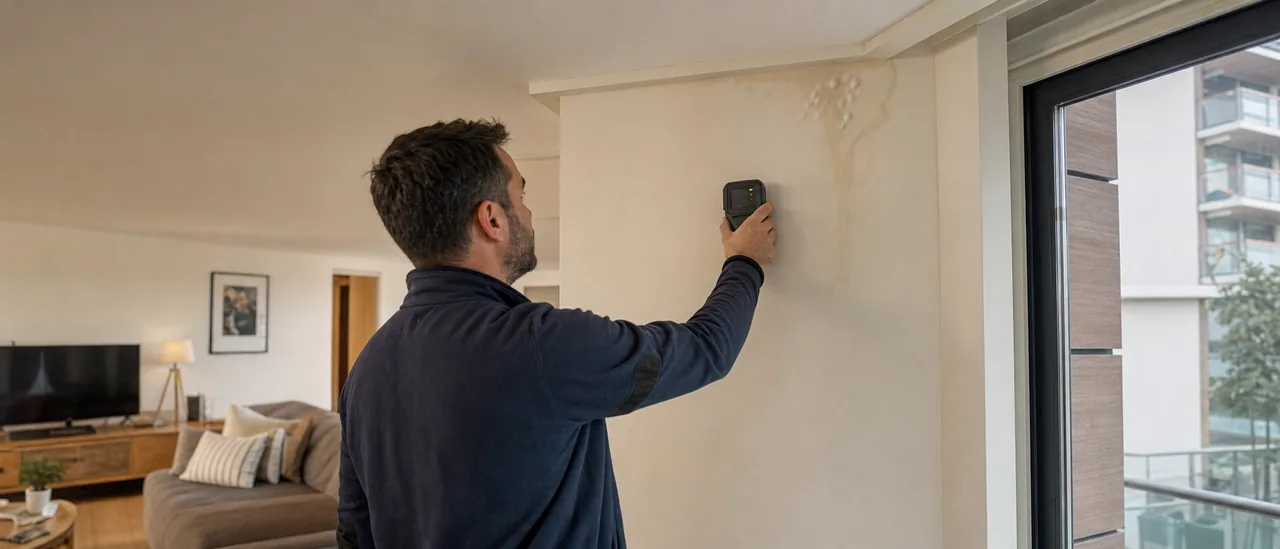
“Water damage” usually means visible staining, swelling, peeling finishes, softened material, corrosion, or another condition consistent with past or present moisture. It does not automatically mean an active leak, mold, structural failure, or an expensive repair.
The important questions are whether the area is currently wet, where the water originated, and what materials were affected. A small, dry stain from a repaired overflow has different implications from damp drywall beneath an operating plumbing line.
A stain is evidence, not a diagnosis
Color and shape alone cannot reliably identify the source, age, or hidden extent of water damage. The report wording, photographs, moisture observations, and surrounding conditions matter more than the label.
Several sources can create similar evidence
In a condo, moisture may come from a supply or drain leak, an overflowing fixture, an exterior wall or window, roof drainage, condensation, or water from the unit above. Old paint, repaired drywall, and ordinary surface discoloration can also resemble a water stain.
Location narrows the possibilities but rarely proves one. A ceiling mark below a bathroom may suggest plumbing, yet water can travel along framing before appearing. Damage beside an exterior opening may reflect failed sealant, flashing, condensation, or a leak that was already corrected.
Condo boundaries add another layer. The affected finish may be inside the unit while the source is in a shared roof, wall, pipe, or neighboring unit. Governing documents and further investigation—not the stain itself—determine who controls the component.
A standard inspection has limits
A general home inspection is visual and non-invasive. Exact requirements vary by jurisdiction and agreement. For example, Washington defines the purpose as assessing conditions at the inspection time through visual observations, simple tools, and normal controls. Its standard says the inspection is not technically exhaustive and does not identify concealed conditions or latent defects.
An inspector may note whether a surface feels damp, whether staining appears recent, or whether plumbing operation reveals leakage. Some inspectors use a moisture meter or infrared camera as an added tool. Those readings can help target further investigation, but they do not see through walls or identify the source by themselves.
Match the next step to the urgency
Treat active dripping, standing water, wet electrical components, sagging material, or rapidly spreading stains as urgent. Avoid touching wet electrical equipment and notify the appropriate unit owner or building contact immediately.
For dry, stable evidence, obtain the report photos and ask what was observed, tested, inaccessible, and recommended. Then review repair records and relevant association documents. A qualified plumber, building-envelope specialist, or other appropriate professional may need to trace the source and assess concealed materials.
Water-damaged materials should not remain wet. The EPA advises drying affected areas and items within 24–48 hours to help prevent mold growth. Promptly stop active water, define the affected area, and verify drying rather than assuming a repainted surface solved the problem.