On this page
What the finding usually means
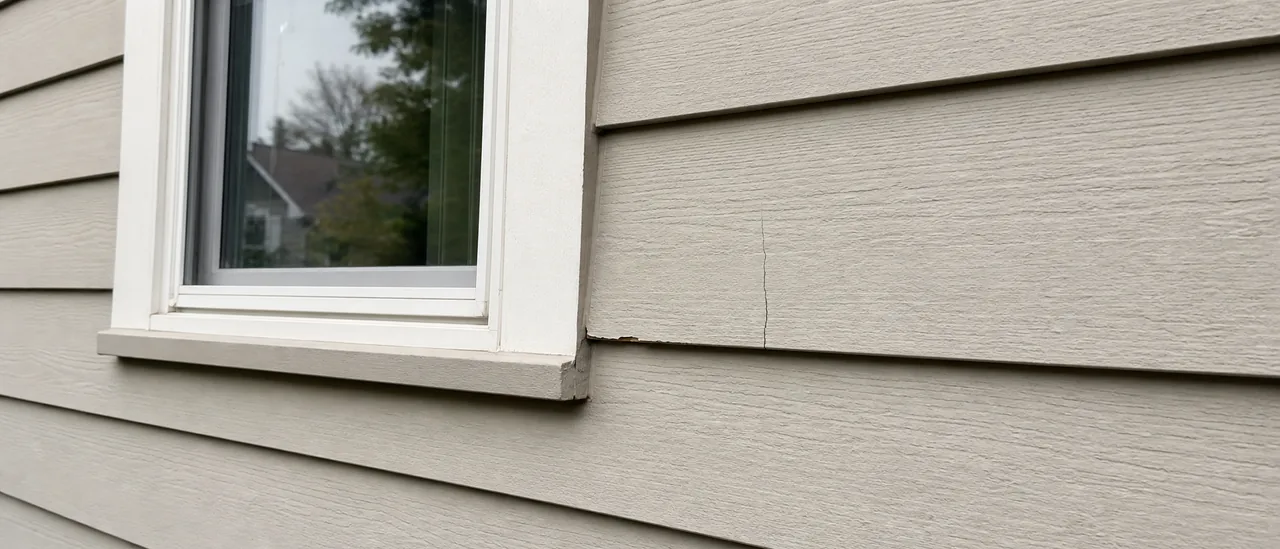
“Damaged exterior siding” usually means the inspector saw wall cladding that was cracked, loose, missing, warped, deteriorated, or otherwise no longer intact. The wording describes an observed condition, not a confirmed cause or a verdict on the entire wall.
Some findings are primarily cosmetic, such as a shallow scuff or localized finish wear. Open cracks, holes, displaced panels, soft material, or damage around windows and doors matter more because they may allow water behind the visible covering. The report’s photographs, location, extent, and recommendation provide more meaning than the label alone.
Damage is not the same as hidden wall failure
Siding is the visible outer covering of a layered wall assembly. A defect can raise concern about concealed materials without proving that the sheathing, weather barrier, insulation, or framing is damaged.
Plausible causes and look-alikes
The appearance may fit several explanations:
- Physical impact: a puncture, split, dent, or broken edge may follow contact with an object.
- Moisture exposure: cracking, warping, peeling paint, discoloration, rot, algae, or mold around openings can be signs of water damage beneath siding.
- Movement or attachment problems: buckling, gaps, or loose sections may reflect movement or a fastening detail that needs closer examination.
- Ordinary weathering: faded paint, minor surface checking, and isolated abrasions may affect appearance before they affect the wall’s weather protection.
These clues can overlap. A visual pattern alone rarely establishes when the condition developed or exactly what caused it.
How an inspector confirms the scope
A standard home inspection examines exterior wall coverings, while the exact scope follows the inspection agreement and applicable standard. InterNACHI’s detailed wall-cladding guidance limits the examination to readily accessible, visible portions. The inspector also considers flashing, trim, penetrations, windows, doors, grading, and drainage where those conditions could affect the building.
Confirmation usually means documenting the siding material, defect type, location, approximate extent, nearby water-entry clues, and any areas that could not be seen. It does not normally include removing siding or proving the condition of concealed moisture barriers. Even apparently minor exterior damage can therefore carry a recommendation for further evaluation when visible clues suggest a deeper issue.
Urgency and the practical next step
Treat missing pieces, open holes, actively loose siding, soft or decayed material, or damage accompanied by indoor dampness or staining as higher priority. Those conditions can leave the wall exposed or suggest ongoing moisture entry.
Minor finish wear without openings or moisture clues is usually less urgent, though it should be maintained and watched for change. If the report identifies possible hidden moisture, widespread deterioration, or uncertain attachment, a qualified siding or exterior-wall specialist can determine whether targeted testing or limited removal is justified. The inspection report should make clear what was observed, what remains unknown, and why any next step was recommended.