On this page
What the finding usually means
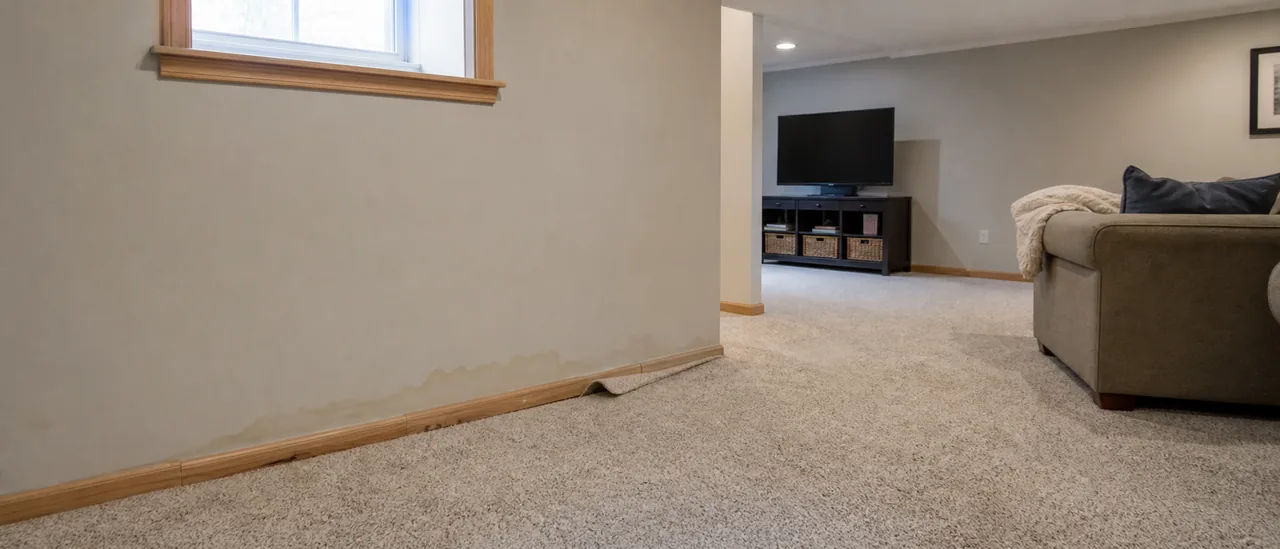
Finished basement water damage means the inspector saw evidence that drywall, trim, flooring, or another visible finish has been exposed to moisture. Stains, swollen baseboards, peeling paint, warped flooring, or musty odors may indicate a current leak or an older event that has dried.
The wording is a condition finding, not a diagnosis. It does not automatically mean the foundation is failing, mold is present, or the basement is actively flooding. A small plumbing spill may leave similar marks to recurring foundation seepage.
Finished walls reduce certainty
Drywall, paneling, insulation, and flooring can conceal the foundation and the back sides of damaged materials. A standard inspection cannot rule out hidden moisture merely because exposed surfaces feel dry.
Plausible sources of the water
Rainwater and groundwater can enter through foundation cracks, joints, or the slab edge. Poor grading, overflowing gutters, or downspouts discharging near the house can increase water near the foundation.
Other possibilities include a leaking supply or drain pipe, a failed appliance connection, window-well leakage, sump-system trouble, or condensation on cool basement surfaces. Warm, humid air can condense in a basement and resemble leakage, so the stain alone rarely identifies the pathway.
Useful clues include:
- damage concentrated below a window or plumbing fixture;
- a waterline or widespread low-level staining after a flood;
- deterioration along an exterior wall after rain; and
- dampness without a clear entry point during humid weather.
These patterns guide investigation, but none proves a cause by itself.
How the condition is confirmed
A home inspection is primarily visual and limited to readily accessible components. Under ASHI’s current Standard of Practice, inspectors are not required to use destructive methods or determine concealed conditions. Finished surfaces therefore limit what can be confirmed during the visit.
The inspector may compare visible damage with exterior grading, roof drainage, plumbing fixtures, a sump, and accessible foundation areas. Moisture-meter or infrared observations may help locate an area for further investigation, but readings need context and do not identify the source on their own.
Confirmation may require monitoring through rain or humid weather, plumbing testing, or selective opening by a qualified professional with the owner’s permission. The appropriate method depends on the suspected pathway.
Urgency and the practical next step
Active water, soft materials, electrical exposure, sewage, or continuing plumbing leakage deserves prompt attention. Otherwise, ask what was observed, where it appeared, whether it was damp at inspection, and which areas were concealed.
Do not treat fresh paint or a currently dry surface as proof that the issue is resolved. Before repairing finishes, identify and correct the moisture source. When the source, extent, or recurrence remains uncertain, a qualified moisture, foundation, drainage, plumbing, or indoor-environmental specialist can evaluate the relevant system.