On this page
The valve outlet is not safely routed
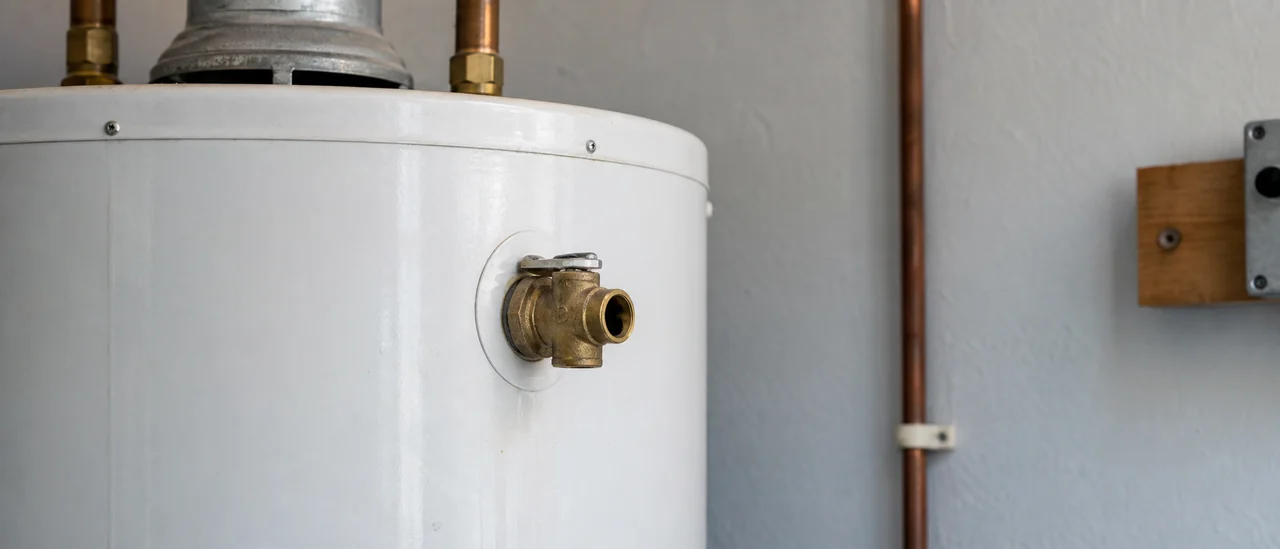
A missing TPR discharge pipe usually means the temperature-and-pressure relief valve has an exposed outlet. The valve may still be present, but nothing directs a release of very hot water away from people and the water heater.
The TPR valve is a safety device intended to relieve excessive temperature or pressure. The pipe does not make the valve open. Its job is to carry any discharge toward an appropriate, visible termination point.
This is more than a cosmetic omission. Plumbing rules typically address pipe size, gravity drainage, valves, traps, and termination. For example, Washington’s rules require discharge that avoids personal injury or structural damage. The exact requirements depend on the locally adopted code and the equipment instructions.
Do not test an exposed TPR outlet
ASHI’s standard does not require operating automatic safety controls. With no discharge pipe attached, manual operation could release hot water directly beside the heater. Leave testing and correction to a qualified plumber.
Why the pipe may be absent
The pipe may never have been installed, may have been removed during previous work, or may be missing after an incomplete water-heater replacement. The report wording alone cannot establish which explanation applies.
A nearby pipe is not necessarily the TPR discharge. Water-heater pan drains, condensate lines, and other plumbing can look similar. The relevant pipe must connect to the relief valve’s outlet and follow an acceptable route to its termination.
What the inspector can confirm
An inspector can visually locate the TPR valve, observe whether piping is attached, and examine accessible portions of the route. Depending on access, the inspector may also identify obvious concerns such as a cap, shutoff valve, upward run, reduction, or unsafe termination.
Visual inspection cannot confirm concealed piping, the valve’s internal condition, or whether it will open at its rated settings. It also does not prove that the tank has experienced overheating or excessive pressure. ASHI limits a standard inspection to readily accessible, visually observable systems and does not treat it as a code-compliance determination.
Urgency and next step
Treat the finding as a safety correction rather than evidence that the water heater is about to fail. Prompt evaluation is sensible because the missing pipe leaves no controlled route if the valve discharges.
Keep people and stored belongings clear of the valve outlet. If water is already releasing, the water is unusually hot, or the heater shows other abnormal behavior, avoid the area and seek qualified plumbing evaluation promptly. Otherwise, have a qualified plumber identify the applicable local requirements, assess the valve and heater, and install a compliant discharge route.