On this page
Most likely meaning
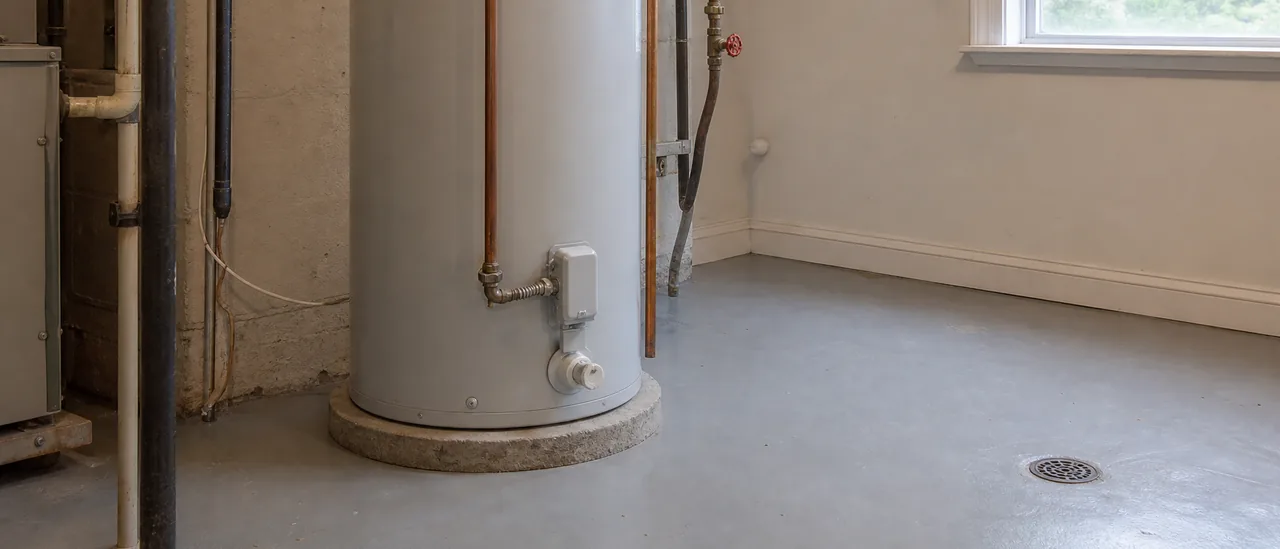
A missing water heater drain pan usually means there is no secondary container beneath a tank-type heater to catch limited leakage or condensate and direct it toward a safe discharge point. Inspectors commonly flag this when escaping water could damage finished floors, ceilings, walls, or stored belongings.
The finding does not by itself prove the heater is leaking, failing, or improperly installed under every local rule. A pan may not have been required when the heater was installed, and requirements vary by adopted code, local amendments, installation date, heater type, and location.
A pan is damage control, not a repair
A drain pan can collect small amounts of water and make leakage more noticeable. It does not stop a tank rupture, correct a plumbing leak, or replace the water heater’s temperature-and-pressure relief system.
Why the pan may be absent
The heater may be older than the applicable requirement, located where leakage is unlikely to damage the building, or installed before a finished space was created nearby. It is also possible that a replacement was completed without bringing this detail up to the current local standard.
Federal installation guidance calls for a code-compliant pan with a drain line where water leakage could damage the home. That is practical context, not a universal compliance verdict: the locally adopted code, amendments, and installation history control.
What an inspector can confirm
A standard home inspection covers visually observable, readily accessible water-heating equipment. The inspector can usually document whether a pan is visible, whether it appears large enough to sit beneath the tank, and whether a visible drain line is present. Accessible staining, corrosion, dampness, or active dripping may also be reported.
Visual inspection cannot reliably establish concealed drain routing, watertightness beneath the tank, past leakage, or compliance with every rule in effect on the installation date. Inspectors generally do not move the heater, open finished surfaces, or perform destructive testing.
Useful follow-up questions include:
- Is the heater above or beside materials that water could damage?
- Is there active moisture, corrosion, or staining around the tank?
- If a pan exists, does its drain terminate at an approved, observable location?
- Which locally adopted rule applied when the heater was installed or replaced?
Urgency and next step
Treat active leaking, spreading moisture, a soft or sagging surface, or water near electrical components as prompt concerns. Avoid standing in water or touching wet electrical equipment; shut off the affected utility only if that can be done safely.
When the area is dry, a missing pan is usually a correction-planning item rather than proof of an emergency. Ask the inspector what was visible and why the condition was reported. If damage potential, drain routing, or local requirements remain unclear, have a qualified plumber or the local building authority evaluate the installation before deciding on the correction.