On this page
What the finding usually means
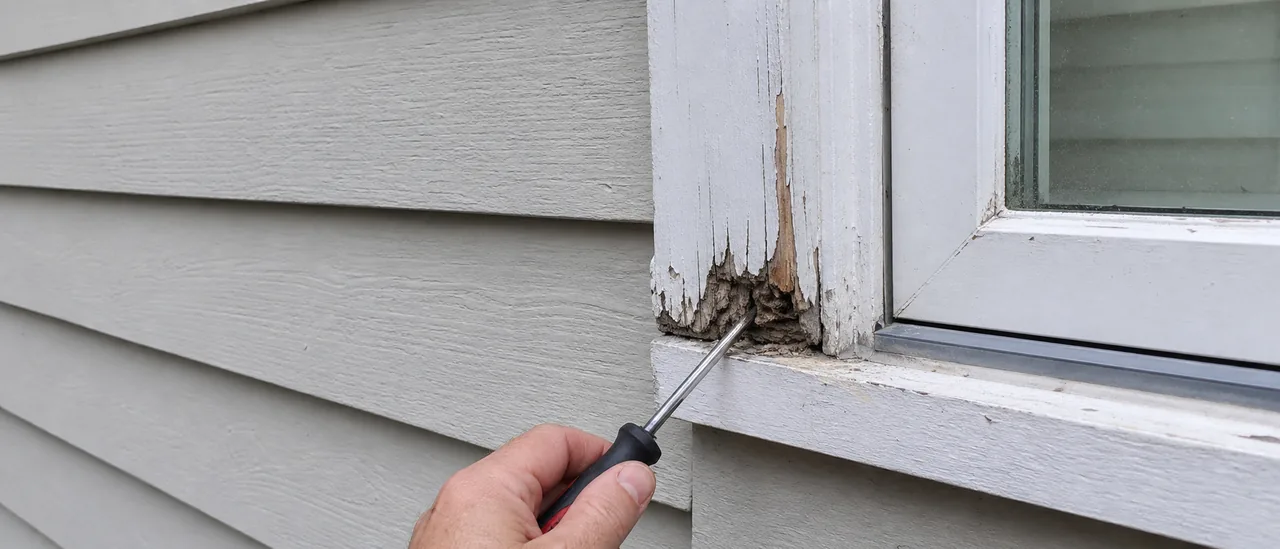
Rotted exterior trim usually means moisture has remained in wood long enough for decay fungi to damage it. The finding may be limited to a window sill, door casing, fascia board, or corner board. It does not automatically mean the wall framing is rotten.
Small, shallow damage can be a localized maintenance problem. Soft, crumbling, missing, or deeply deteriorated trim is more concerning because it may no longer shed water or hold fasteners reliably. Decay beside a window, door, roof edge, or deck connection can also be a clue to a leak or faulty water-management detail.
“Rotted” is an observed condition, not a complete diagnosis
A standard inspection can identify visible deterioration and its location. It generally cannot establish the full concealed extent, the exact length of time it has been present, or every condition that caused it.
Other causes and look-alikes
Persistent wetting is the central concern, but the water may arrive in different ways:
- failed or missing flashing around an opening or roof-to-wall transition;
- open joints, failed coating, or exposed end grain that absorbs rain;
- overflowing gutters, poor drainage, or repeated splashback near grade; or
- condensation or a leak from behind the exterior finish.
Peeling paint, sun-weathered wood, surface checking, and old patched areas can resemble decay without proving it. Conversely, sound-looking paint can conceal softened wood below. Discoloration alone is therefore weaker evidence than loss of material, softness, or abnormal movement.
How the condition is confirmed
InterNACHI’s residential standard includes flashing and trim in the exterior inspection. It also defines a home inspection as a non-invasive visual examination and excludes concealed or latent defects. The inspection agreement and any applicable state rules may set a different or additional scope.
An inspector typically records the location, visible extent, texture, openings, and nearby moisture clues. Where permitted and unlikely to damage the finish, gentle probing can help distinguish intact wood from softened material. A moisture meter can identify elevated moisture at the time of testing, but neither a dry reading nor a firm painted surface rules out older or deeper decay. The National Park Service notes that internal decay may hide beneath sound-looking wood and that probing should be judicious.
Urgency and the practical next step
Prompt attention is appropriate when the wood is deeply soft, loose, missing, widespread, or next to active staining or dampness. Those signs raise the chance that water is still entering or that concealed components need evaluation.
Minor surface weathering with firm wood and no moisture clue is generally less urgent, though failed coatings and joints still need maintenance. When the report describes extensive decay, uncertain depth, or a likely leak, a qualified exterior or building-envelope professional can determine the moisture source and repair scope. The useful next step is to address both the damaged material and the condition keeping it wet.