On this page
The most likely meaning
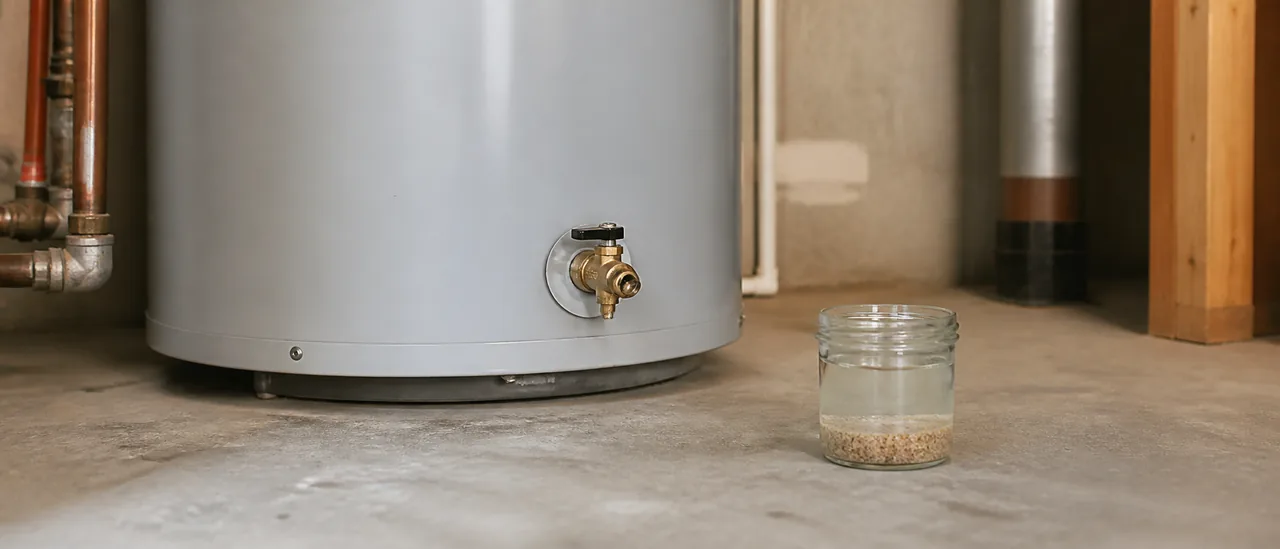
Sediment in a storage water heater usually means minerals have collected near the bottom of the tank. Hard water contains dissolved minerals, and heating can turn some calcium compounds into solid scale. Over time, that material may settle or break into particles.
This is often a maintenance and performance concern, not proof that the tank is about to fail. Mineral accumulation can lower efficiency and contribute to clogged plumbing. Its importance depends on the amount present and how the heater is operating.
Other plausible explanations
Not every particle associated with hot water is mineral sediment. White or gray fragments can come from a deteriorating plastic dip tube inside some storage heaters. That look-alike condition may also restrict flow by clogging faucet aerators.
The location of the evidence helps narrow the possibilities. Particles found only at hot-water fixtures point toward the hot-water system, while debris at both hot and cold fixtures suggests a source elsewhere. Color and texture offer clues, but they do not establish the source by themselves.
Sediment is a description, not a complete diagnosis
An inspection note may describe observed particles or operating clues. It does not necessarily identify the material, measure the buildup, or prove what caused it.
How the condition is confirmed
A standard home inspection covers the water-heating equipment and hot-water supply system, but it remains a visual examination of readily accessible components. Inspectors generally do not dismantle a tank, determine water quality, or operate a drain valve merely to inspect the interior.
An inspector can document visible particles at fixtures, exterior leakage, installation concerns, and whether hot water was produced during normal operation. Those observations may support a sediment concern, but the steel tank normally hides the deposit itself.
Confirmation may require comparing hot- and cold-water samples, examining captured particles, or having the tank evaluated during appropriate service. A qualified plumber can distinguish mineral scale from deteriorated components and decide whether maintenance is suitable for the heater's condition.
Urgency and the practical next step
If the heater produces hot water normally and has no leakage or other significant defect, a sediment note usually calls for follow-up rather than emergency action. Review the inspector's exact observation and any available maintenance history.
Move more quickly when the report also identifies tank leakage, a lack of hot water, restricted flow, or another safety or operating defect. Sediment alone does not explain every symptom, and correcting a separate defect may be the more urgent task.
Do not operate unfamiliar valves solely to test the finding. Follow the heater's instructions, or ask a qualified plumber to confirm the material and appropriate next step.