On this page
What standing water most likely means
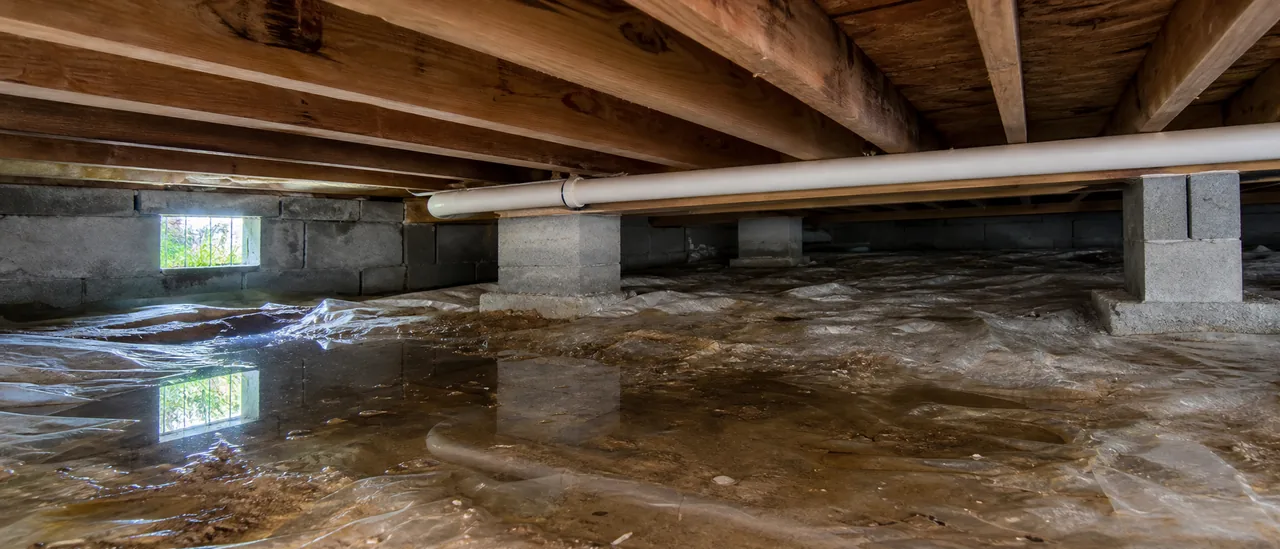
Standing water means liquid water has entered or accumulated in the crawl space and has not drained or dried. It is an active moisture condition at the time of inspection, but it does not identify the source by itself.
The common possibilities are rain reaching the foundation, surface runoff directed toward the house, groundwater moving through the soil, or a plumbing leak. Water can also come from condensate equipment or drains. Condensation may explain droplets on cool pipes or framing, but a broad puddle usually requires tracing where the liquid collected.
A puddle is a finding, not a complete diagnosis
Location, recent weather, plumbing use, staining, and drainage conditions help separate a one-time event from a recurring problem. A dry-day inspection cannot prove how often water appears, while a wet-day inspection may make the pathway easier to see.
What the inspector looks for
A standard home inspection is visual and non-invasive. InterNACHI’s standard requires inspection of the crawl space and reporting observed indications of active water penetration, but it does not require entry when the area is unsafe or not readily accessible.
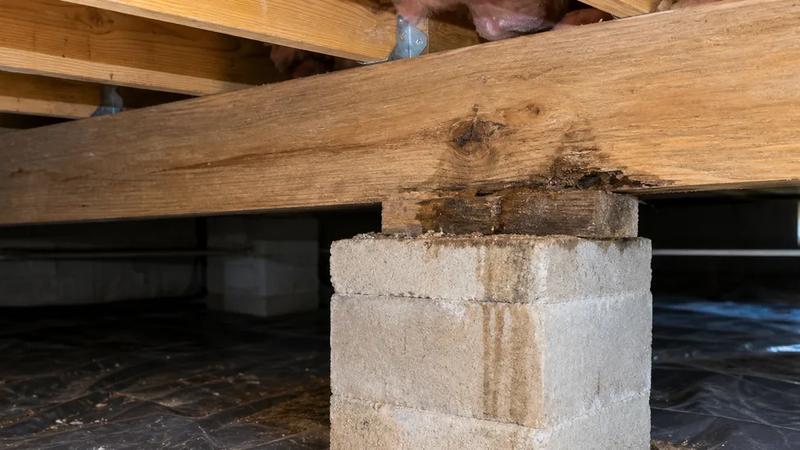
The inspector may document the puddle’s location and extent, wet soil or vapor-barrier surfaces, stains, efflorescence, damp insulation, musty odors, and visible changes to wood. Outside, roof runoff, downspout discharge, low grading, foundation openings, and nearby irrigation can provide useful context. Visible plumbing above the wet area, HVAC condensate piping, sump equipment, and accessible drains may also offer clues.
These observations can confirm that water is present and sometimes reveal an obvious pathway, such as an actively dripping pipe. They cannot rule out concealed leaks, establish the groundwater level over time, or determine hidden damage behind insulation and other materials. The inspection report should also note inaccessible areas and other limits.
How serious the finding may be
Urgency depends on the water’s source, amount, recurrence, and what it contacts. A small puddle from a corrected, isolated spill is different from widespread water after ordinary rainfall. Persistent moisture can promote mold and rot in wood framing, so standing water should not be treated as merely cosmetic.
Prompt action is appropriate when water is still entering, touches electrical equipment, appears contaminated, or accompanies sagging, softened, or visibly decayed wood. Avoid entering a flooded or electrically hazardous crawl space.
Practical next step
First, read the report for the observed location, access limits, weather, and recommended follow-up. Compare those notes with recent rainfall and ask whether the condition has occurred before.
An obvious plumbing leak calls for plumbing evaluation. Water associated with grading, runoff, groundwater, or an uncertain route may need evaluation by a qualified drainage, foundation, or crawl-space moisture specialist. The goal is to identify and correct the source before judging finishes or repairs.