On this page
The direct answer
Treat backdrafting as a safety finding
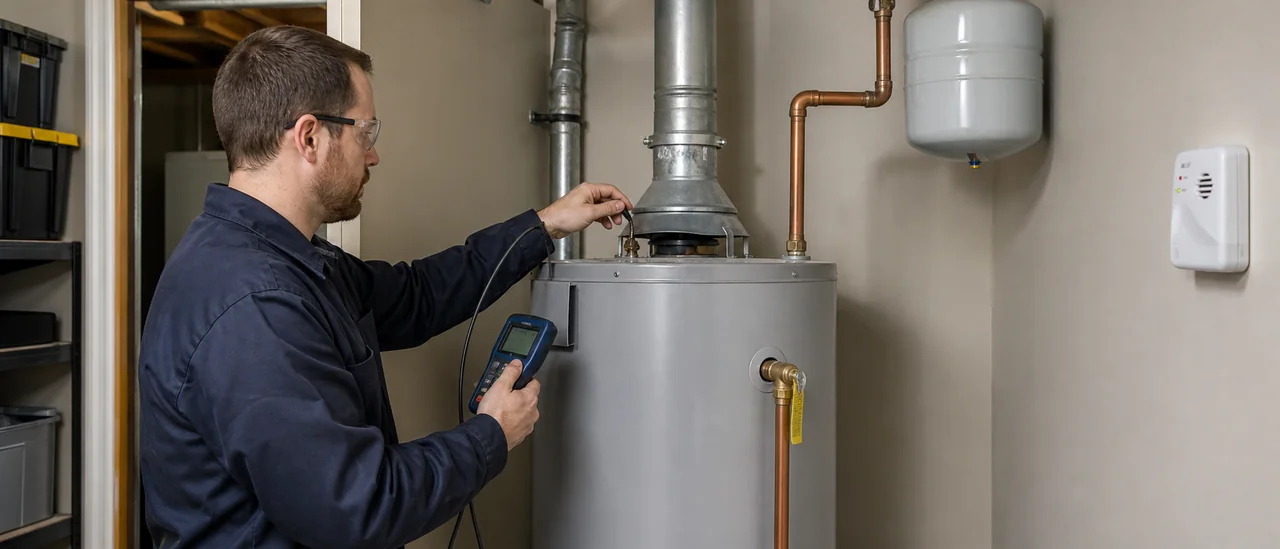
Backdrafting means the intended upward vent flow reverses or fails, allowing combustion gases from a fuel-burning water heater to spill into the room instead of leaving through the vent. Those gases can contain carbon monoxide. Do not block alarms or alter the vent. A home inspector may document visible evidence or perform a limited screening within the inspection scope; diagnosis and combustion testing require a qualified technician.
Observed recurring spillage calls for prompt evaluation by a qualified fuel-gas or HVAC professional, especially if anyone has headache, dizziness, fatigue, nausea, irregular breathing, or other possible carbon monoxide symptoms.
What can cause it
A natural-draft water heater relies on warm exhaust rising through the draft hood, connector, and chimney or vent. That flow can be disrupted by several conditions:
- a blocked, disconnected, undersized, damaged, or poorly sloped vent
- a cold or deteriorated chimney
- inadequate combustion or makeup air
- strong exhaust fans, dryers, or other appliances depressurizing the room
- competition between appliances connected to a common vent
- burner, draft-hood, or installation problems
- wind or building-pressure conditions.
Soot, corrosion, melted plastic near the draft hood, moisture staining, or exhaust odor can support concern, but their absence does not prove safe operation. Carbon monoxide itself is colorless and odorless.
What a home inspection can establish
A home inspector may observe the vent connector, clearances, visible damage, and evidence of spillage, and may perform a limited screening when conditions and local rules allow. That screening is not the same as diagnostic draft, pressure, or combustion testing. The result applies to the conditions at that time. Kitchen fans, dryers, closed interior doors, wind, chimney temperature, and other appliances can change building pressure.
ASHI's plumbing standard covers installed water-heating equipment and visible vent systems, flues, and chimneys, but does not require determining draft characteristics. A qualified technician's combustion-safety evaluation may include draft, pressure, combustion, and vent-sizing measurements appropriate to the system.
Why the response should be prompt
The U.S. Consumer Product Safety Commission recommends having fuel-burning appliances inspected by a qualified technician each year and installing carbon monoxide detectors. An alarm is an important backup, not a repair for a venting defect, and a silent alarm does not establish that venting is safe.
If an alarm sounds or occupants feel ill, move to fresh air and contact emergency services. If recurring spillage is confirmed, stop using the appliance unless the inspecting professional or responding utility gives different safety instructions, and arrange prompt evaluation before returning it to service.