On this page
The inspection can usually proceed without you
You generally do not need to attend a roof inspection if the inspector has authorization and safe access to every area included in the agreement. Confirm this beforehand, because an appointment cannot proceed as planned if you are the only person who can provide access.
Your absence should not change the inspector’s agreed scope. It does change how you receive the findings: instead of seeing conditions and asking questions in real time, you will rely on the written report, its photographs, and a follow-up conversation.
Confirm these details before the appointment
Ask who will provide entry, which exterior and interior roof-related areas are included, when the report will arrive, and how questions will be handled afterward. Also send the inspector any known leak locations or specific concerns in advance.
What the inspector can document without you
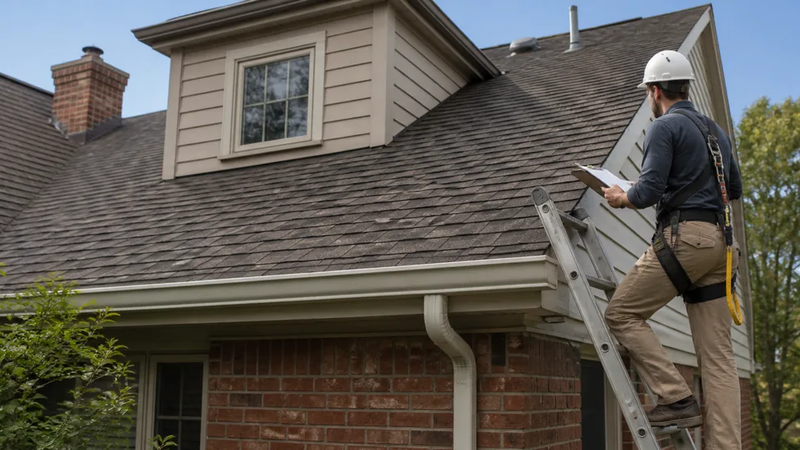
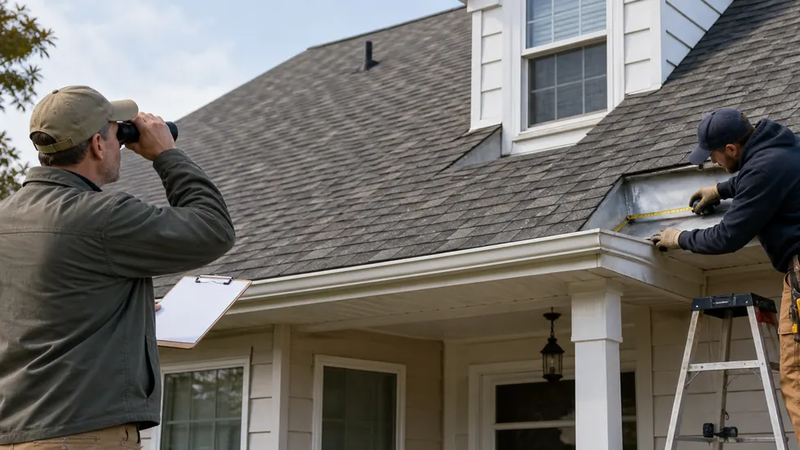
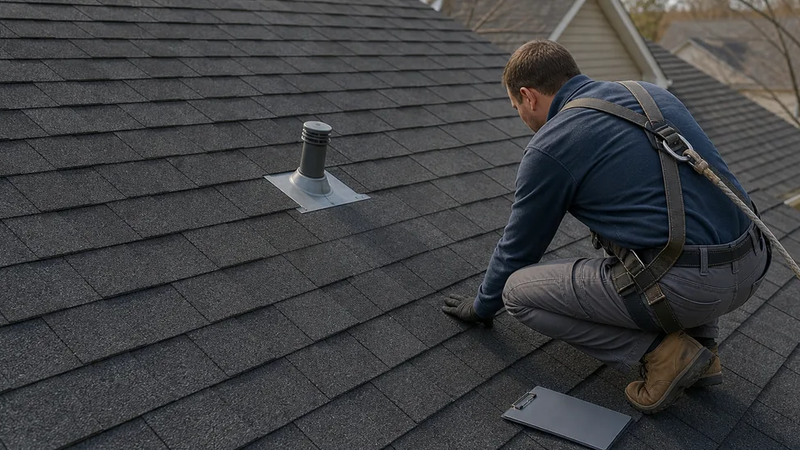
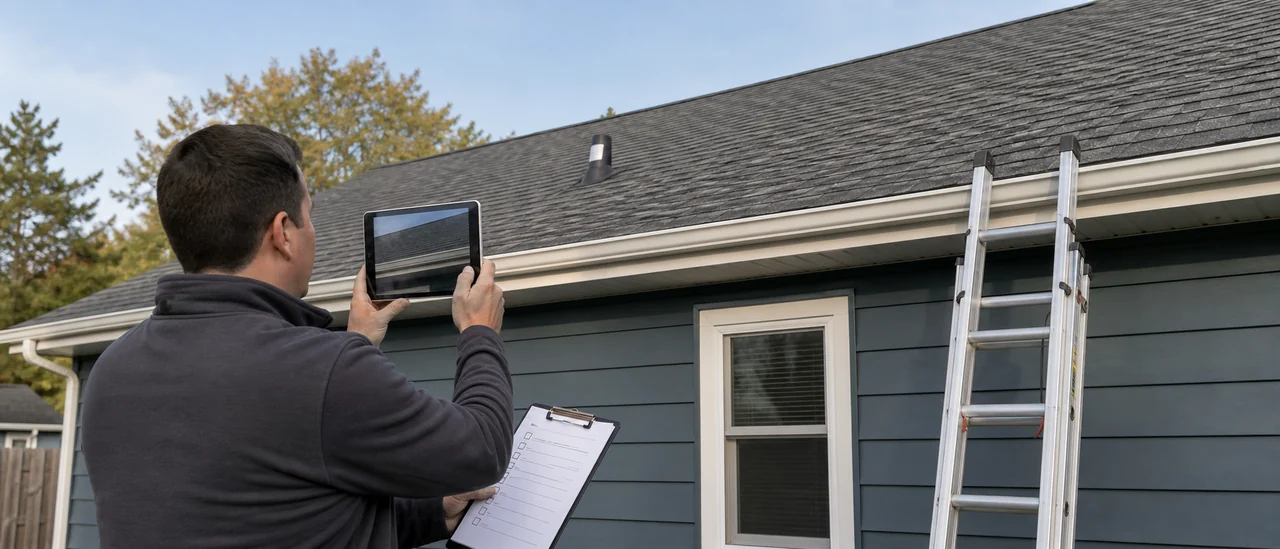
The inspector can observe accessible roof-covering materials, drainage components, flashing, penetrations, and other items within the contracted scope. The inspection method may involve the ground, eaves, a ladder, an attic access, or the roof surface when conditions and the inspector’s practices allow it.
The report should identify observed conditions, the method used, and significant access limits. Photographs are helpful for locating a finding, but they do not expand what was visible at the property.
Attendance would not turn a visual inspection into a destructive or technically exhaustive examination. For example, concealed layers cannot be confirmed without opening the assembly, and some standards do not require walking on a roof when doing so could be unsafe or cause damage. Snow, debris, steepness, fragile materials, locked access, or an inaccessible attic can therefore limit what is observed.
Can the roof inspection report be reviewed remotely?
Yes. Arrange a phone or video review after you have read the report. A focused discussion is more useful when you note the finding locations, unfamiliar terms, and any places where the report says an area was not inspected.
Useful follow-up questions include:
- What was directly observed, and what is only a possible explanation?
- Which inspection method was used for the roof and attic areas?
- Did any obstruction or safety condition limit access?
- Does a recommendation call for a specialist, testing, or simply monitoring?
A remote review can clarify the inspector’s wording and photographs. It cannot recreate the inspector’s complete view at the property or establish a concealed condition that was outside the inspection scope.
Practical bottom line
Missing the appointment does not automatically make the inspection invalid. The practical priorities are authorization, access, a clear written report, and a scheduled opportunity for questions. Read the scope and exclusions before the visit, then check the report for the inspection method and every stated limitation.
If the report identifies a condition beyond a visual inspection’s scope, or an important area could not be accessed, follow the report’s recommendation for evaluation by an appropriately qualified professional.