On this page
Treat the reports as evidence, not competing verdicts
If two roof inspections disagree, compare what each inspector actually observed, how the roof was viewed, and what each report excluded. A disagreement does not automatically prove that either inspection is wrong. It means the conclusions should not be treated as interchangeable until their scope and evidence match.
“Roof inspection” is not one universal procedure. A general home inspection may cover visible roofing materials, drainage, flashing, skylights, chimneys, and penetrations. A focused roof evaluation may use a different scope, closer access, measurements, or testing. The governing state rules, inspection standard, and signed agreement can also change what was required.
Find the exact point of disagreement
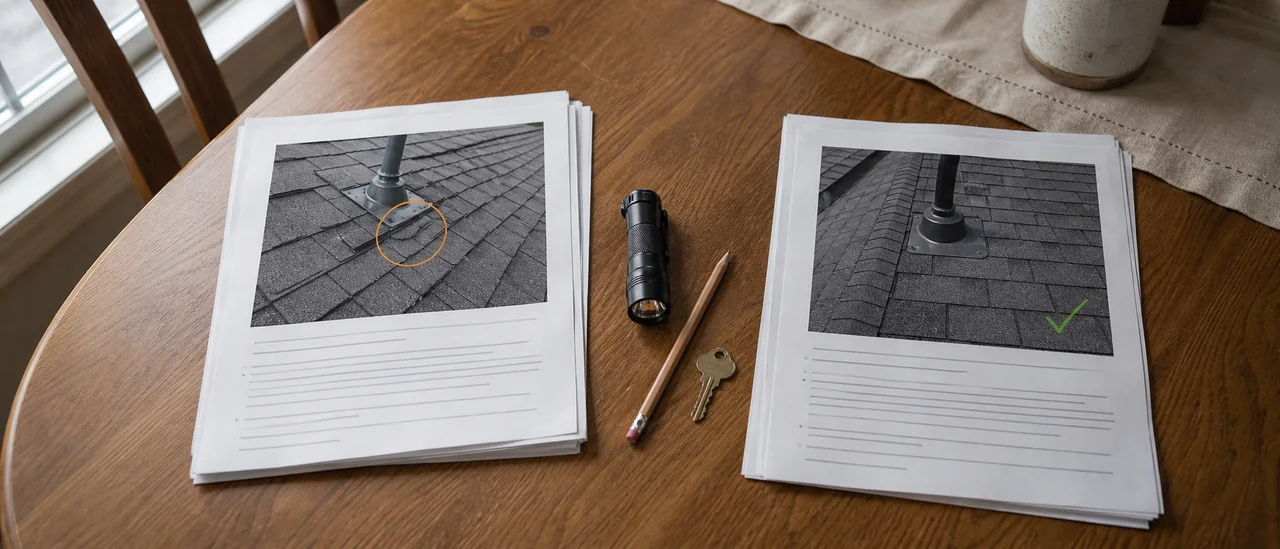
Read the reports side by side and isolate the disputed statement. “No defect observed” is different from “the roof is defect-free.” Likewise, an estimated condition, a recommended repair, and a confirmed leak are separate findings.
Compare these details:
- the inspection dates and roof conditions on each date;
- the areas, slopes, attic surfaces, flashings, and penetrations examined;
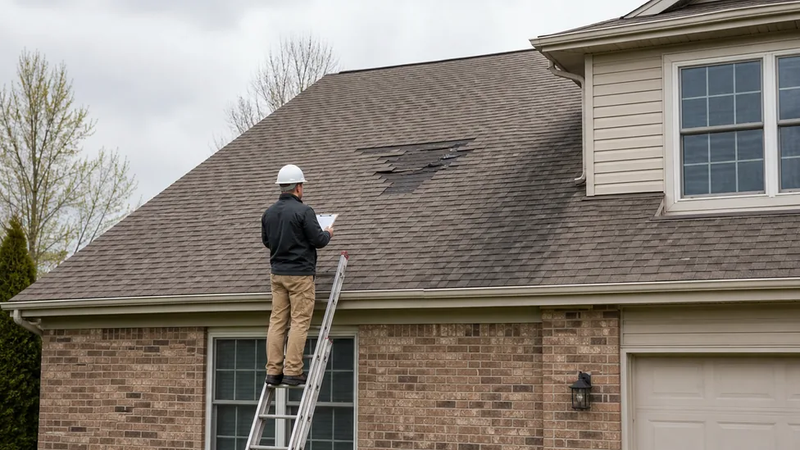
- whether the roof was walked, viewed from the ground or eaves, or observed another way;
- snow, debris, height, steepness, fragility, or access restrictions;
- photographs and location-specific notes supporting each conclusion; and
- the standard, exclusions, and definitions used in each report.
This comparison matters because recognized standards do not all prescribe identical access. The ASHI standard requires the roofing inspection method to be reported and limits a home inspection to readily accessible, visually observable components. InterNACHI's standard describes a non-invasive visual examination and does not require walking on a roof.
A visual inspection cannot certify concealed conditions
Roof coverings can hide underlayment, fastening, portions of the deck, and some moisture paths. A report may document visible clues and limitations, but ordinary visual inspection does not reveal every latent defect or predict future performance.
Ask for clarification before adding another opinion
Give each inspector the disputed passage and the other report's relevant photographs. Ask what evidence supports the conclusion, which areas were inaccessible, whether the wording reflects an observation or professional judgment, and what additional evidence would resolve the difference. A clear written clarification may show that the reports examined different conditions rather than reached opposite findings about the same condition.
If a decision-critical conflict remains, use a qualified independent roof inspector or appropriate technical specialist with a written, focused scope. The follow-up should identify the disputed locations, document the access method, distinguish observed conditions from possible causes, and state remaining limits. That produces a narrower answer without pretending any inspection is a warranty.
Practical bottom line
Do not settle the conflict by counting opinions. Prefer the conclusion with the clearest scope, direct observations, location-specific photographs, and explicit limitations. When those records still cannot resolve a material roof question, seek a focused evaluation aimed only at that uncertainty.