On this page
The direct answer
A material defect is a significant problem with a home system, component, or condition. Depending on the governing definition, it substantially affects property value, desirability, habitability, or safety, or creates an unreasonable risk to people.
The exact wording is not universal. InterNACHI’s Standard of Practice uses the value-or-risk definition. California law, as one jurisdictional example, includes conditions that significantly affect value, desirability, habitability, or safety. The applicable state rules, inspection standard, and signed agreement therefore matter when reading a report.
“Material” means significant
The word does not identify what an item is made from. It separates consequential conditions from ordinary appearance issues or minor maintenance observations. California’s definition expressly excludes style and aesthetics from deciding whether a component is defective.
Why age alone is not the test
An old component can still operate, while a newer one can present a serious concern. Under InterNACHI’s standard, being near, at, or beyond normal useful life is not, by itself, a material defect.
That distinction does not make age irrelevant. ASHI’s standard calls for reports to identify inspected components that are near the end of service life, as well as those that are significantly deficient, unsafe, or not functioning properly. A report may therefore include important findings that it does not label “material defects.” Read the description and recommendation, not only the heading or summary category.
What a visual inspection can establish
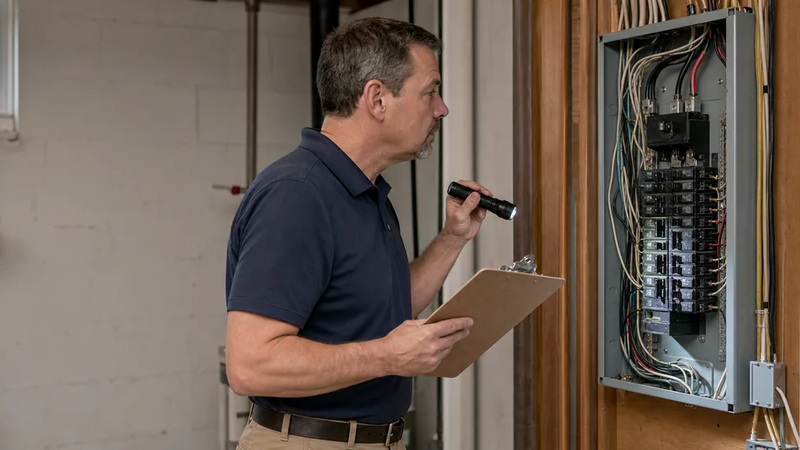
A home inspector can report an observed condition within the agreed scope and explain why it appears significant. The report may recommend correction, monitoring, or evaluation when the observation warrants it.
However, a standard home inspection is limited. ASHI’s standard covers readily accessible, visually observable, installed systems and components. It defines ready access as not requiring personal property to be moved, dismantling, destructive measures, or actions likely to risk people or property.
Consequently, the inspection may identify visible evidence of a serious issue without confirming its concealed extent or exact cause. InterNACHI also states that its inspection is not technically exhaustive and will not identify concealed or latent defects. Specialized testing, invasive investigation, engineering analysis, and repair-cost estimates are outside that standard’s required scope.
The practical bottom line
Treat “material defect” as a significance threshold, not a complete list of everything needing attention. Check which standard and agreement govern the inspection, then read each finding for the observed condition, its implication, access limits, and recommended next step.
When a report identifies a potential safety issue or cannot determine the extent of a significant condition visually, a qualified system specialist can provide the focused evaluation the general inspection could not.