On this page
Start with the wellhead, water, and performance
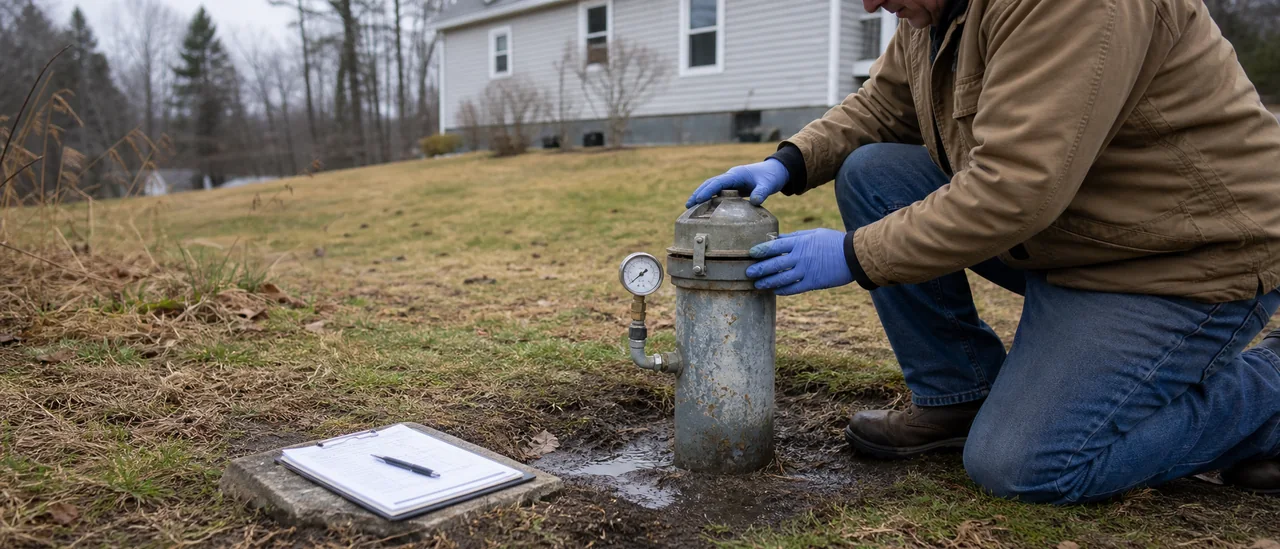
The main red flags in a well inspection are damaged or missing wellhead parts, water draining toward the casing, nearby contamination risks, abnormal pump or pressure behavior, poor water-test results, and missing construction or maintenance records. These findings matter because a well must both protect the water supply and deliver enough water reliably.
Not every concern is visible. A standard home inspection may not include the well, pump, water quality, flow, pressure, or well-water quantity. Confirm the agreed scope before relying on the report.
Treat these findings as reasons to investigate
- A cracked or corroded casing: The casing and its grout help keep dirt, surface water, and less desirable groundwater out.
- A loose, broken, or missing cap: The cap should block debris, insects, and small animals while accommodating a proper vent.
- Ponding or runoff toward the well: The ground should direct rainwater away rather than allow it to collect around the casing.
- Settled or cracked surface seals: EPA specifically identifies these, damaged casing, and broken or missing caps as exposed-part problems.
- Potential contaminant sources nearby: Septic components, fuel storage, chemicals, flooding, and disturbed ground deserve attention. Required separation distances depend on state and local rules.
- Pressure or delivery problems: Rapid pressure swings, frequent pump cycling, leaks, unusual noise, sediment, or inadequate flow may justify testing by a well professional. A brief functional check cannot predict the next pump failure or future groundwater levels.
- Unacceptable laboratory results: Appearance, taste, and odor are not substitutes for sampling. EPA recommends a certified laboratory and identifies additional testing triggers such as flooding, system repairs, and water-quality changes.
A visual inspection cannot certify water quality
Buried casing depth, underground components, aquifer conditions, and many contaminant sources cannot be confirmed by sight. Water testing and records research answer different questions than the visual inspection.
Match the finding to the right follow-up
Ask what was actually inspected: the visible wellhead, pressure system, pump operation, yield, records, unused wells, and laboratory sampling are separate scope items. State rules also differ. For example, Wisconsin requires a licensed well driller or pump installer to make compensated property-transfer statements about a well’s compliance, condition, capacity, or performance.
A red flag is not automatically proof that the well has failed or that contamination is present. It means the uncertainty could affect health, reliability, or repair planning. The practical bottom line is to obtain applicable records, certified water-test results, and qualified well-system evaluation when the inspection reveals a defect or leaves a material question unanswered.