On this page
A large branch can damage more than the roof surface
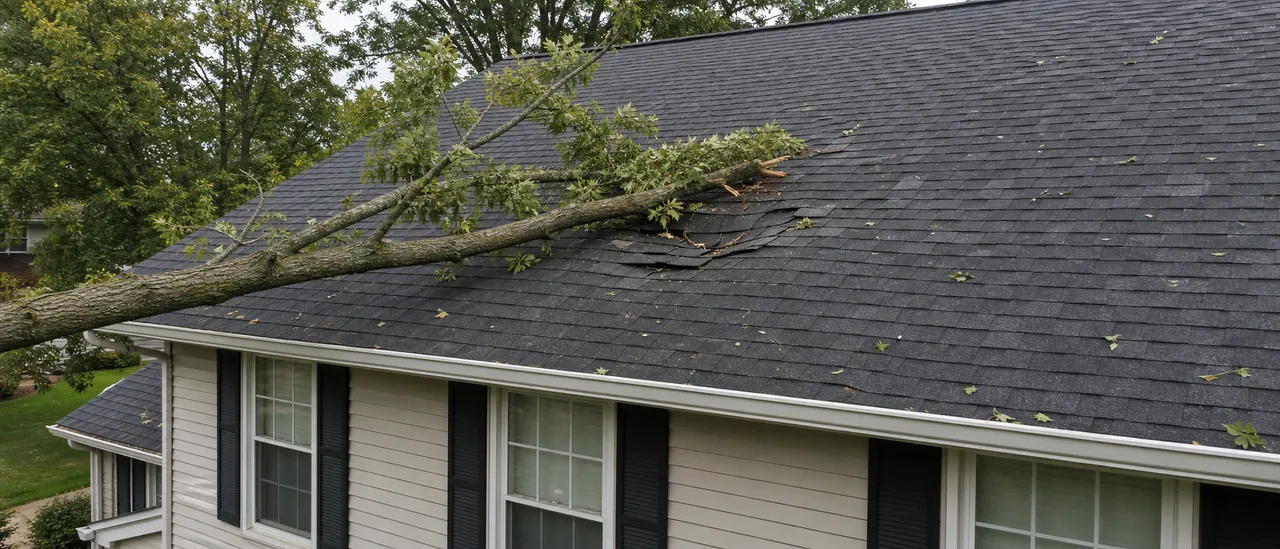
A large branch impact is a sudden strike or heavy landing by a limb—not ordinary leaf buildup or light contact. It can crack, tear, dislodge, or puncture the roof covering, damage the deck beneath it, and fracture or shift structural framing. The opening may then admit rain, even if the ceiling has not started dripping.
The damage can extend beyond the exact landing point. A branch may crush a ridge, bend flashing, break a vent, pull fascia or gutters loose, or transfer force into rafters and their connections.
One documented engineering assessment shows the possible range. In a Maryland administrative case involving a branch strike on a shed, the accepted damage included shingles, trim, rafters, and sheathing. Investigators also found sheathing fractured and separated from rafters, a fractured ridge board, and shifted roof framing. That example shows what can happen; it does not predict the damage at another building.
Damage depth depends on the impact
The branch’s mass, drop distance, angle, and whether it bounced or remained on the roof all matter. So do the roof slope, assembly, material, age, existing deterioration, and the location of the strike. A glancing blow across flexible shingles is different from a concentrated hit at a ridge, valley, eave, skylight, or other projection.
Possible damage generally falls into three layers:
- Water-shedding components: torn shingles or membrane, cracked tiles or shakes, displaced seams, damaged flashing, and broken vents.
- Roof deck: dented, split, punctured, or separated sheathing, sometimes hidden beneath an apparently modest surface mark.
- Structure and edges: cracked rafters or trusses, ridge damage, shifted connections, and bent fascia or gutters.
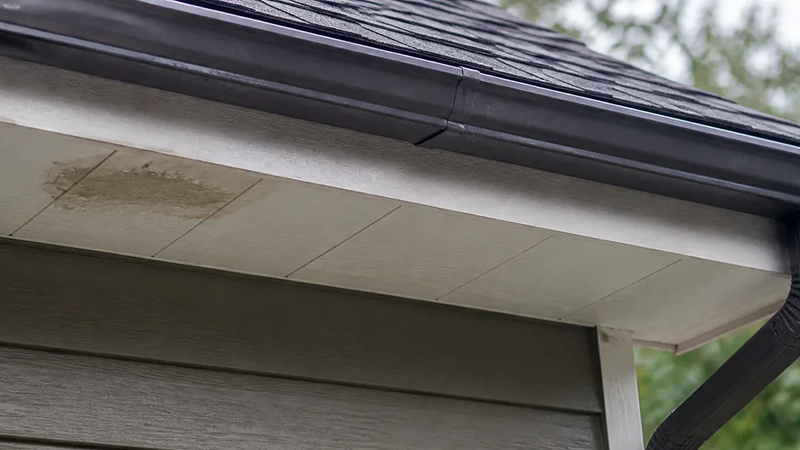
A breach no longer sheds water as designed. U.S. Department of Energy building guidance notes that roof leaks can damage insulation and contribute to structural rot. Moisture may travel before appearing indoors, so the first stain may not sit directly below the impact.
Keep off an impact-damaged roof
View the area from the ground or a safe interior location. The surface may hide weakened decking or framing, and roofing guidance recommends ground-level checks for owners after storm damage.
What the visible clues do—and do not—show
From the ground, look for a hole, displaced materials, a low or uneven roof line, damaged eaves, or fresh debris. Indoors, new staining, damp insulation, daylight through the deck, or cracked finishes can indicate that the impact reached deeper layers.
Absence of those signs does not prove the assembly is intact. NRCA guidance notes that storm damage may not be obvious and recommends checking whether roof areas remain tight and attachments secure. A useful evaluation separates new impact damage from age, rot, or earlier defects and checks the covering, deck, framing, and nearby penetrations.
The bottom line: a large branch can cause anything from localized covering damage to a structural roof failure. The impact point, surrounding assembly, and interior side must be considered together before its depth is known.