On this page
How a nearby fire can affect a roof
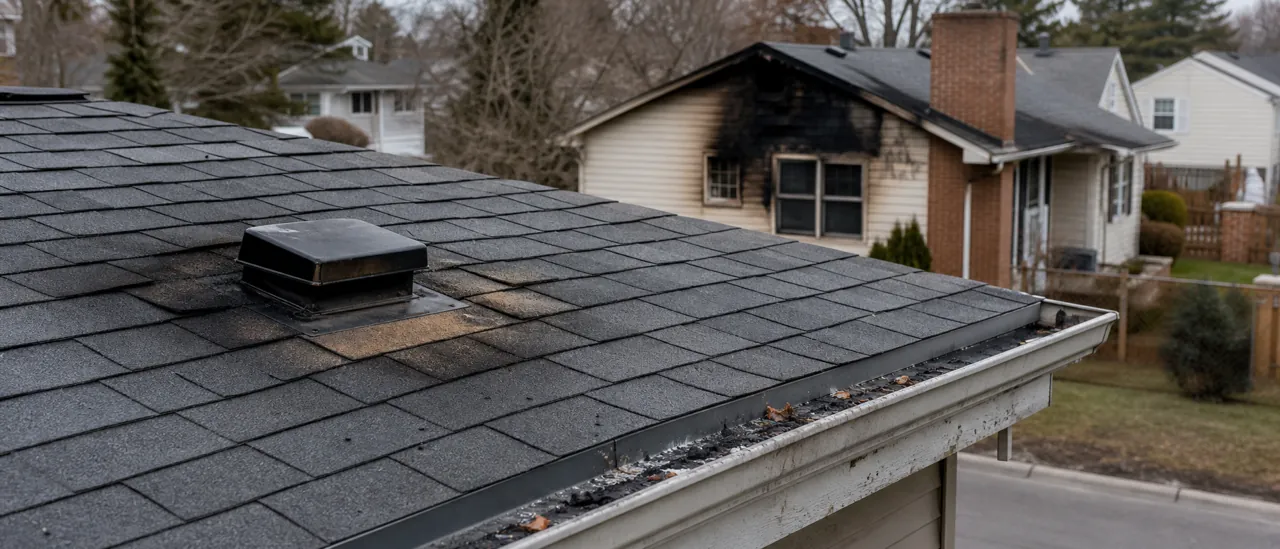
A nearby house fire can damage a roof through radiant and convective heat, direct flame contact, and wind-carried embers, also called firebrands. The outcome can range from ash deposits to ignition of roof-edge materials or combustible parts within the roof assembly. Damage is possible even when flames never visibly cross the property line.
Heat from a fully involved structure can raise the temperature of exposed roof components. At close range, combustible eaves, fascia, debris, or other roof-edge materials may ignite. Heat-sensitive attachments can also fail before the main roof covering burns; California fire guidance identifies combustible gutters and plastic vents as vulnerable to fire exposure.
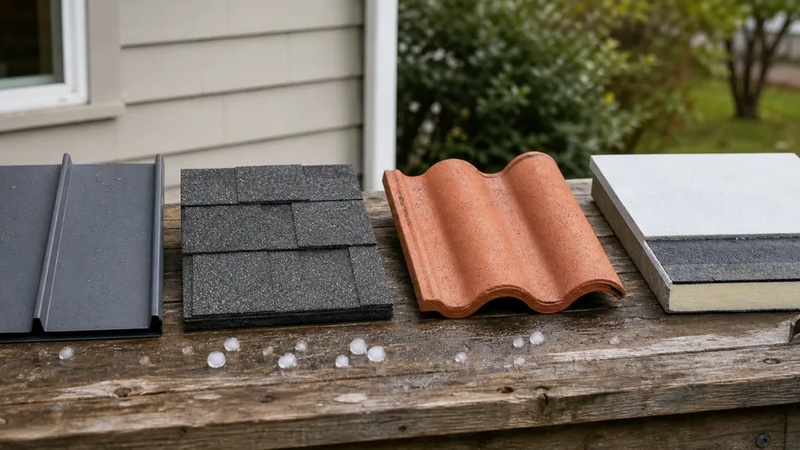
Embers create a different pathway. They can land on a roof, collect in dry gutter debris, lodge in gaps, or pass through roof and attic vents. Once inside, an ember can ignite combustible material in an attic or concealed roof space. NIST testing has also shown firebrands entering gaps in some tile assemblies and melting the underlayment below.
Damage patterns to look for
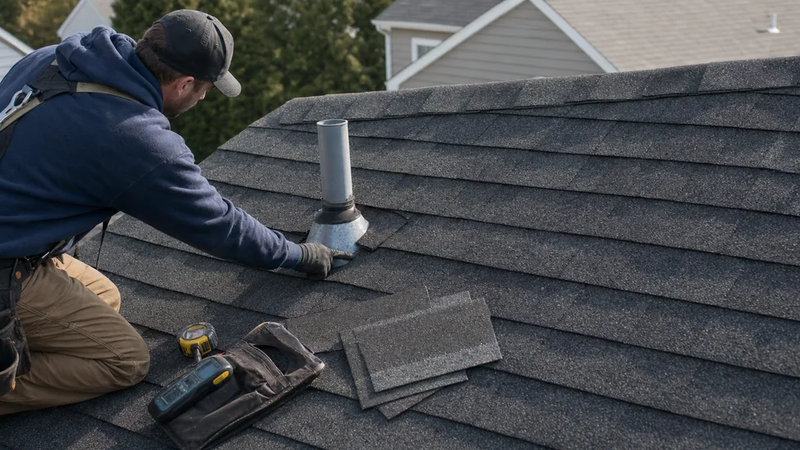
- Roof covering or underlayment damage: Localized charring, burning, or heat damage may occur where embers accumulate or flames and intense heat reach the assembly.
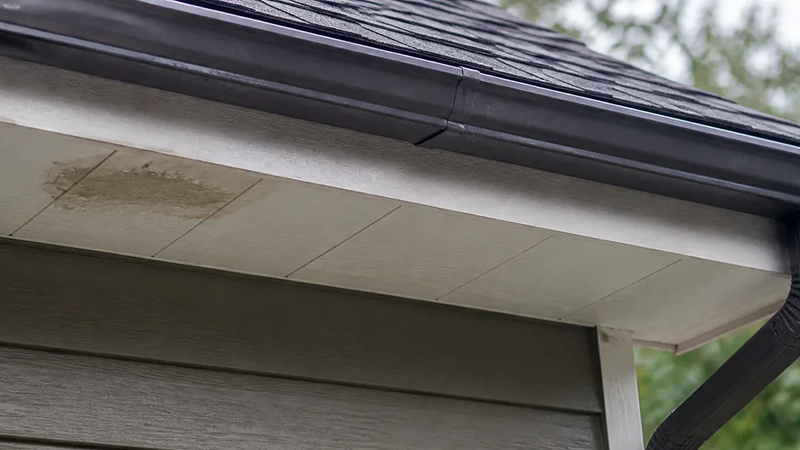
- Gutter, fascia, and eave damage: Debris may ignite, and a combustible gutter can expose fascia or roof sheathing to flames.
- Vent or attic involvement: Embers may enter through ridge, off-ridge, gable, or soffit openings and start a concealed fire.
- Ash and soot deposits: Fire particles can settle on exterior surfaces. Deposits show exposure, but do not by themselves prove that the roof covering lost its weather resistance.
A clean-looking roof is not conclusive
Ground-level appearance cannot rule out ember entry beneath tile, through a vent, or into an attic. Conversely, ash or smoke odor alone does not establish heat damage or structural damage.
What determines the severity
Separation distance matters because radiant intensity decreases as distance increases, but there is no single distance that proves a roof is safe or damaged. Fire size and duration, wind direction and speed, roof slope, covering type, open gaps, vent design, and accumulated debris all change the exposure. Prior defects can also give embers easier access to underlayment, decking, or the attic.
The practical bottom line is to treat the roof as exposed, not automatically damaged. Observe only from a safe location and note smoke, glowing material, active flame, sagging, fallen debris, or visibly burned roof edges. Do not climb onto the roof or enter an attic during or immediately after the incident. If fire officials have restricted access, return only when they say it is safe; if you see smoke, heat, or embers, move away and call 911.