On this page
Tropical-storm roof damage, in plain terms
A tropical storm can loosen or remove roof coverings, damage vents and soffits, and drive rain into openings. The result may be a few lifted shingles, an attic leak, or—under more severe local conditions—damage that progresses into the roof deck or structure.
The National Hurricane Center defines a tropical storm by maximum sustained surface winds of 39–73 mph. That is the cyclone’s highest one-minute average wind, not a measurement at every house in its path. The storm label therefore cannot tell whether a particular roof was damaged.
Common damage paths include:
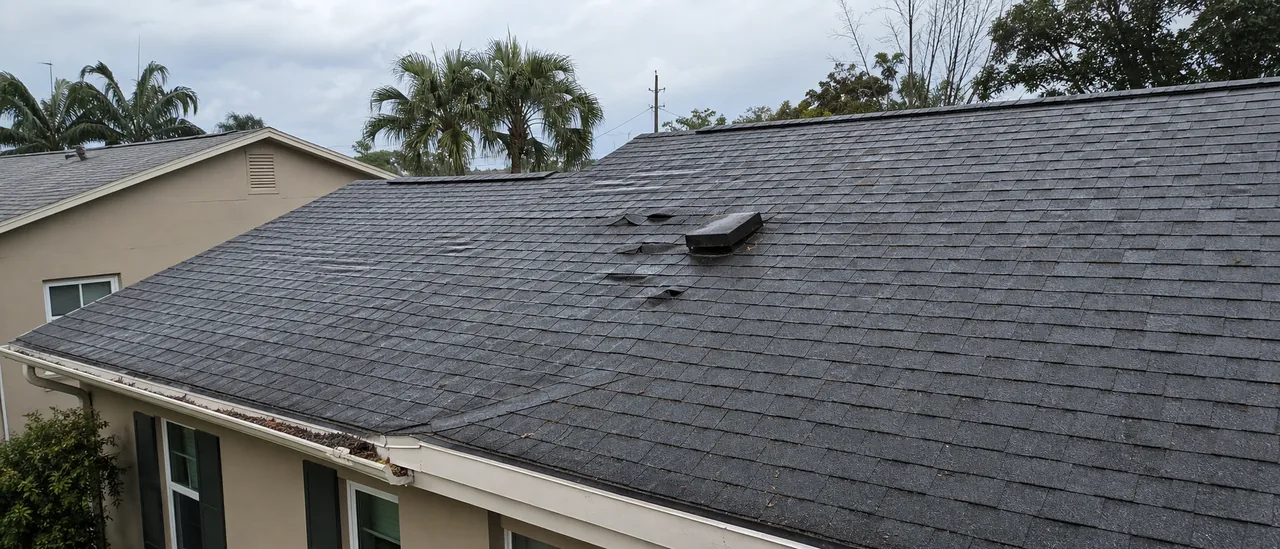
- Roof-covering loss: Shingles or other covering pieces may lift, tear, crease, or detach, leaving underlayment or sheathing exposed.
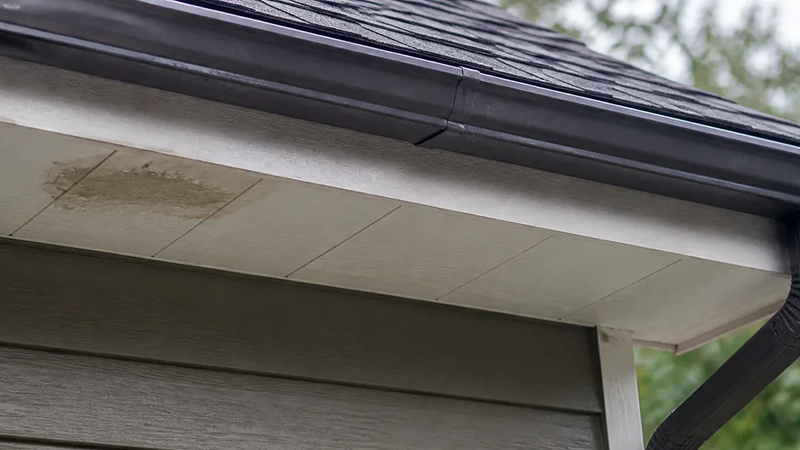
- Damaged openings and edges: Upper roof vents can pull free, while soffit assemblies may collapse or admit wind-driven rain.
- Debris impacts: Windborne debris can strike and damage roof coverings, even when the covering stays attached.
- Water intrusion: Rain can enter through missing covering, storm-created holes, sheathing joints, or roof and soffit vents. Wet insulation, ceiling finishes, and belongings may then become part of the damage.
Why wind and rain create a combined problem
Wind damage does not need to remove an entire roof to matter. Building America guidance explains that damaged or missing shingles leave the underlayment and sheathing as the remaining rain barrier. Unsealed joints or storm-created holes can then admit water into the building.
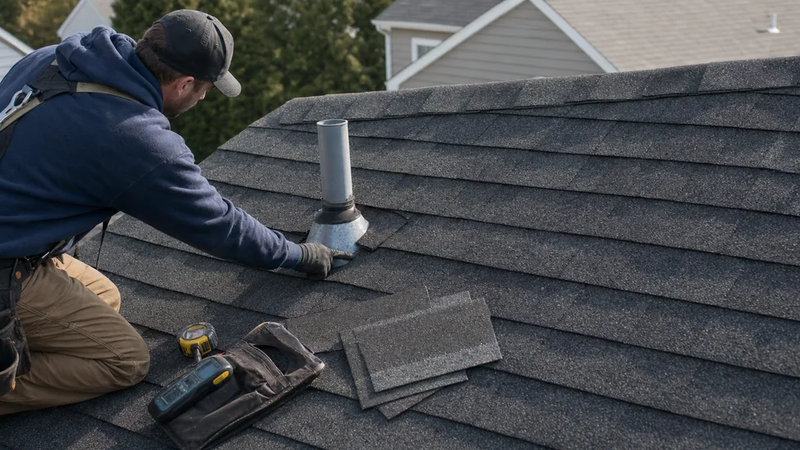
Vents are another route. The same federal building-science program identifies roof vents as a common pathway for rainwater entry during high-wind events. It also notes that upper roof vents can be pulled from the leeward side and that a collapsed soffit can increase pressure inside the attic. In an extreme progression, those pressure changes can contribute to loss of roof cladding or structure.
A forecast is not a roof diagnosis
A storm track, wind-probability map, or tropical-storm label describes weather conditions—not damage at an address. Confirmation requires property-specific observations, including areas hidden from the ground.
Why one roof is damaged and another is not
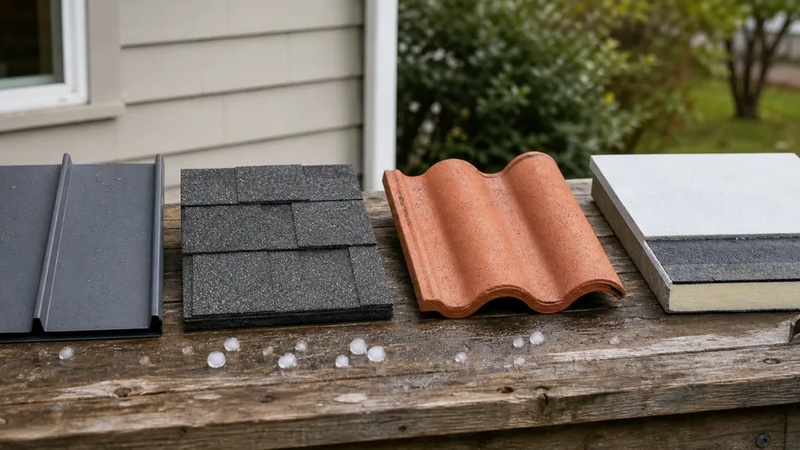
The outcome depends on the wind that actually reaches the building and how the roof handles it. Roof shape and exposure influence wind pressure. Material selection, fastener placement, shingle sealing, vent attachment, and the condition of the water-shedding layers also affect how a roof performs.
A roof may show no obvious change from the yard yet still have a leak path around a vent or beneath displaced covering. Conversely, seeing nearby storm debris does not prove roof damage. The practical bottom line is to look for missing or raised covering, displaced vents or soffits, attic moisture, and new ceiling stains. Stay off a wet or storm-damaged roof; if the cause or extent remains uncertain, a qualified roof evaluation is the appropriate way to determine the condition.