On this page
The direct answer
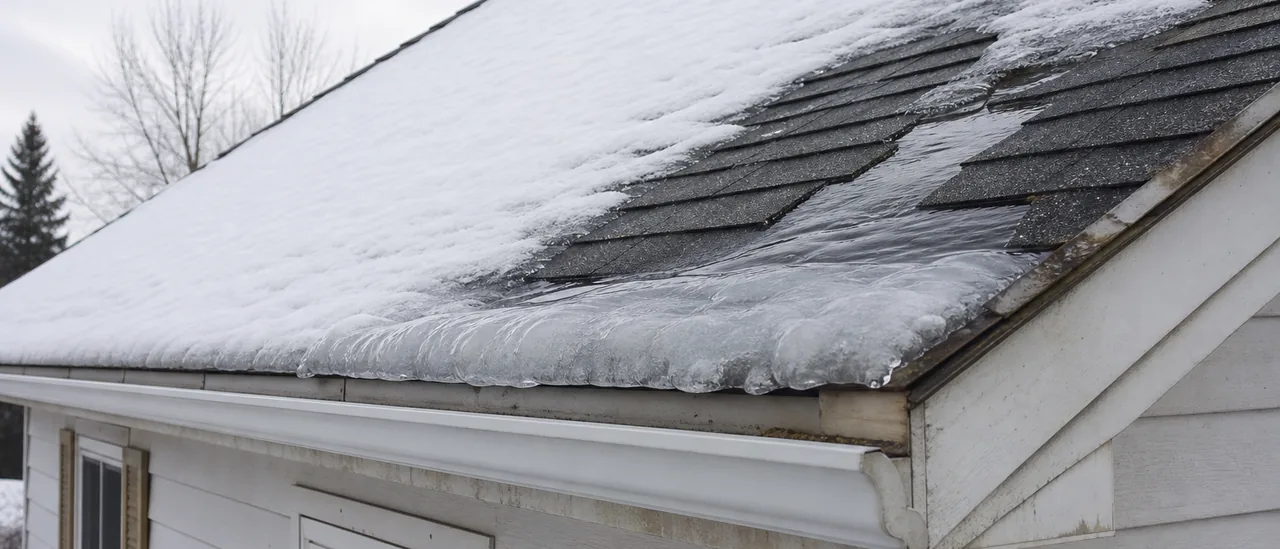
An ice dam is a ridge of ice near a roof edge that blocks meltwater from draining. Water can then back up beneath the roof covering and leak into the assembly.
The resulting damage can involve shingles or other roof coverings and components along the eaves. Once water gets past the covering, it can wet roof sheathing, framing, insulation, ceilings, and walls. Repeated or prolonged wetting can also contribute to decay in wood roof components.
Ice is not the only damage mechanism
The dam creates the blockage, but trapped liquid water usually causes the hidden damage. The visible ice at the gutter does not reveal how far water has traveled inside the assembly.
Why the damage spreads
Ice dams form when snow melts on a warmer part of the roof, flows downward, and refreezes over a colder section. The growing ridge holds additional meltwater upslope.
Sloped roof coverings are intended to shed water downward. Backed-up water can move beneath overlapping materials or enter through cracks and openings. From there, gravity may carry it across the roof deck, into an attic, through insulation, or into exterior walls and ceiling finishes.
Common consequences include:
- leakage beneath shingles or other water-shedding roof coverings;
- wet sheathing or framing, with decay possible if moisture persists;
- saturated or otherwise water-damaged insulation; and
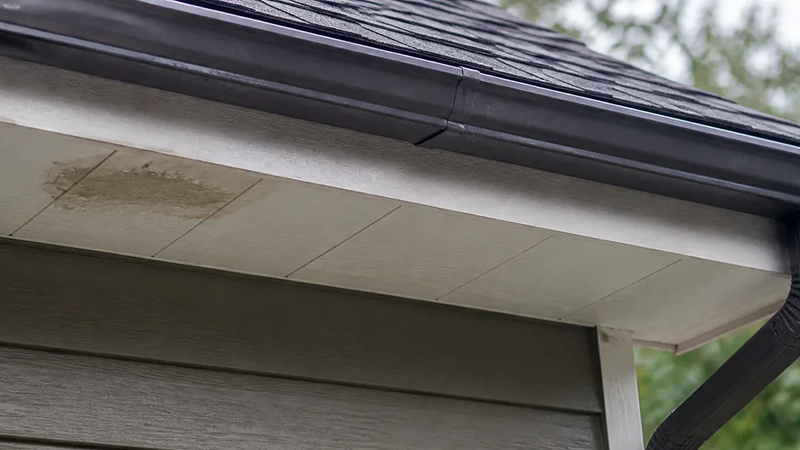
- ceiling stains, peeling finishes, damp walls, or active interior leaks.
What changes the severity
Not every ice dam causes every type of damage. The outcome depends on how much water accumulates, how long it remains, and whether the roof has vulnerable openings. Roof slope, valleys, penetrations, existing defects, and the presence and extent of an ice-barrier membrane also affect where water can enter.
A large ridge is not proof that water has reached the interior. Likewise, a small or concealed dam can still leak if water finds an entry point. Interior staining may appear away from the eave because water can travel along framing or other surfaces before becoming visible.
Practical bottom line
Treat an ice dam as a water-backup risk, not automatic proof that the entire roof needs replacement. Look for displaced edge materials, damp attic surfaces or insulation, and new ceiling or wall stains. The extent of damage can only be determined by checking both the exterior drainage area and accessible parts of the roof assembly after conditions are safe.