On this page
What animals can damage on a roof
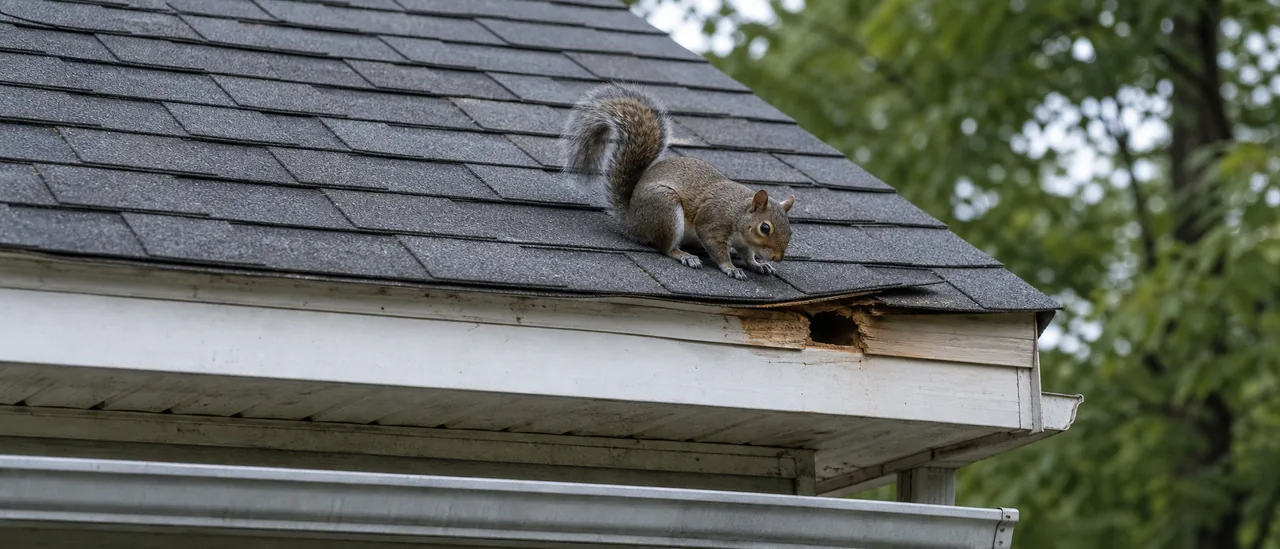
Animals can tear, chew, peck, displace, clog, or contaminate roof components. Typical targets include shingles, roof membranes, fascia, soffits, vents, seals, gutters, and chimney openings. The damage matters because a small opening or displaced component can expose the roof assembly to water and give wildlife a route into the attic.
Different animals leave different patterns. North Carolina’s wildlife agency notes that squirrels use existing gaps between shingles or vents and can also create openings. Their chewing can damage wood, soffits, roofing, and drainage pipes. Raccoons are more forceful: University of California guidance documents females ripping off shingles, fascia boards, and rooftop ventilators while seeking attic den sites.
Bird damage also varies by species. Woodpeckers may drill holes in wooden eaves and trim. Vultures can tear shingles, vent seals, and rubber roof liners, while pigeon droppings can deteriorate gutters and other metal structures.
The main damage patterns
- Openings and enlarged gaps: Chewing, pecking, or pulling can expose decking or create an attic entry point.
- Displaced roof components: Lifted shingles, loosened vent covers, damaged seals, or torn membrane can interrupt the weather-resistant surface.
- Blocked features: Nesting material may collect in gutters or occupy unprotected vents and chimneys. That can interfere with drainage or the intended function of the opening.
- Surface deterioration: Concentrated bird droppings can damage some metals, especially around repeated roosting sites.
These patterns can overlap. An animal may first exploit loose trim or an uncovered vent, then enlarge it. The Building America Solution Center specifically recommends sturdy soffit-vent covers that resist displacement by animals and roof details that discourage nesting-material buildup.
Animal activity is not the same as confirmed roof damage
Tracks, sounds, droppings, or an animal on the roof identify activity—not the condition beneath the covering. Confirmation requires checking the suspected entry point and nearby materials for displacement, holes, moisture, or deterioration.
What changes the severity
Species, access, roofing material, and duration all matter. A squirrel using a pre-existing vent gap may leave little new exterior damage; repeated gnawing at a roof edge can create a larger opening. Heavy animals can pull loose parts farther out of place, while a persistent bird roost concentrates debris and droppings in one area.
The roof’s prior condition matters too. Loose fascia, aged seals, damaged screens, and existing gaps are easier to exploit than sound, secured components. Damage is therefore usually localized rather than a uniform roof-wide pattern.
Practical bottom line
Look for torn or lifted roofing, tooth or peck marks, damaged vent screens, loose fascia, nesting material, and concentrated droppings. From the ground, note the location without assuming the animal caused every defect. The useful next step is a close evaluation of that area, including the roof surface, opening, flashing or seal, and the attic side when accessible.