On this page
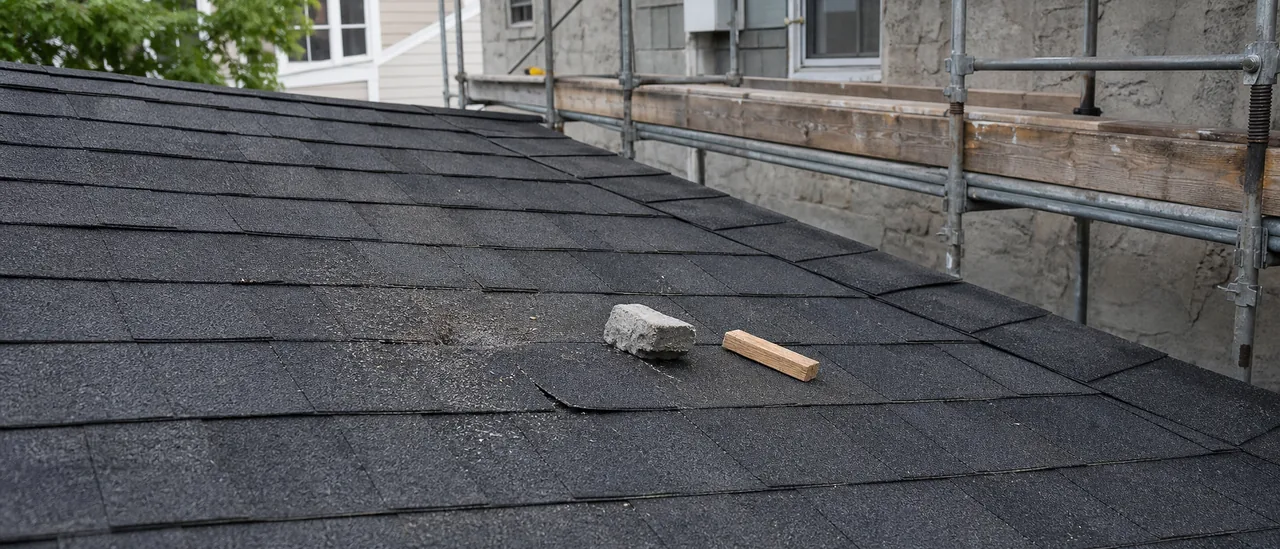
Falling construction debris can remove shingle granules, puncture roof coverings, crack tiles, dent metal, or damage the deck and framing below. A light, blunt piece may leave only a surface mark. A sharp or heavy object can open a water path or weaken the supporting assembly.
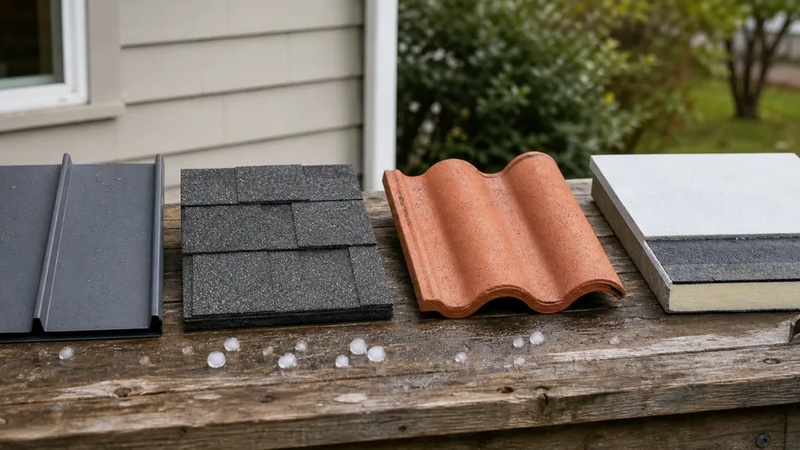
Damage depends on the roof material
“Construction debris” means loose jobsite material or equipment that drops onto a roof from work above. Examples include fasteners, tools, metal offcuts, wood, masonry fragments, and broken roofing material.
The resulting damage is usually localized around the impact point:
- Asphalt shingles: displaced granules, a dent, or a breach through the shingle. Impact testing identifies all three damage modes.
- Clay, concrete, or slate tiles: a chip, crack, or complete break. Impact research shows that brittle roof tiles can crack or shatter.
- Metal roofing: a shallow dent may be cosmetic, while a sharp-edged impact can create a hole or disturb a vulnerable joint.
- Low-slope membranes: screws, tools, and jagged fragments can cut, tear, or puncture the waterproofing layer. Dynamic puncture resistance is a recognized performance property for several membrane types.
- Decking and framing: large, heavy pieces can crush roof layers, crack sheathing, or damage trusses. Government field guidance expressly includes roof-truss damage from fallen trees or debris.
Why similar impacts produce different results
Weight alone does not decide the outcome. The object’s shape, speed, impact angle, and landing point all affect how force reaches the roof. A pointed fastener concentrates force in a tiny area; a broad board spreads it over more surface.
The roof assembly matters too. For membrane roofs, ASTM guidance notes that puncture resistance can vary with the insulation substrate and temperature. An impact directly over a firm support can therefore leave a different mark than one over a softer layer or unsupported gap.
A mark is not the same as a leak
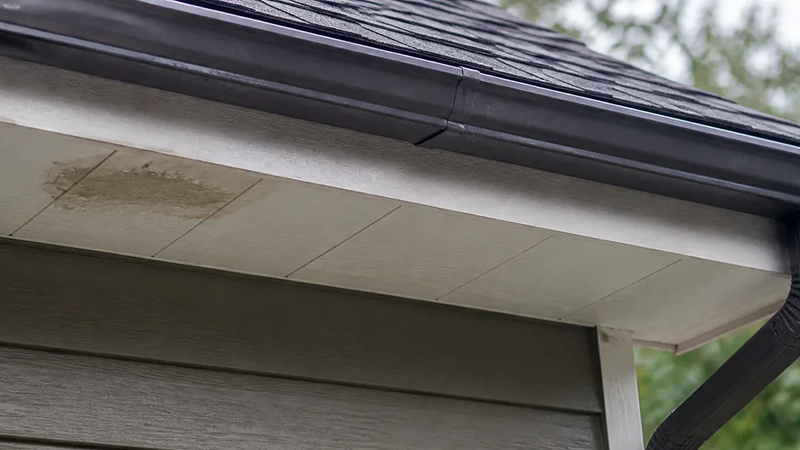
Surface appearance alone does not establish whether the waterproofing layer or structure failed. A dent can be cosmetic, while a small puncture may admit water. The covering, seams, substrate, and area below the impact must be considered together.
Practical bottom line
From the ground, note holes, split shingles, broken tiles, dents, or a localized depression. Indoors, check the attic or ceiling below the impact for fresh moisture, but do not assume a dry surface rules out damage.
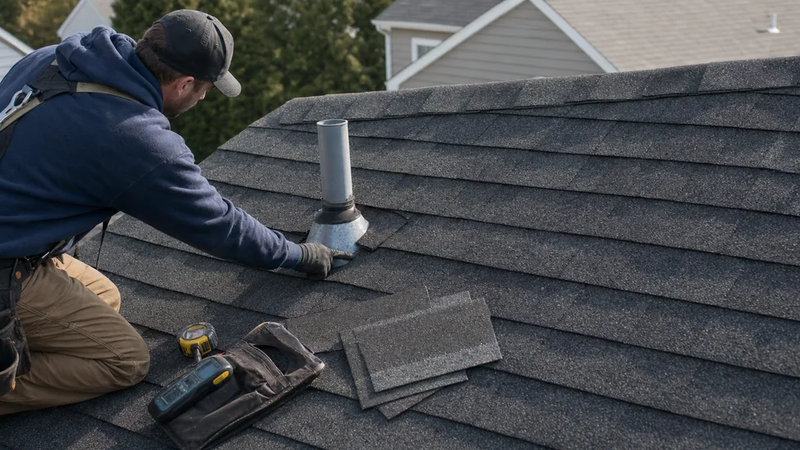
Do not climb onto a possibly damaged roof. OSHA warns that uneven sheathing and loose roofing materials create fall hazards, and structural integrity should be evaluated before roof work begins. An inspection should identify the impact point, roof-cover damage, condition of the layer beneath it, and any framing displacement.
Related reading: Can I Get a Same-Day Roof Inspection?