On this page
Heavy snow can overstress roof decking and framing, causing deflection, cracking, or partial to complete collapse. Uneven drifts and sliding snow can concentrate weight on valleys, lower roofs, and areas beside dormers. Meltwater can also refreeze at cold eaves, forming ice dams that back water beneath the roof covering and into the building.
Snow weight can deform the roof structure
A damaging “snow load” is the downward force from accumulated snow and ice, not simply the measured snow depth. The roof’s design, condition, slope, exposure, and the snow’s distribution all affect whether that load becomes excessive.
Structural damage may begin as excessive bending in sheathing, rafters, or trusses. Massachusetts safety guidance lists sagging roofs, cracked wood, wall cracks, unusual sounds, and doors or windows that become difficult to operate among warning signs. In severe cases, a roof section or the entire roof can fail.
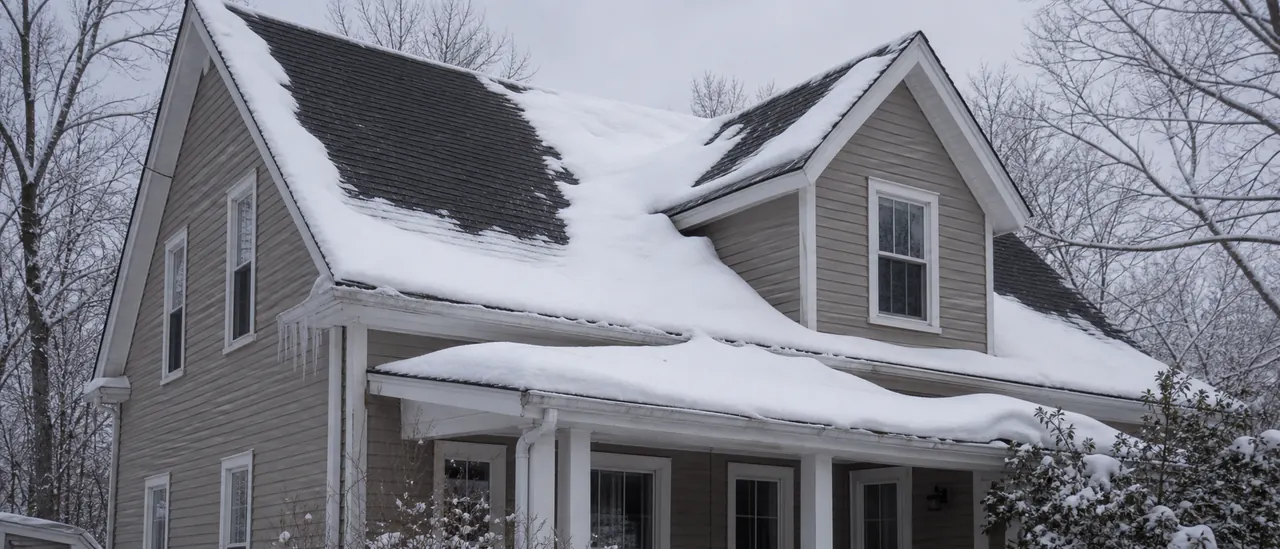
Deep snow does not have to cover the roof evenly to be dangerous. New York State guidance notes that drifts can impose concentrated loads well above uniformly distributed snow. Wind-driven drifts gather behind projections and obstructions, while snow sliding from an upper slope can overload a porch or lower roof.
Melting snow can create leaks at cold edges
Heavy snow can also cause water damage without breaking the framing. Heat reaching the upper roof can melt the bottom of the snowpack. When that water reaches a colder eave and freezes, the growing ice ridge blocks later meltwater.
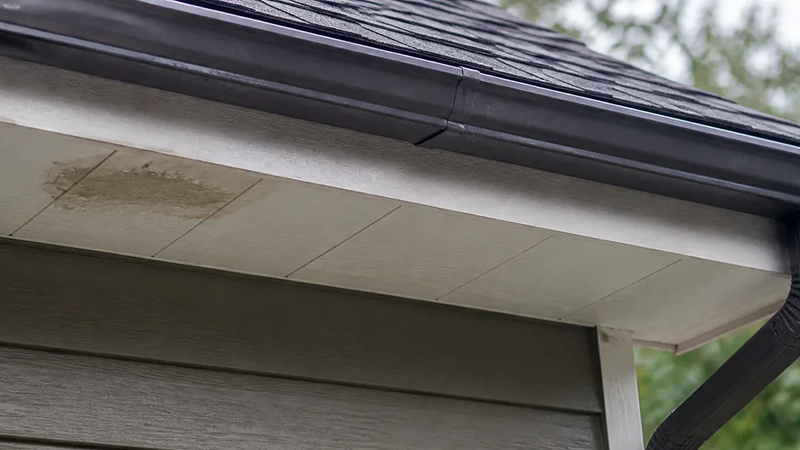
The National Weather Service explains that repeated melt-freeze cycles can work water and ice beneath shingles. Water may then enter the attic and damage ceilings, walls, insulation, or contents. The leak is caused by backed-up meltwater, while the snow cover supplies the water and helps sustain the cycle.
Treat movement or cracking as urgent
Leave the area beneath a visibly sagging roof or a ceiling that is shifting, and avoid climbing onto a snow-covered roof. Popping or cracking sounds, bowed framing, fresh wall cracks, or suddenly sticking doors and windows warrant prompt assessment by local emergency officials or a qualified structural professional.
The practical bottom line
Snow depth alone cannot prove damage or predict failure. A roof built for local snow loads may perform normally, while drifting, prior deterioration, blocked drainage, or an altered structure can change the outcome.
From a safe location, look for uneven rooflines, unusually deep drifts, new interior cracks, damp attic materials, or stains near exterior walls. Do not chip ice or shovel from the roof unless the method and structure have been evaluated; removing snow unevenly can create another unbalanced load. Visible deflection, active leaking, or interior warning signs call for a qualified evaluation rather than a guess based on snowfall totals.