On this page
The direct answer
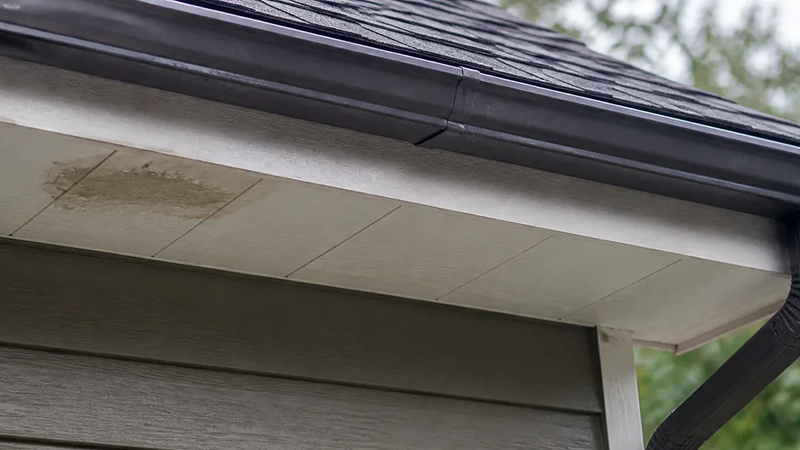
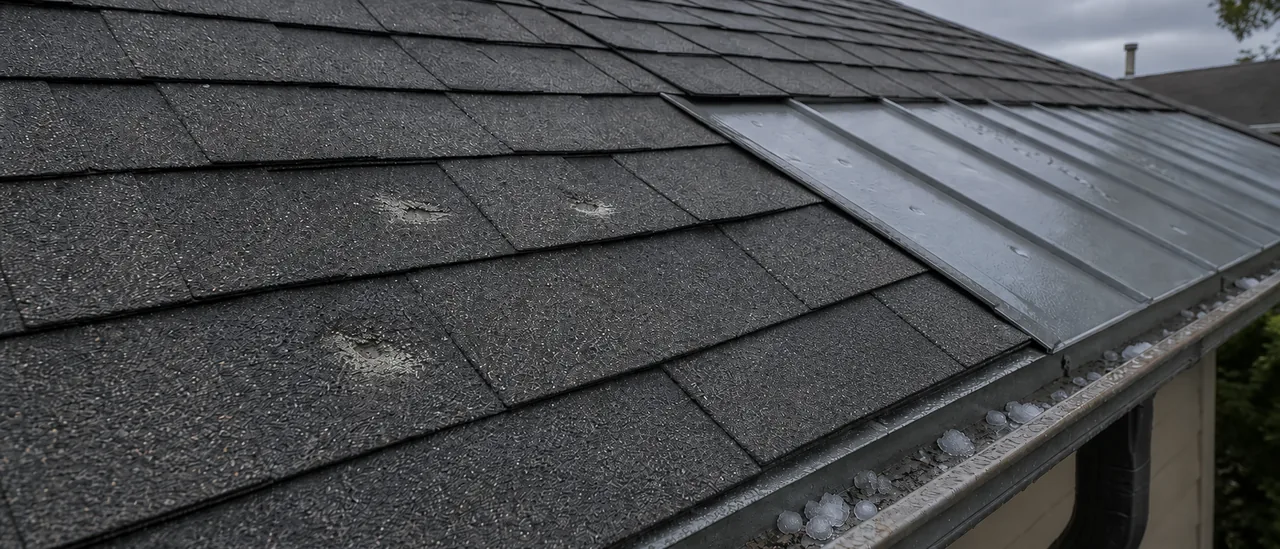
Large hail can tear or fracture asphalt shingles, knock away surface granules, crack or shatter roof tiles, and dent metal roofing. If an impact opens the roof covering, water can reach the layers below. Some effects—especially dents in metal—may be cosmetic rather than a loss of water-shedding function.
“Large hail” is a practical description, not a promise that damage occurred. The National Weather Service considers hail at least 1 inch in diameter severe. Roof damage still depends on the hailstone, the storm, and the roof it strikes.
What the damage can look like
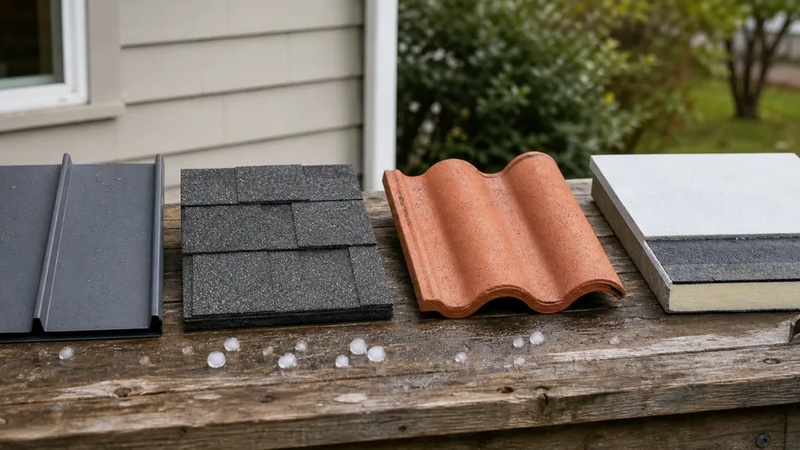
The likely effect changes with the roof covering:
- Asphalt shingles: impacts can dent the surface, displace granules, or breach the shingle mat. A breach or fracture can compromise water shedding; granule loss alone does not establish the full extent of damage.
- Clay or concrete tile: a large stone can crack or shatter a tile. Thickness, material, and the impact location influence the result.
- Metal roofing: impacts can leave visible dents. IBHS notes that current evidence does not show dents alone reduce metal-roof function, so appearance and performance should be evaluated separately.
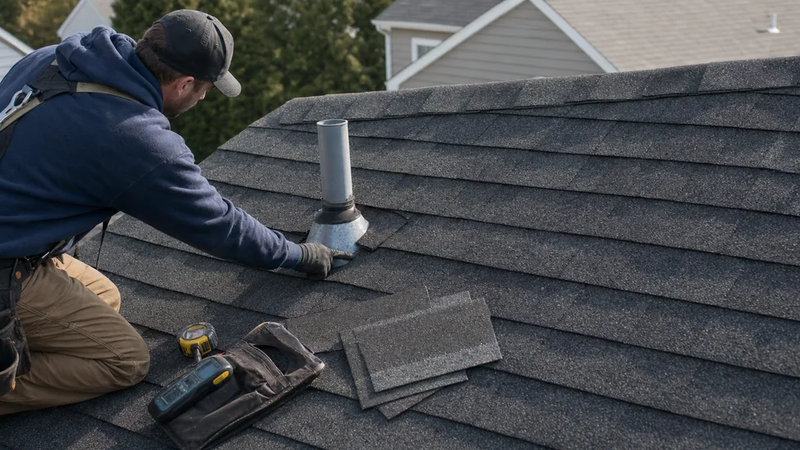
Large hail may also strike ridges, edges, vents, and flashing. Those components need their own physical evaluation; a mark on one surface does not prove that every roof component failed.
Why the same hailstorm produces different results
Impact energy changes with a hailstone’s mass, diameter, and velocity. Harder stones may behave differently from softer stones that break apart or turn to slush. Wind can also drive hail at an angle, changing which roof slopes and details receive the strongest impacts.
The roof matters just as much. Product design, tile thickness, material condition, and years of weather exposure can change the outcome. Consequently, no single hail diameter serves as a universal damage threshold for every roof.
Storm evidence is not roof-damage confirmation
A radar product such as MESH estimates hail size from storm reflectivity. A spotter report records hail observed or measured at a place and time. Neither confirms damage to a particular property; confirmation requires physical evidence from that roof.
Practical bottom line
Large hail can cause anything from cosmetic surface changes to fractures and openings that threaten water shedding. Do not infer the result from a map, neighborhood report, or hail-size estimate alone. From a safe ground position, note displaced material or visible broken components. If damage is suspected, a qualified roof evaluator can distinguish impact damage from aging, installation marks, and ordinary wear without treating storm history as proof.