On this page
A useful report is organized, specific, and limited
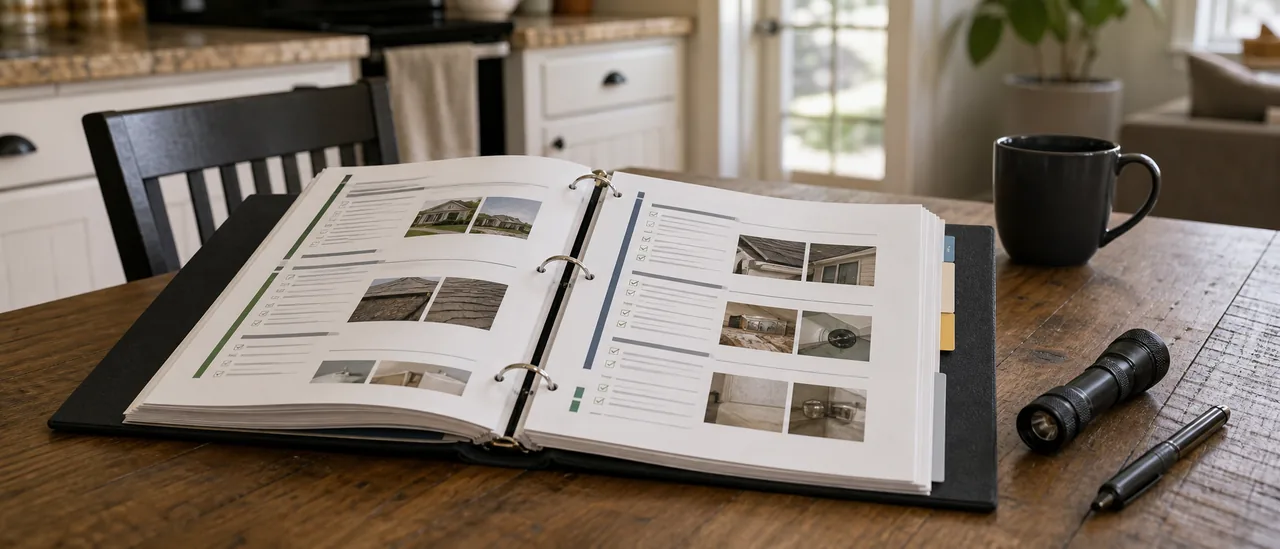
A sample home inspection report should look like a readable, system-by-system record of conditions observed on the inspection date. It should identify the property and inspector, explain the inspection scope, distinguish inspected and uninspected items, and give specific findings with practical recommendations.
The format may be a PDF, web report, or another written medium. Length and design matter less than clarity. A glossy summary cannot replace the detailed report, and a long checklist is not helpful when it fails to explain significant findings.
What the main sections should show
A reader should be able to move from the report’s scope to each home system without guessing what a label means.
| Report section | What it should tell you |
|---|---|
| Identification | Property, inspection date, client, inspector, and report number |
| Scope and limits | Governing standard, excluded services, access restrictions, and weather or utility limits |
| System details | The component or system inspected and relevant type or method information |
| Findings | The observed condition, where it appears, and why it matters when that is not obvious |
| Recommendation | Whether to correct, monitor, or obtain further evaluation |
| Not inspected | What was present but not inspected and the reason |
Photographs can make locations and conditions easier to understand, but they are supporting evidence—not a substitute for written explanation. Helpful navigation, consistent labels, and a summary of important findings also improve usability.
Status labels need a key
An official Texas report form, for example, uses “Inspected,” “Not Inspected,” “Not Present,” and “Deficient.” Other jurisdictions and inspectors may use different terms, so the report should define its labels.
What a good finding looks like
A useful finding is more than “roof issue” or a red icon. It identifies the observed condition and location, explains its significance when needed, and recommends an appropriate next step. The American Society of Home Inspectors’ standard calls for reporting certain deficient, unsafe, improperly functioning, or aging systems, along with recommendations and explanations that are not self-evident.
The report should also document inspection limits. Under that standard, an inspection covers installed systems and components that are readily accessible and visually observable. It is not technically exhaustive and does not require identifying concealed conditions or latent defects. Accordingly, a report can document what was visible without confirming conditions inside walls, below ground, or in inaccessible equipment.
Practical bottom line
Before relying on a sample, compare it with the inspector’s agreement and the rules where the property is located. Confirm that the final report defines its rating system, covers the major home systems, explains meaningful observations, and lists every important limitation.
If a finding is unclear or points beyond a visual inspection, ask the inspector for clarification. A qualified system specialist may be appropriate when the report specifically recommends further evaluation.