On this page
The practical threshold
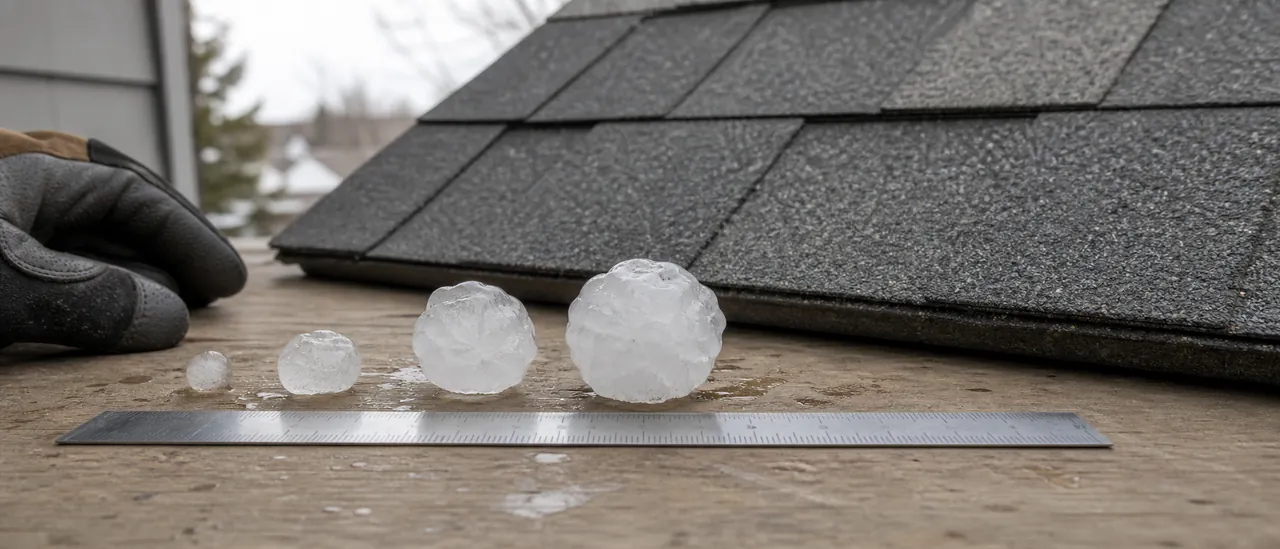
Hail about 1 inch in diameter—roughly quarter-sized—can damage a roof. Damage becomes more likely around 1¼ inches, especially on asphalt shingles, but no diameter guarantees either damage or a clean bill of health.
National Weather Service testing guidance reports no damage to tested shingles at ¾ inch, damage to some 11-year-old shingles at 1 inch, and damage to nearly all tested shingle types at 1¼ inches. Those results make 1 inch a useful caution point, not a universal pass/fail line.
Diameter is only a starting point
A reported hail size describes the storm, not the condition of a particular roof. Confirming damage requires property-specific evidence.
Why size is not the whole answer
Larger hail generally carries more impact energy, but diameter works alongside mass and velocity. The NOAA National Severe Storms Laboratory says hail under 1 inch typically falls at 9–25 mph, while 1- to 1¾-inch stones typically fall at 25–40 mph.
Wind can drive hail at an angle and increase impacts on roof slopes, ridges, flashing, siding, and windows. Hailstone hardness matters too. IBHS research distinguishes stones that bounce, shatter, or turn to slush; those different behaviors change how energy reaches the roof.
Roof conditions also change the threshold:
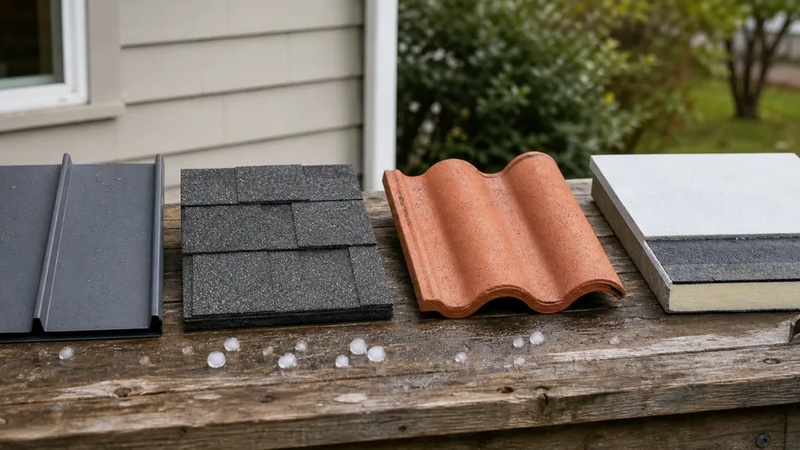
- Material: Asphalt shingles may dent, lose granules, or breach, while metal may dent without losing function.
- Age and condition: Weathered or already brittle materials may be less tolerant than newer roofing.
- Support and impact location: Deck support, roof slope, edges, seams, and previous defects can affect the result.
- Storm pattern: Repeated impacts, mixed hail sizes, rain, and wind can produce different outcomes from one isolated stone.
What weather reports can—and cannot—show
An observed hailstone is measured or estimated near where it fell. Radar estimates conditions aloft and can help reconstruct a storm path, but neither establishes what struck one address or whether its roof was damaged.
Confirmed property damage is different: it comes from physical evidence on the specific roof, interpreted in context. Marks should be distinguished from normal aging, manufacturing features, foot traffic, debris, or prior damage.
Bottom line
Treat 1-inch hail as a reasonable point to start paying attention, with substantially greater concern as stones reach 1¼ inches and beyond. Smaller, wind-driven hail can still cause minor damage, while some roofs withstand larger stones.
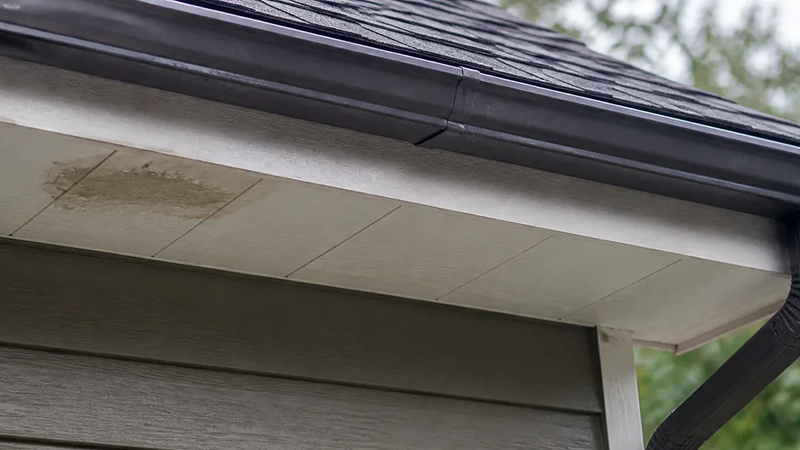
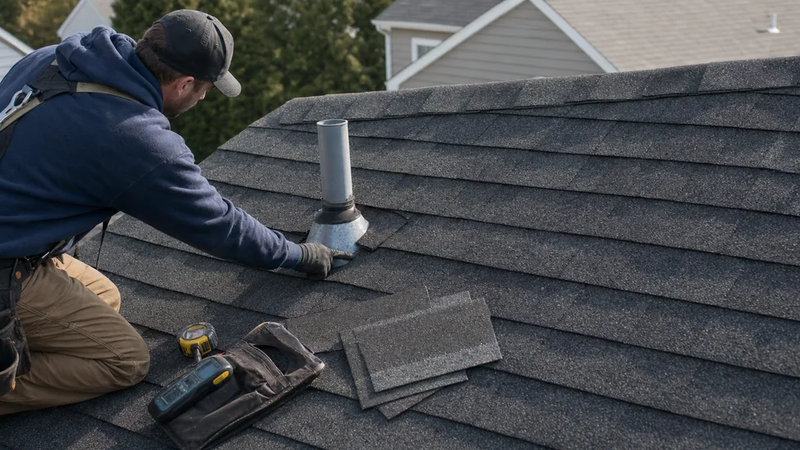
If a storm produced roughly quarter-sized or larger hail near the property, or if leaks or displaced materials appear afterward, a qualified roof evaluation can determine what actually happened. Storm history can guide the timing and location of that evaluation; it cannot confirm damage by itself.