On this page
Start with the property, not a standard bundle
Specialty inspection add-ons are separate tests or expert evaluations beyond a general home inspection. A buyer should prioritize them when the property has a relevant system, the general inspector excludes that scope, records raise a concern, or the contract, lender, insurer, or local authority requires a result.
A general inspection is not an all-clear. InterNACHI defines it as a non-invasive, visual examination of accessible areas, and its standards exclude many environmental and technically exhaustive determinations. Read the inspector’s agreement before ordering add-ons because state rules and individual scopes differ.
Use a three-part test
Order an add-on when exposure is present, the consequence matters, and the answer could affect your decision or negotiations before the applicable deadline. Do not treat an add-on as a guarantee against every hidden defect.
Match the add-on to the exposure
| Property feature or clue | Add-on to consider | Question it should answer |
|---|---|---|
| Any occupied home where radon has not been reliably tested | Qualified radon test | What indoor radon level does the test measure? |
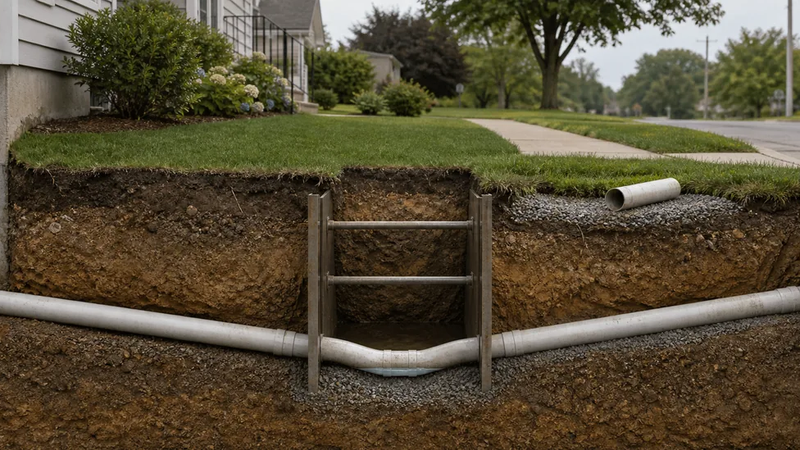
| Private septic system | Septic inspection and records review | What are the visible condition, operating indicators, maintenance history, and locally required findings? |
| Private well | Well-system inspection plus certified laboratory water testing | Do accessible components operate, and what does the selected water panel detect? |
| Older sewer lateral, large trees, recurring drain trouble, or unknown line condition | Sewer camera scope | What is visible inside the accessible lateral, and where does the inspected run end? |
| Pool or spa | Pool/spa inspection | What is the observed condition of accessible structure, circulation, heating, electrical, and safety components within the written scope? |
| Wood-destroying-organism risk or lender requirement | Licensed pest/WDO inspection | Is reportable evidence found under the jurisdiction’s form and inspection rules? |
| Used fireplace, solid-fuel appliance, or concerning chimney history | Qualified chimney inspection | What level of examination is appropriate, and what accessible defects or deposits are reported? |
| Movement, altered framing, significant cracking, or unresolved load concerns | Structural engineer or qualified structural specialist | Does the observed condition require analysis, monitoring, or a defined repair scope? |
Radon deserves a property-specific measurement rather than a neighborhood assumption. EPA says testing is the only way to learn whether a home has elevated radon levels.
For septic systems, a visual glance at the yard is not equivalent to a system inspection. EPA’s homebuyer guidance calls for a septic service provider to inspect before purchase and notes that local government or a mortgage lender may require it.
Private-well decisions need two different answers. A system inspection addresses accessible equipment and operation; laboratory testing addresses the sampled water. CDC advises using a state-certified laboratory and asking the health department which additional contaminants matter locally.
Factors that change the decision
Start with disclosures, permits, maintenance records, prior reports, warranties, and repair invoices. A recent report may be useful, but confirm who performed it, what was tested, whether conditions have changed, and whether your contract or lender accepts it.
Then compare the general inspection agreement with each specialist’s written scope. Ask about access limits, equipment used, sampling location, excluded components, credentials required by state or local law, turnaround time, and whether a reinspect is included. No camera, sample, or visual examination confirms conditions outside its inspected area.
Transaction timing matters as much as technical value. An inspection contingency may set notice, access, report, objection, or termination deadlines. Requirements vary by contract and jurisdiction, so do not assume ordering a test automatically extends a deadline or creates a repair right.
Before the inspection period expires, have the general inspector identify excluded or referred systems, obtain the property records and disclosures, confirm lender and local requirements, and let the appropriate licensed inspector, certified laboratory, engineer, attorney, or other qualified specialist review the exact transaction question.