On this page
Why heavy rain changes the leak
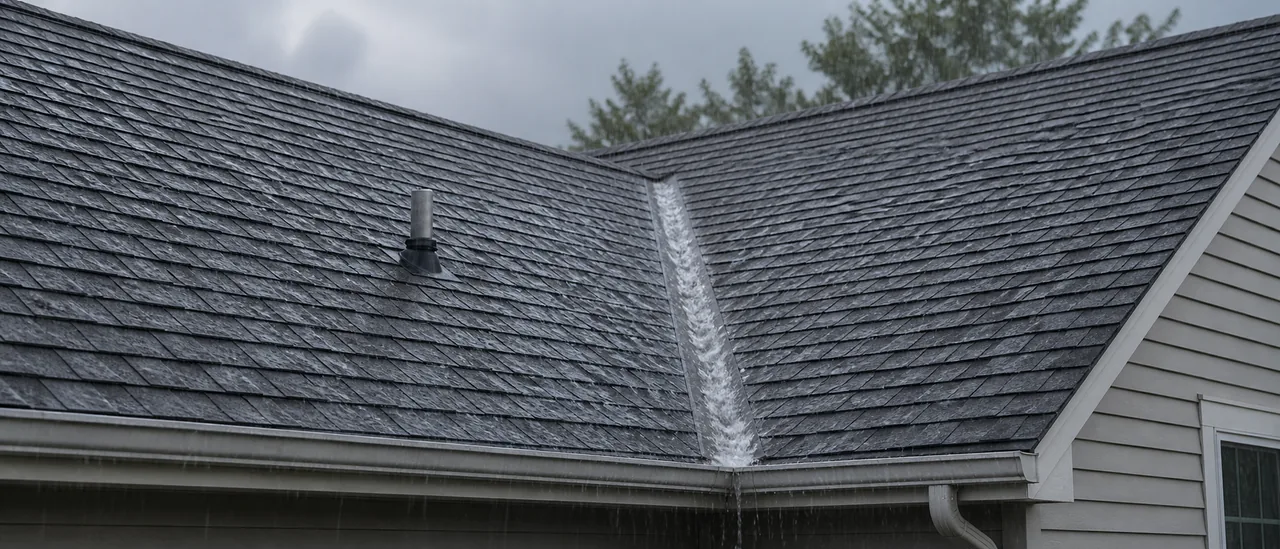
A roof that leaks only during heavy rain usually has a small entry path that ordinary rain does not reach or overwhelm. Greater runoff may concentrate water at a weak detail, while wind can push rain sideways or even upward against normal drainage.
The defect may be limited, such as a partly blocked drainage path or a loose flashing edge. More serious possibilities include displaced roofing, failed flashing, an open seam, or deterioration that has reached the roof deck. A dry ceiling during light rain does not prove the roof is sound.
Where the water may enter
Heavy rain exposes roof details that must manage concentrated or wind-driven water:
- Valleys and low areas: Fast runoff can collect where two roof slopes meet or where debris slows drainage.
- Chimneys, skylights, and wall intersections: Flashing must redirect water around changes in shape and material.
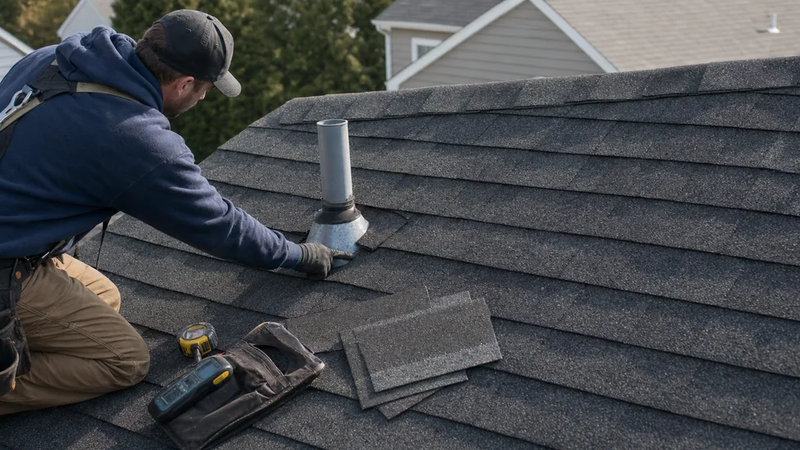
- Plumbing vents and roof vents: Cracked boots, open seams, or wind-facing openings may admit water only from certain directions.
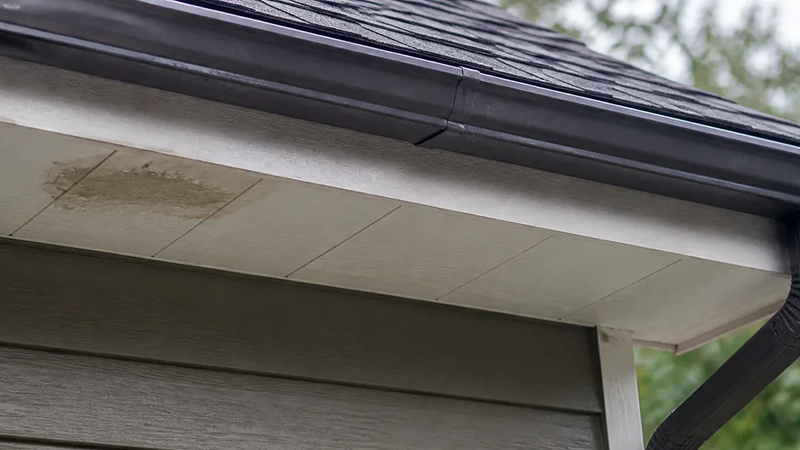
- Roof edges and gutters: Overflow or backed-up water can wet fascia, soffits, walls, or the roof edge and resemble a leak through the main covering.
Water can also enter through siding, a window, or another wall opening above the stain. That distinction matters because “roof leak” often describes where water appears, not where it entered.
The ceiling stain is not a map
Water may follow roofing layers, decking, rafters, or pipes before dripping. The first wet spot can be several feet from the exterior opening.
How the cause is confirmed
Start with observations that do not require climbing. Note whether the leak begins immediately or after prolonged rain, whether wind is present, and which direction it blows. Photograph the stain’s first edge and check from the ground for overflowing gutters, debris, or displaced materials.
A qualified evaluation compares those conditions with the roof above. It should cover roofing materials, drainage, flashing, skylights, chimneys, and penetrations, then look in an accessible attic for wet decking or a water trail. When visual evidence is inconclusive, controlled water testing may isolate one area at a time; careless spraying can create a new leak or confuse the result.
How urgent is it?
Treat recurring leakage as a defect even if it stops when the storm weakens. Arrange prompt evaluation if water is active, the stain grows, materials sag, or the source remains unknown. Keep people away from a bulging ceiling or water near electrical fixtures.
Do not climb onto a wet or windy roof. Wind and rain increase fall risk, including for experienced workers; wait for safe conditions and use a qualified inspector when roof access is necessary.